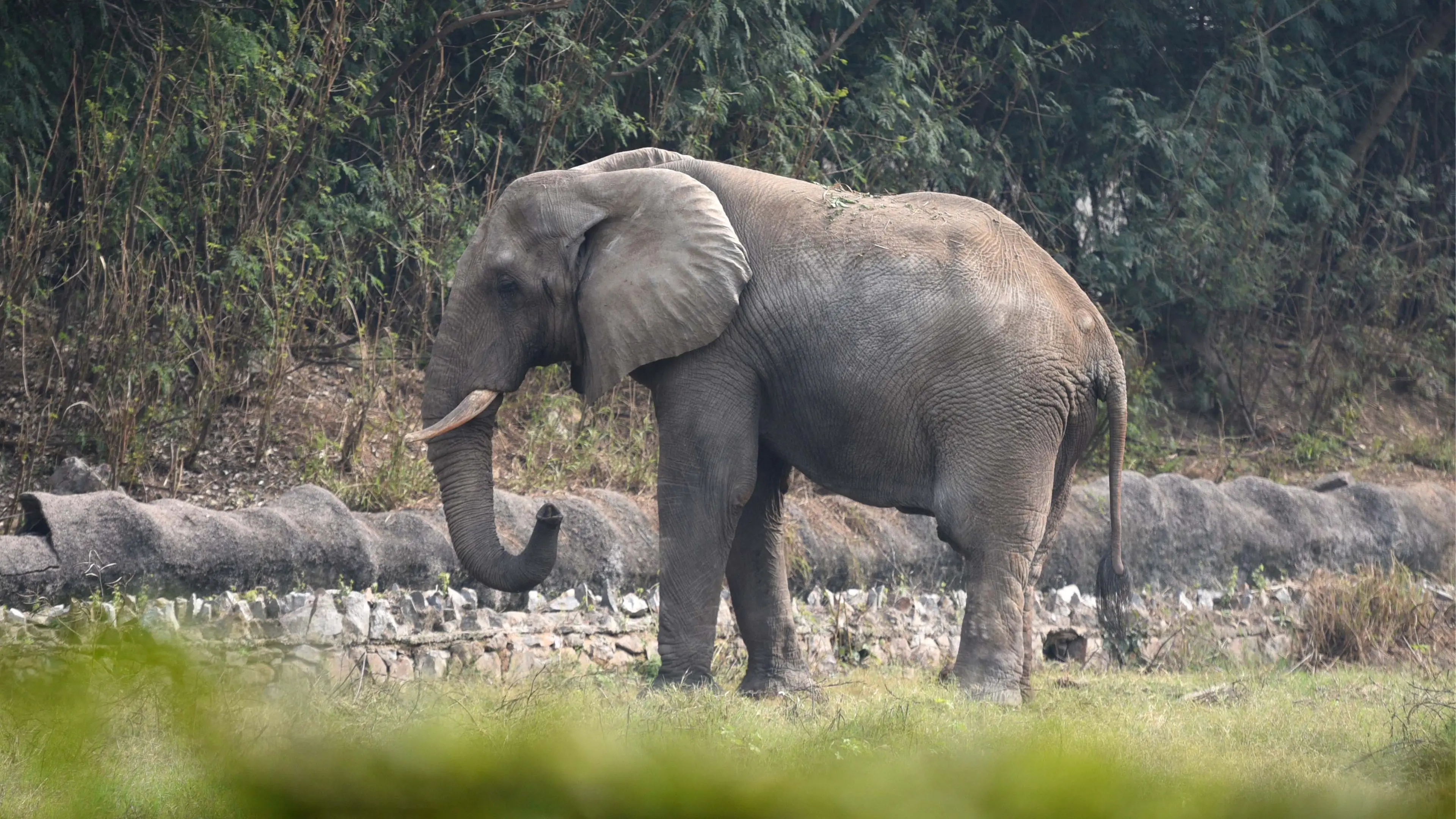
Tragic update on ‘world's loneliest elephant’ held in complete isolation

A devastating update has been provided on the elephant known as the loneliest in the world, as he spent the majority of his life in isolation.
Shankar, a 29-year-old male elephant died on 17 September of a rodent-borne virus after spending a chunk of his life in a zoo in Delhi, India.
Sadly, several animal rights campaigners had fought for him to be relocated to a wildlife sanctuary so that he could receive specific elephant care.
He was the only African elephant at the zoo, with an autopsy revealing this month that the elephant tested positive for encephalomyocarditis virus (EMCV), and the cause of his death was not known at the time.
Advert
Delhi Zoo director Sanjeet Kumar confirmed the diagnosis, with the condition known to cause fatal inflammation of the heart and even brain fever in mammals. The virus is spread through rodent faeces and urine.
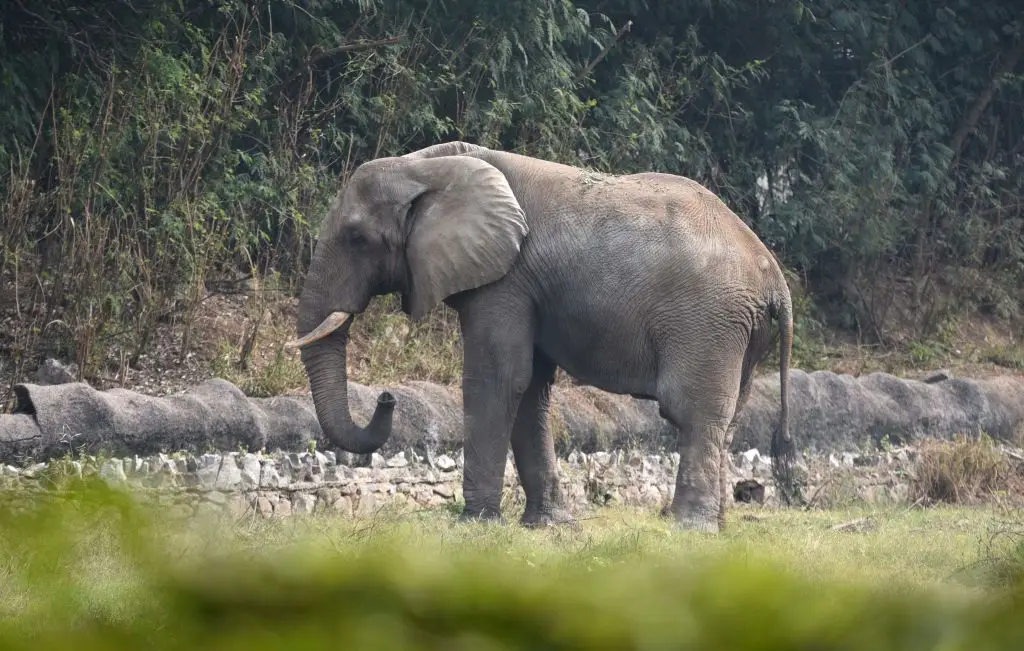
Shankar spent the majority of his life in isolation following his companion's death back in 2001, just three years after being gifted as a diplomatic present from Zimbabwe to then-Indian President Shankar Dayal Sharma.
The BBC reported that efforts were made to introduce Shankar to new elephants, but he was hostile towards them, as his demeanour was altered after the death of the other elephant.
Most outbreaks of EMCV are associated with captive animals in pig farms, and primate research centres and zoos, with the virus replicating quickly and often causing sudden death.
Speaking to the BBC, a senior official at the Indian Veterinary Research Institute (IVRI) said that 'there may have been unreported instances of mammals dying because of EMCV', though Shankar might be the first 'recorded' death caused by the virus in the country.
It's believed that EMCV was first isolated in 1945 from a gibbon in Florida, USA, though outbreaks have been reported in South Africa, China, and Australia to name a few countries, since the 1970s.
Kumar refused to answer questions on how the elephant got the infection or if there was a rodent problem at the zoo, saying he was not an expert on the 'rare virus'.
Animal activists were aiming to rehabilitate the lonely animal, as he was moved to a new enclosure which was virtually an example of solitary confinement, despite a 2009 ban being put on elephants being alone for over six months.
He would live here until his death.
As recently as 2021, a petition in Delhi's high court looked to secure Shankar's relocation to a sanctuary with other African elephants but it would be dismissed two years later as the court told the petitioner to speak to a committee which handles transfers of animals by zoos.
Petition director Nikita said his passing was 'preventable' and 'heartbreaking', with the death leaving just one African elephant in India, an adult male at Mysore Zoo in the southern Karnataka state.
He has also been living in isolation for years.
Topics: Animals, Health, World News
 Joshua Nair