ladbible homepage
ladbible homepage
  • iconNews
  • videos
  • entertainment
  • Home
  • News
    • UK
    • US
    • World
    • Ireland
    • Australia
    • Science
    • Crime
    • Weather
  • Entertainment
    • Celebrity
    • TV
    • Film
    • Music
    • Gaming
    • Netflix
    • Disney
  • Sport
  • Technology
  • Travel
  • Lifestyle
  • Money
  • Originals
    • FFS PRODUCTIONS
    • Say Maaate to a Mate
    • Daily Ladness
    • UOKM8?
    • FreeToBe
    • Citizen Reef
  • Advertise
  • Terms
  • Privacy & Cookies
  • License Our Content
  • About Us & Contact
  • Jobs
  • Latest
  • Archive
  • Topics A-Z
  • Authors
Facebook
Instagram
X
Threads
Snapchat
TikTok
YouTube
Submit Your Content Here
  • SPORTbible
  • Tyla
  • GAMINGbible
  • LADbible Group
  • UNILAD
  • FOODbible
  • UNILAD Tech
Scientists reveal the two exact ages in your life when the ageing process dramatically spikes
Home>News>Health
Updated 14:37 15 Aug 2024 GMT+1Published 14:32 15 Aug 2024 GMT+1

Scientists reveal the two exact ages in your life when the ageing process dramatically spikes

The findings suggest ageing isn't always slow and steady

Anish Vij

Anish Vij

google discoverFollow us on Google Discover

As someone who is turning 30 next year, the quarter-life crisis has already begun.

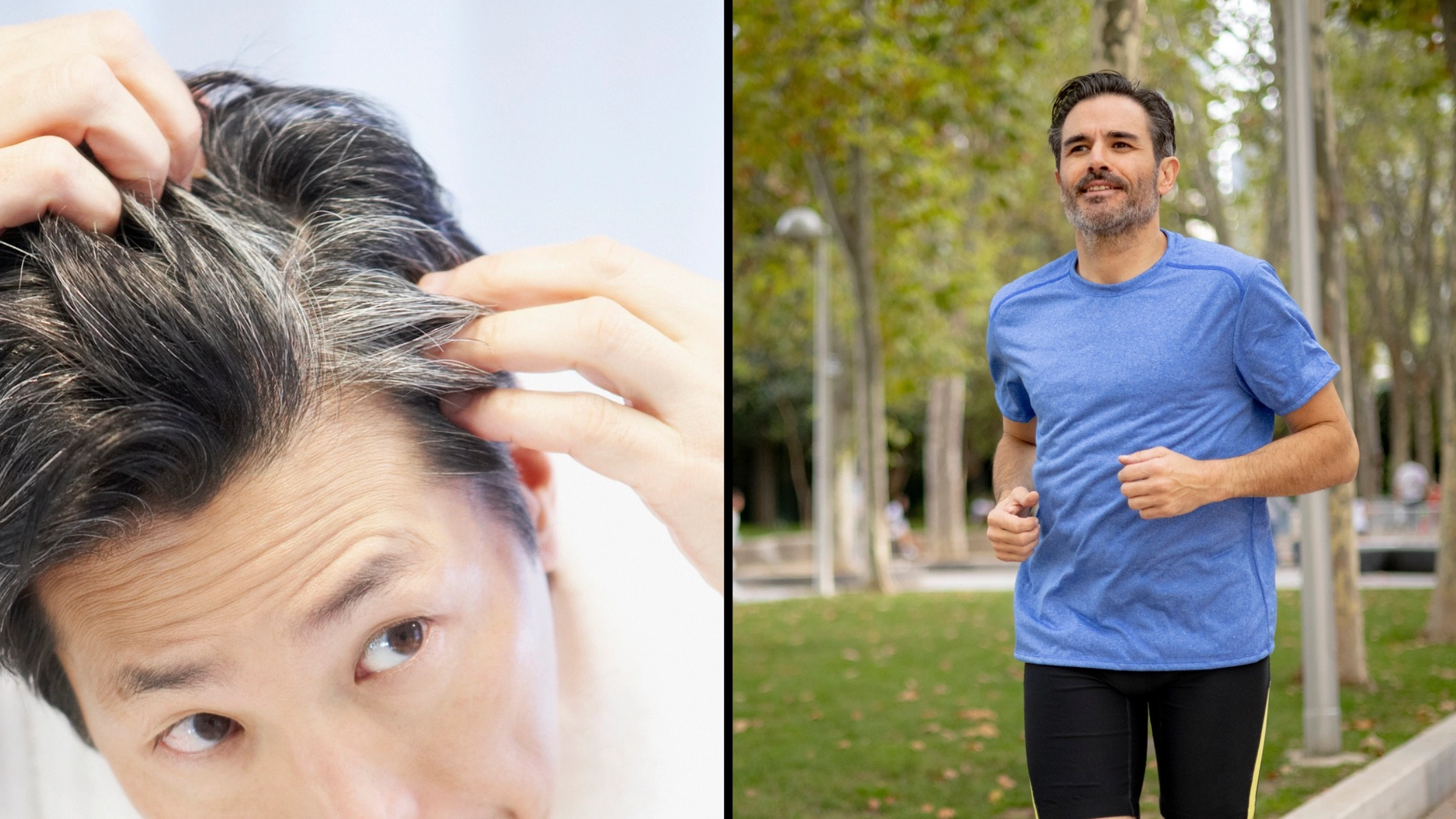
More grey hairs and less motivation to work out are just a couple of symptoms that I'm noticing.

But it turns out that the ageing process isn't going to spike until I'm a lot older, which is good but equally scary to think about.

According to a new study published on Wednesday (14 August), it's all about 'understanding the molecular changes underlying ageing'.

Advert

You can't avoid it. (Getty Stock Images)

The authors of 'Nonlinear dynamics of multi-omics profiles during human ageing' used a sample size of 108 participants, aged between 25 and 75, to draw their conclusions.

Those participants lived in California, US, and were tracked from '1.7 years, with a maximum follow-up duration of 6.8 years'.

More specifically, the scientists went and took a look at the molecules in their blood, poo and skin via mouth and nose swabs.

Apologies if your Covid-related PTSD just kicked in.

Around 135,000 different molecules (like proteins) and microbes (like bacteria, viruses and fungi) were looked at, and the shock came when most of them didn’t shift in a gradual way, as expected.

The molecules and microbes shifted more during two age groups and it was determined that the ages of 44 and 60 are the most likely time periods where age-related changes start to take place.

The NHS advises 'older adults should do some type of physical activity every day'. (Getty Stock Images)

This includes the possible build up of health issues, such as cardiovascular disease or musculoskeletal problems.

“We’re not just changing gradually over time. There are some really dramatic changes,” Prof Michael Snyder, a geneticist and director of the Center for Genomics and Personalized Medicine at Stanford University and senior author of the study, told the Guardian.

“It turns out the mid-40s is a time of dramatic change, as is the early 60s – and that’s true no matter what class of molecules you look at.

“I’m a big believer that we should try to adjust our lifestyles while we’re still healthy.”

The mid-40s revelation was not expected as it was initially thought that this was the result of perimenopausal changes in women.

But similar shifts in ageing were also noticed in men.

“This suggests that while menopause or perimenopause may contribute to the changes observed in women in their mid-40s, there are likely other, more significant factors influencing these changes in both men and women,” added Dr Xiaotao Shen, a former postdoctoral scholar at Stanford medical school and first author of the study.

You can take a look at the full study in the journal Nature Aging.

Featured Image Credit: Getty Stock Images

Topics: Health

Anish Vij
Anish Vij

Anish is a Journalist at LADbible Group and is a GG2 Young Journalist of the Year 2025. He has a Master's degree in Multimedia Journalism and a Bachelor's degree in International Business Management. Apart from that, his life revolves around the ‘Four F’s’ - family, friends, football and food. Email: [email protected]

X

@Anish_Vij

Recommended reads

Who Wants to Be a Millionaire contestant wins £500k with 'educated guess'ITVMum of British woman, 23, shot dead by dad after ‘row about Trump’ hits out at policeHandoutDoctor shares 11 overlooked signs men have low testosteroneGetty Stock ImagesModel left with broken spine and legs after ‘Dubai Porta Potty party’ says attackers left chilling noteInstagram/@mariia.kovalchuuk

Advert

Choose your content:

10 hours ago
11 hours ago
12 hours ago
  • Handout
    10 hours ago

    Mum of British woman, 23, shot dead by dad after ‘row about Trump’ hits out at police

    Lucy Harrison was shot dead by her dad, though he was never charged

    News
  • Instagram/@mariia.kovalchuuk
    11 hours ago

    Model left with broken spine and legs after ‘Dubai Porta Potty party’ says attackers left chilling note

    Maria suffered devastating injuries in the incident, including multiple fractures across her body

    News
  • Getty Stock Photo
    11 hours ago

    Erectile dysfunction is on rise in young men for worrying reason

    Around a quarter of young men suffer from it in some way

    News
  • X/Frank Fournier
    12 hours ago

    Tragic tribute left at scene where girl whose eyes turned black died after getting trapped

    Rescuers were unable to save Omayra, who became a symbol of the Armero tragedy

    News
  • Scientists shared exact two ages in your life when ageing process dramatically spikes
  • Expert explains why ageing process dramatically spikes at two exact ages and how to stop it
  • Shocking new study discovers exact age range your body starts ageing faster as organ takes vital hit
  • Scientists discover protein that could reverse ageing in the brain