
Timeline of how wine effects the brain after photographer took pictures of people after one, two and three glasses

As anyone who has ever consumed alcohol will know all too well, booze has quite an impact on our bodies.
You might feel a bit flushed after your first beer, or end up staggering down the street if you've had a few too many - but as well as these physical effects, there are some psychological ones too.
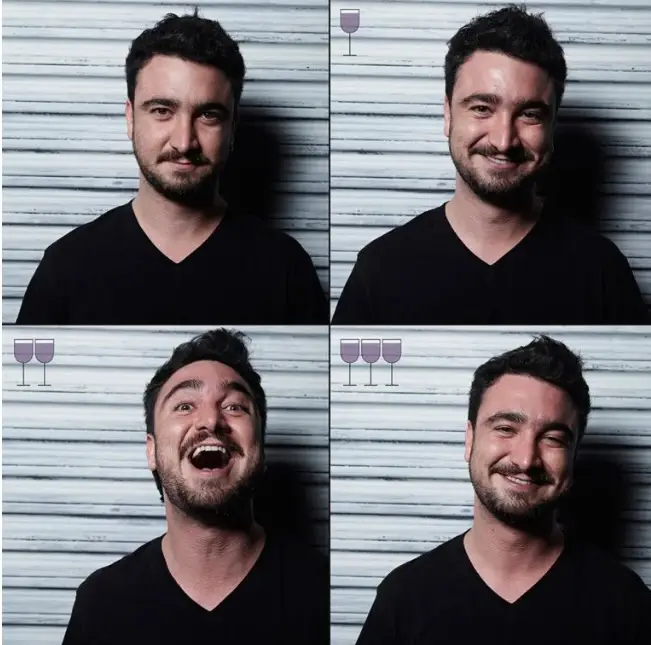
The photos taken by Brazilian photographer Marcos Alberti as part of 'The Wine Project' give us something of a visual of what this looks like, as his muses change in mood was evident in the snaps.
He got a host of his mates together to take part in the series, which involved him taking four images of them.
Advert
They posed for pictures when they were sober, before doing so again after every glass of wine they consumed, so that Alberti could document how their expressions altered.
"At the end of every glass of wine a snapshot, nothing fancy, a face and a wall, three times," the photographer explained. "By the end of the third glass, several smiles emerged and many stories were told."
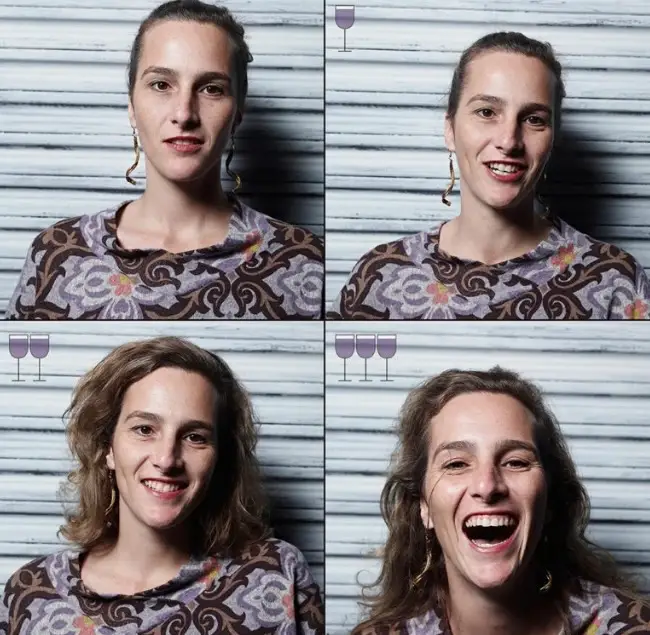
The subjects who took part in 'The Wine Project' all looked a lot more relaxed after three glasses of vino.
This is likely because of the impact that the alcohol had on their brains, as experts at Northwestern Medicine explained that their are several stages of intoxication.
And that's exactly what the pictures taken by Alberti demonstrate.
According to Northwestern Medicine, the first phase of drunkenness is described as 'subliminal intoxication'.
"You may not look like you have been drinking, but your reaction time, behaviour and judgment may be slightly altered," the healthcare firm explains. "Depending on weight, most people enter this stage after one drink."
Next is euphoria - as during these tender stages of a drinking session, your brain begins to release more dopamine.

This makes you 'feel relaxed and confident' - as evidenced by the second snap that Alberti took of his friends, which shows how they each began to slowly warm up to the camera.
NorthWestern Medicine said this period is when people might describe themselves as feeling 'tipsy', while it also notes: "Your reasoning and memory may be slightly impaired."
The third rung on the drinking ladder is when your brain really starts to feel the effect of alcohol, as the experts explained that the occipital lobe, temporal lobe and frontal lobe are all impacted.
"Drinking too much can cause side effects specific to each lobe's role, including blurred vision, slurred speech and hearing, and lack of control, respectively," it continues.
"The parietal lobe, which processes sensory information, is also affected. You may have a loss of fine motor skills and a slower reaction time.
"This stage is often marked by mood swings, impaired judgment, and even nausea or vomiting."
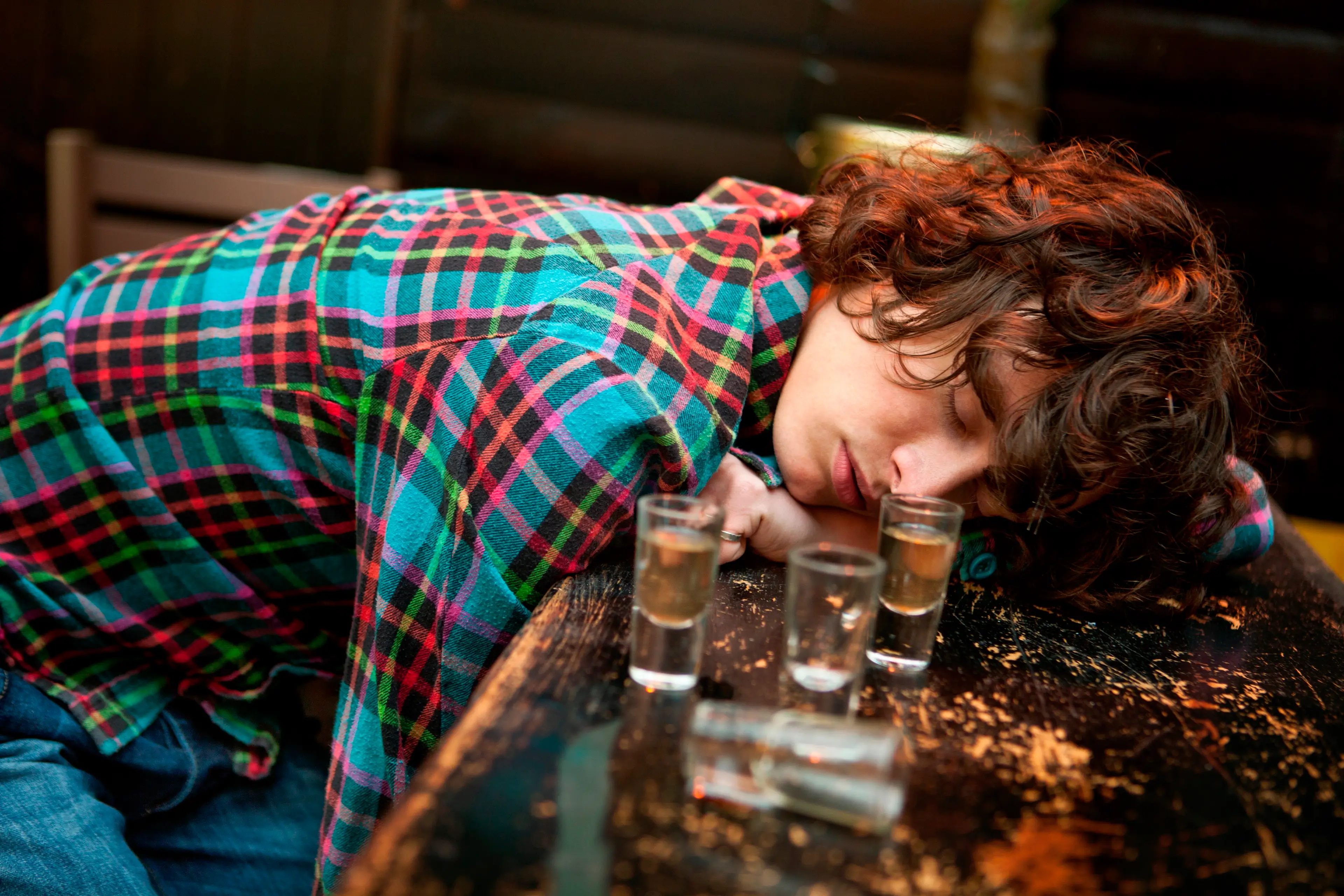
What follows from here is disorientation - and this is probably the part of the night where you could consider calling a taxi home.
"Your cerebellum, which helps with coordination, is impacted," the health boffins said. "As a result, you may need help walking or standing.
"Blackouts, or the temporary loss of consciousness or short-term memory, are also likely to occur at this stage.
"This is a result of the hippocampus, the region of the brain that is responsible for making new memories, not working well. You may also have a higher pain threshold, which may increase your risk for injury."
If you carry on drinking until you find yourself in a drunken stupor, your 'mental, physical and sensory functions are severely impaired' at this point.
YouTuber Jae Andrés, who is behind the account 'Getting Sober...Again', also shared a similar assessment of the toll alcohol takes on the brain in a video uploaded in February last year.
The content creator and photographer, who 'practice positive sobriety awareness', explained that in the first half an hour of having an alcoholic beverage, you will typically have 'lowered inhibitions' and feel 'relaxed'.
He explained that impaired coordination, slurred speech and an altered mood come next.
Andrés continued: "After just one to four hours of drinking, your brain's going to have continued impairment of cognitive and motor functions.
"You may feel a little unsteady on your feet, you may find it a bit harder to concentrate and walk, and you're going to have a hard time saying the alphabet backwards - not that you can do it sober anyway," he joked.
Topics: Alcohol, Art, Health, Mental Health, Food And Drink
 Olivia Burke