I was almost killed by Covid vaccine after suffering side effects experienced by 1-in-10,000

Three years ago, I was rushed to the hospital over fears that I'd had a heart attack. I was 24.
There's no doubt that the Covid vaccine did great things for humanity, eventually bringing an end to lockdown and social distancing restrictions after the pandemic claimed the lives of over 200,000 people in the UK and over seven million people worldwide.
Sadly, however, one of the rare side effects of the vaccines included a sometimes fatal impact on heart health, namely myocarditis and pericarditis, which was suddenly occurring far more often among young and otherwise healthy men, such as yours truly.
I must stress at this point that I am in no way an 'anti-vaxxer' just because of the impact it had on me. The vaccine also helped to save several vulnerable people in my family from suffering far more when they contracted Covid.
Advert
Anyway, back in June 2022, I was admitted to the hospital with what I - and doctors - thought at the time was a heart attack.
I had been ill a few days before and put it down to a nasty flu, as I was sweating through my bedsheets, which is a common sign of something being wrong with your ticker, and had shooting pains in both my arms.
After starting to feel a bit better, I took myself for a run, but I just about made it down the street before I nearly collapsed and had to head home, thinking I was still ill.
That evening, my parents, who I was still living with at the time, went out to a gig and I started to feel worse and worse, eventually calling 111 with symptoms of a tight chest, difficulty breathing and shooting pains up my arms, which were now noticeably worse in my left.
Despite the obvious signs, though, I was in my mid twenties at the time, and in fairly good shape, so I wasn't too worried, but when the ambulance didn't turn up, I took myself to hospital.
I had my bloods taken and an electrocardiogram done, and I started to feel better, so at about 4.00am, and with no sign of urgency within the hospital to check my results, I foolishly went home and straight to sleep.
Two hours later, I was woken by a call from my GP telling me to get back to the hospital immediately, as they thought that I'd had a heart attack.
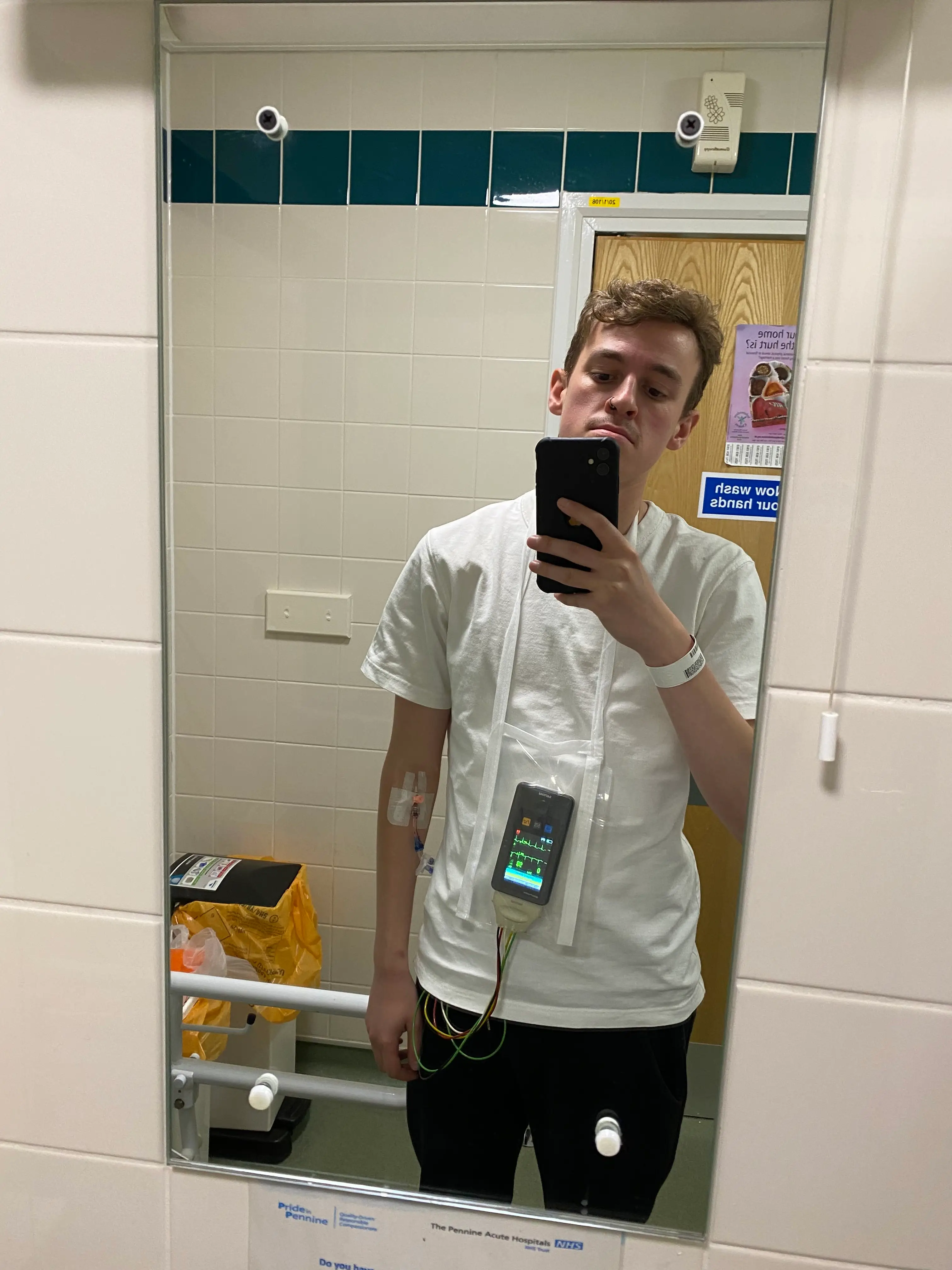
I was there for just short of a week as they completed various scans, hooked me up to a heart monitor and gave me some medication to help with the chest pain, which only got worse as I got more and more anxious about the situation I'd found myself in.
Eventually, the doctors were able to rule out a heart attack, instead diagnosing me with myopericarditis, which causes inflammation to both the heart muscle (myocardium) and the sac surrounding it (pericardium), presenting with symptoms that are very similar to those of a heart attack.
In more severe cases, myopericarditis can cause scarring of the heart muscle, which can make it become enlarged and weaker. This is sometimes called dilated cardiomyopathy (DCM) or heart failure, the British Heart Foundation explains.
The British Heart Foundation suggests that the risk of this particular side effect is extremely low, as it affects just one in 10,000 people who took either the Pfizer or the Moderna vaccine, but if you don't buy a ticket, you don't win the raffle, and I was one of the not-so-lucky winners in this case.
This was obviously a huge shock at the time; I did a lot of running and other sports and have never smoked or done drugs, and it was implied by doctors at the time that it could have been caused by the vaccine, which now feels certain given the subsequent studies that have been done.
A new study, which confirmed the link between the vaccines and heart problems, also confirmed that vaccinated adults had a 74 percent lower risk of dying in hospital from Covid complications, and yet there are still many across the world who will refuse to take it, due to online misinformation and fears over some of the rare side effects, such as these.
I was finally able to head home with a box full of medication, which would hopefully work to reduce the inflammation around my heart and get me back feeling normal.
Unfortunately, there were a lot of things that I needed to do over the next six months in order to make sure I didn't suffer a repeat.
These included avoiding stress, any form of exercise and perhaps most bafflingly, grapefruit.
Naturally, after the incident, I became a lot more aware of my own heartbeat and still struggled with chest pain when taking deep breaths or even walking too quickly, which put things like running and football completely off the table for six months.
A number of hospital and GP visits would follow, too, as I regularly struggled with anxiety about the possibility of it happening again, but fortunately, I was given the all clear around January 2023, and told that, much like the Grinch, my heart had swelled to twice its size during the initial hospital visit.
Fortunately, it's back to a normal size now. Merry Christmas.
Topics: Health
 James Moorhouse