
Signs of illness that caused woman to lose part of bum and privates after eating meal

There are several signs to be aware of when it comes to a serious illness that caused a woman to lose part of her flesh after she became infected with it.
47-year-old US woman Lacey Pepper became unwell after eating shrimp, and several days later her daughter noticed that she had a blistering rash on her leg.
Dismissing it as a boil, the next day Lacey couldn't walk and realised it was more serious than that, with her doctor telling her to go to hospital.
While in the emergency department she fell unconscious, a state she would remain in for three days, with her family told she'd contracted necrotising fasciitis and there was a strong chance she wouldn't survive.
Advert
Rushed into surgery to remove the dead flesh from her body, Lacey had to have 25 percent of her left buttock and upper thigh removed, as well as half of the left side of her privates.

Over the next two months she went through a further 17 operations to rebuild the skin on her leg and had to learn to walk again.
She said: "I remember going to get a CT scan and I don't remember anything after that.
"I've been told that the doctor said it wasn't looking good [and that] I might not live. I might lose my leg and I might die.
"They did surgery on me and told my sister I had a flesh-eating bacteria and I had to be flown to another hospital."
When she learned more about necrotising fasciitis she wondered where she'd got it from as she didn't have visible cuts on her body.
Two years on she still needs a cane to walk and still doesn't know exactly how she got the illness, saying it 'could've been from anything', but thinks it could have been the shellfish she ate.
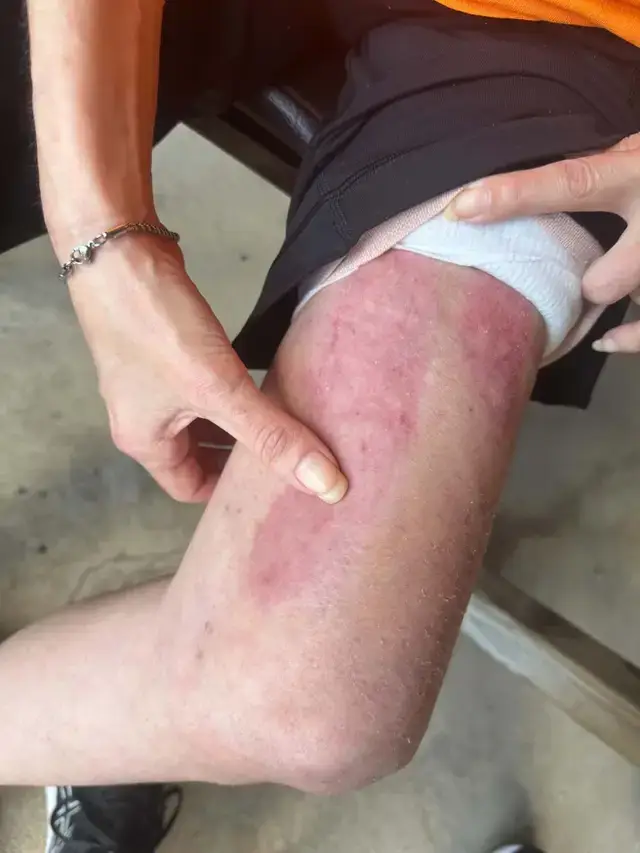
What is necrotising fasciitis
Dr Suzanne Wylie, GP and medical adviser for IQdoctor, explained to LADbible: "Necrotising fasciitis is a rare but very serious bacterial infection that spreads rapidly through the deeper layers of the skin and the tissues beneath it.
"It is often referred to as a 'flesh-eating' infection, although the bacteria do not actually eat the tissue. Instead, they release toxins that destroy tissue and trigger a severe inflammatory response, which can quickly become life-threatening if not recognised and treated promptly."
The doctor explained that people typically contracted necrotising fasciitis 'through a break in the skin'.
"This could be something as obvious as a surgical wound, cut or burn, but it can also follow something much smaller, such as an insect bite, a scratch or even a minor injury that people may barely notice," Dr Wylie said.
"In some cases, no obvious entry point can be identified."
One of the early issues with detecting the disease is how it can 'resemble a much more common skin infection such as cellulitis', leaving people unaware of how much danger they're in.
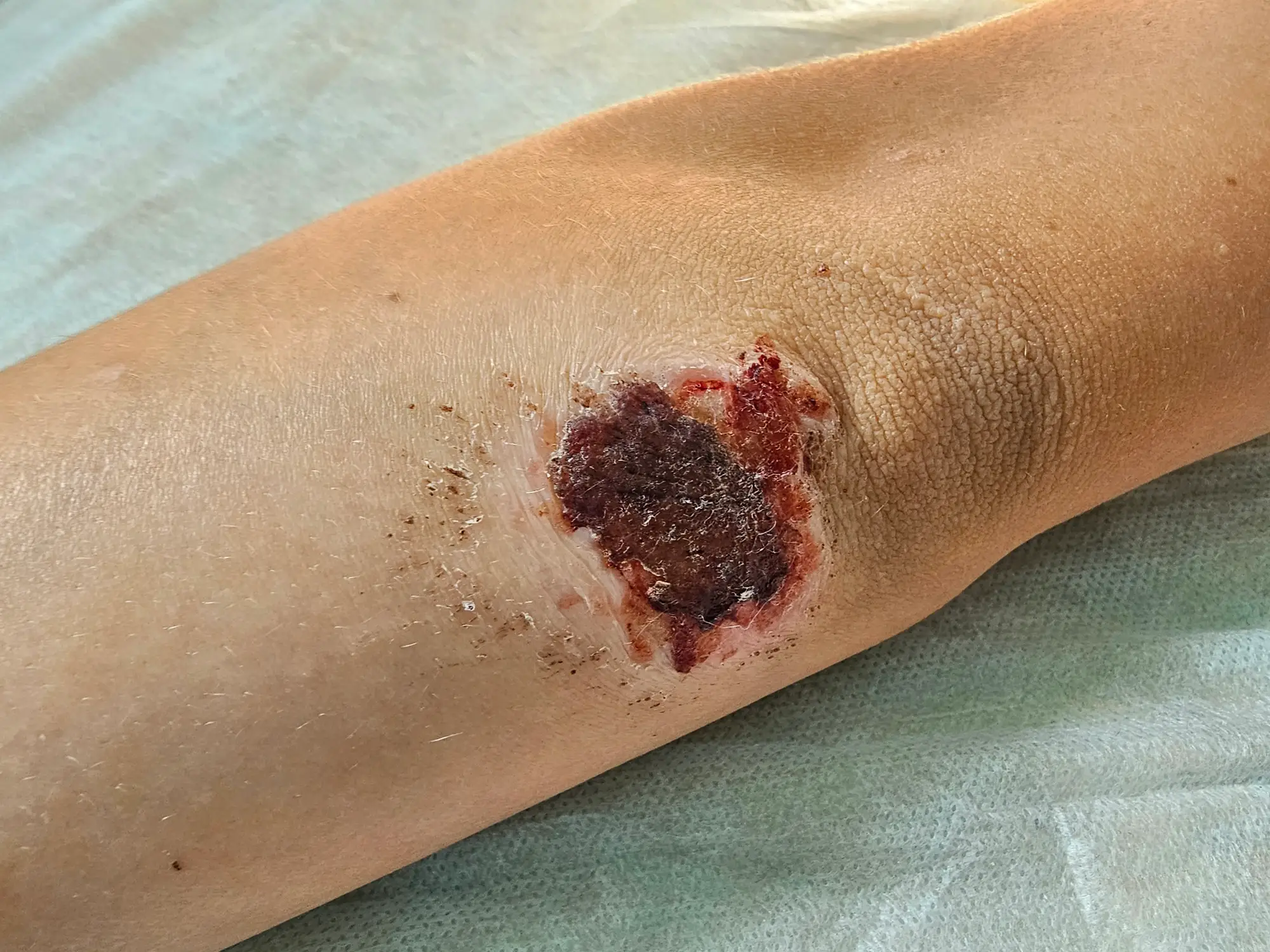
The signs of necrotising fasciitis
The NHS says the disease can develop in a matter of hours or it could take days, but there are early symptoms and ones which develop later on.
While the infections normally happen near cuts and wounds there are times when there's no clear damage to your skin.
The early signs of the flesh-eating disease are:
- Intense pain or loss of feeling – the pain may seem much worse than you would usually expect from a cut or wound, if there is one
- Redness and swelling of the skin around the affected area (redness may be harder to see on black or brown skin)
- Flu-like symptoms, such as a high temperature, headache and tiredness
Necrotising fasciitis can then develop later symptoms including:
- Vomiting and diarrhoea
- Confusion
- Blisters or black, purple or grey blotches on the skin (blotches may be less obvious on black or brown skin)
Since it is a very dangerous disease the NHS advises that if you are suffering from the signs of necrotising fasciitis then you should call 999 or go to A&E.
If you're unsure how you feel then you're advised to call 111 and talk about your symptoms.
Dr Wylie said: "The key message for the public is not to become alarmed by every cut or scrape, as necrotising fasciitis remains exceptionally uncommon.
"Most minor wounds heal without any complications, particularly if they are cleaned properly and kept covered while healing.
"However, people should seek urgent medical attention if they develop rapidly worsening pain around a wound, spreading redness or swelling, blisters, skin discolouration, a fever or if they feel significantly unwell, particularly if the pain seems out of proportion to what can be seen.
"Trusting your instincts is important, as prompt assessment and treatment can make a significant difference to the outcome."
Topics: Health
 Joe Harker