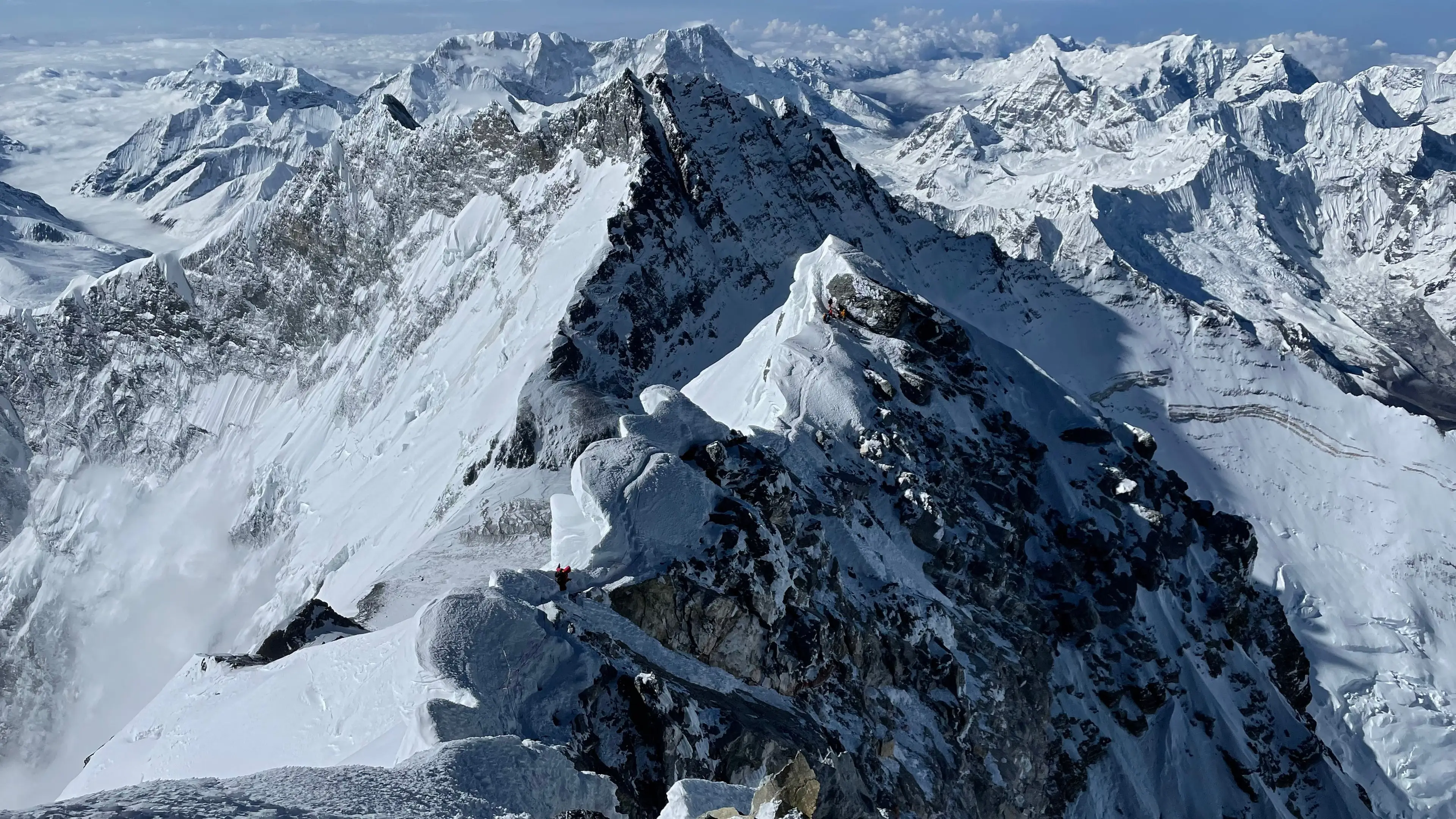
30 years on, Mount Everest's frozen 'Green Boots' climber has a name after ID is confirmed

One of Mount Everest's frozen victims has finally had his identity confirmed, 30 years since the fatal climb.
Since 1996, mountaineers scaling the tallest peak on Earth (which is believed to have claimed more than 340 lives since records of such things began) must come face-to-face with a body known as 'Green Boots'.
Our fallen adventurer is situated at least 26,246 feet up the colossal landmark and stands to this day as an eerie totem of its so-called 'Death Zone'.
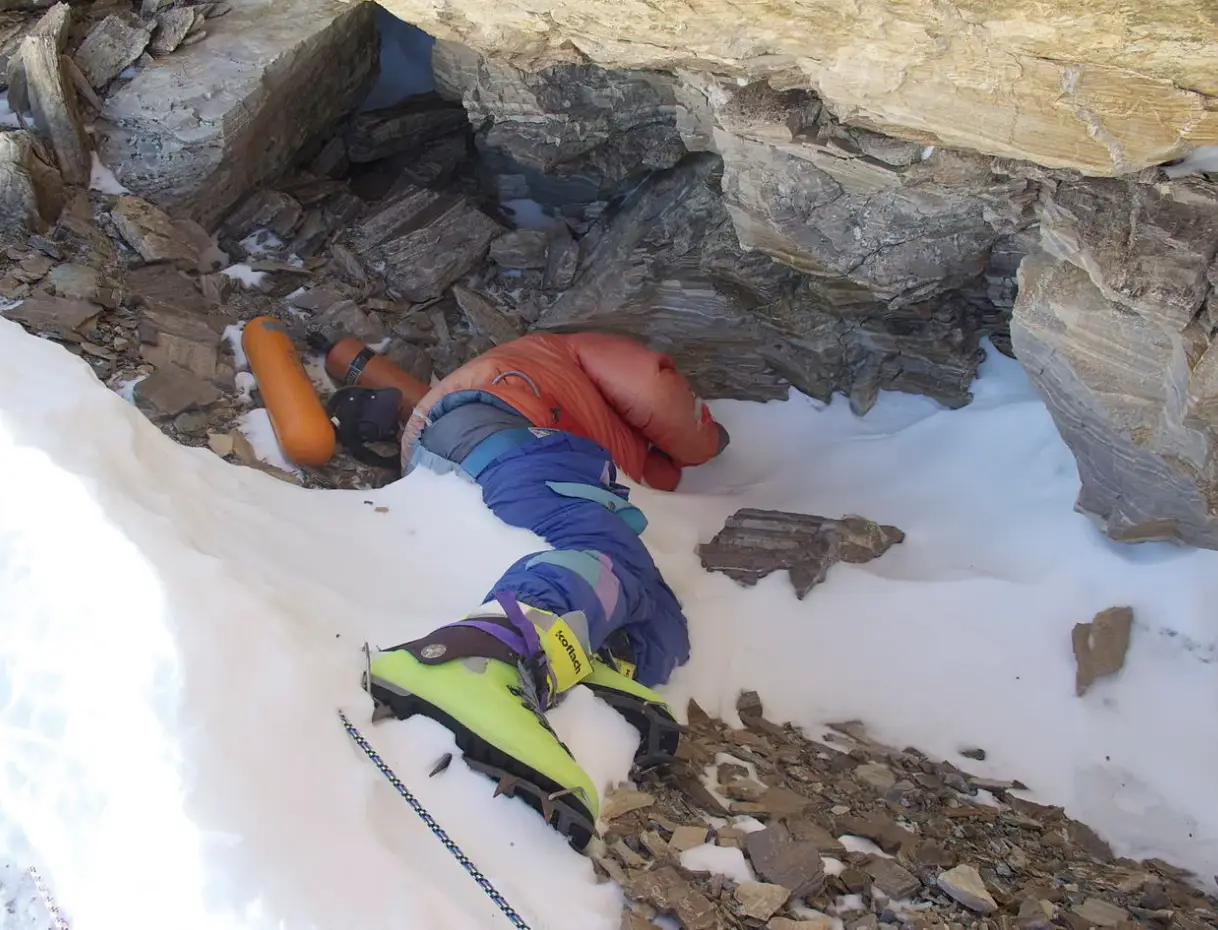
'Green Boots' simply references the colour of his chosen footwear for the climb, which protrude out of the snow and are finely preserved thanks to the inhumane temperatures.
Advert
It was believed for a long time that this was the body of Indian climber Tsewang Paljor, a 28-year-old, yet the Indo-Tibetan Border Police now say otherwise.
This particular soul is actually Paljor's countryman, 47-year-old Dorje Morup.

Per The Sun, the ITBP recently identified Morup ahead of a push to recover his remains from the mountain.
A high-altitude rescue team is set to undergo this life-threatening recovery operation later this summer, in fact.
As for Morup's personal story, he was part of a six-man expedition attempting to summit Everest's north face on May 10, 1996.
Inevitably, the group encountered a monstrous blizzard near the very tip, leading to the half of them turning back.
Morup, Paljor and Tsewang Samanla continued their journey onwards before succumbing to the mountain a little while later.
Records show that this brave trio radioed their team leader around 3.45pm local time, reporting that they'd reached their prestigious destination.
Subsequent accounts indicate that poor visibility could've made it tricky to ascertain their exact location, though.
Soon enough, the three adventurers were being whipped by ferocious winds that reduced visibility to almost non-existent.
Below them, the others who'd bolted from the scene earlier allegedly saw two headlamps moving above the Second Step; this was to become the last-ever sighting of Morup, Paljor and Samanla alive.
As we can see in the image above, 'Green Boots' was nearing the foetal position when he passed away, sheltering in a little cave as Everest's natural artillery rained down on him.
The 'Death Zone' is named as such because it is a particular point on the mountain where oxygen is seriously scarce.
Meanwhile, the UK's first-ever deaf Everest climber Michael Woods reported in from the 'Death Zone' this year.
He wrote on social media: "There were moments during this expedition where I genuinely didn't know if I could make it, especially after being sick and struggling with energy, but somehow I found a way to keep fighting all the way to the top of the world.
"Standing on the summit of Mount Everest is something I'll never ever forget."
Topics: News, Mount Everest
 Dan Seddon