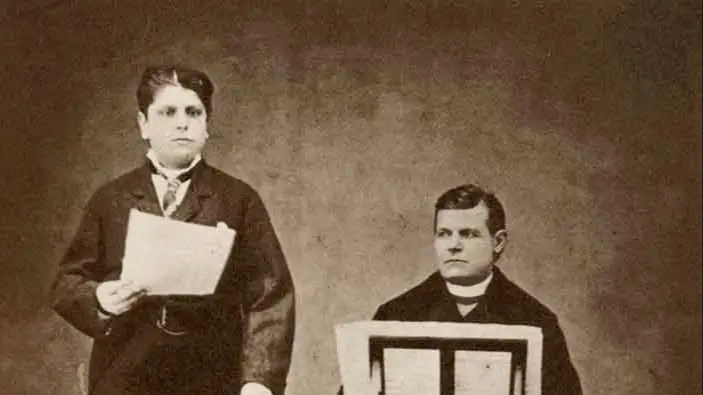
Chilling final recording of 'extinct' human voice

A recording gives a glimpse of what a now extinct kind of human voice would have sounded like.
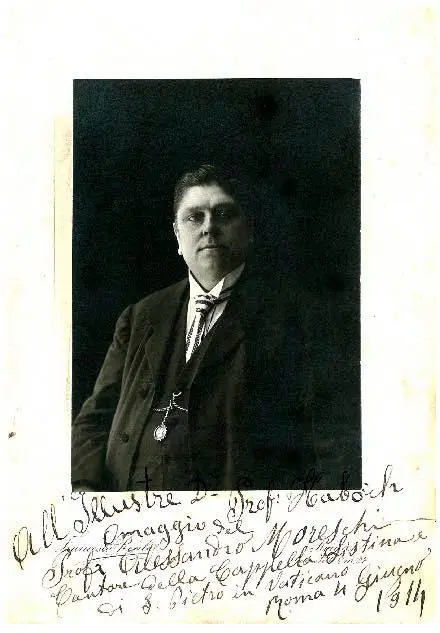
Alessandro Moreschi was born in Italy just outside Rome in 1858, and would go on to be one of the last castrati, singing in the choir in the Sistine Chapel in the Vatican.
A castrato (in Italian '-o' is singular and '-i' plural) was a man who had his testicles removed before his voice broke in order to stop his voice breaking.
Eventually, the practice of castration thankfully died out, but Moreschi would live long enough to see the invention of the gramophone.
Advert
What we have is a pale impression of what these singers would have been capable of. At the time of the recording Moreschi was in his 40s and is believed to have been past his prime as a singer, not to mention that the recording was made on a primitive device.
The first set of recordings were made by Will and Fred Gaisbourg on 3 and 5 April 1902, with the pair representing the Gramophone and Typewriter Company.
While it is a poor recording of a musician who is thought to be past his best years, it is the only known surviving recording of a castrato made before Moreschi died in 1922, and it was shared on TikTok by TikToker tempestinstruments, who also explained in his video about the history of castrati.
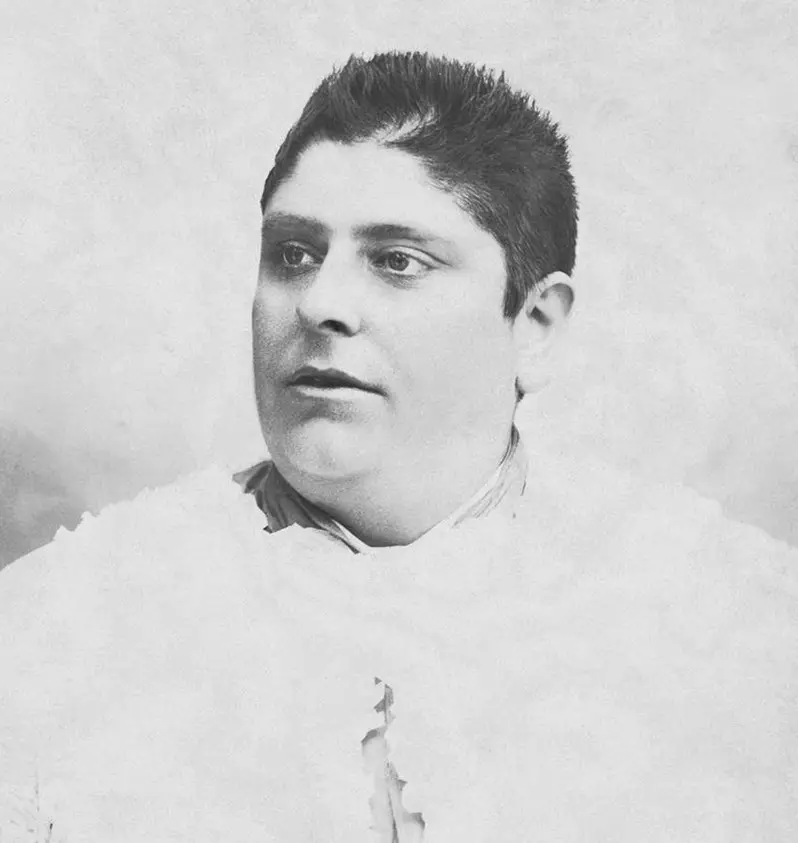
The voice of a castrato had a particular quality. This is because when a voice breaks the vocal chords grow larger, but castration prevents this process creating a unique situation where a castrato had smaller vocal chords, but the lung capacity, chest size, and projection of an adult man.
The result was singers who could hold a note for a full minute without taking a breath and could showcase astonishing vocal techniques, according to contempory accounts.
There was also a belief in innocence and purity which was attached to the voice of a castrato, which meant that they even sang in the Vatican choir, despite the practice being officially against canon law, and were hired to sing over the bodies of children as they lay awaiting burial.
The process was horrific, with the illegality of the practice meaning that only desperate or dodgy surgeons would carry it out in secret, increasing the danger.
Boys would be an average of just eight years old when they were subjected to an orchidectomy, which is having the testicles removed, and remember this was a time before infection control, anaesthetic, and painkillers.
This meant that boys subjected to this were drugged with opium, before the surgeon, who would not be a surgeon in the sense that we think of now, but a barber surgeon who would offer haircuts, shaves, and amputations.
To make matters even worse, while often only boys who already showed vocal talent were selected, sometimes the abusers did not understand that castrating a child did not make them a good singer, it just stopped their voice from breaking. This meant that for many children abused in this way it did not even have the desired effect.
Boys who survived would often grow up to be overweight and without any facial hair. They would also likely have suffered from hormonal disorders which, while treatable now with hormone replacement therapy, would have been likely to impact their health back then.
There are still specialist male singers, countertenors, who are capable of reaching extraordinary pitches with their voices.
Thankfully, they do not have to endure the abuses suffered by castrati to achieve that artistic excellence, just the same gruelling practice as every other musician.
Topics: World News, Music, History
 Kit Roberts