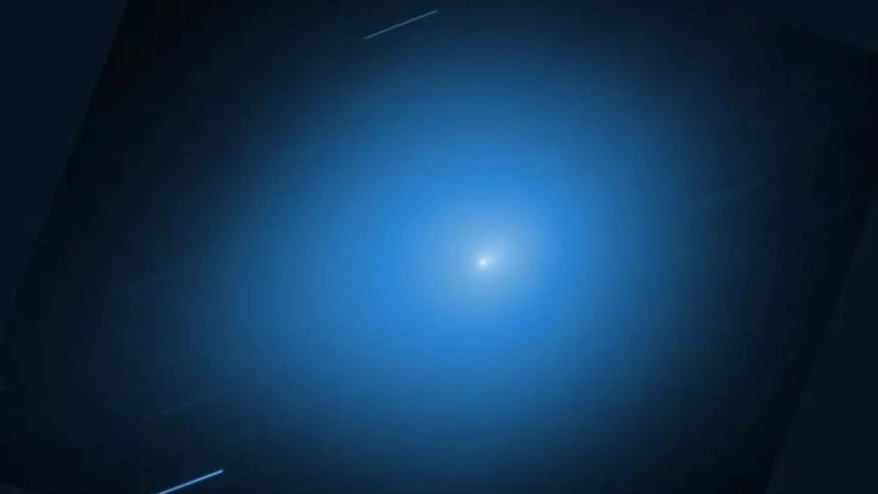
Everything we currently know about 3I/ATLAS as NASA releases new images after 'heartbeat' detected

Recent observations of the interstellar object 3I/ATLAS have indicated that it appears to be pulsing with a 'heartbeat', though exactly what's going on with it is a matter of some scientific debate.
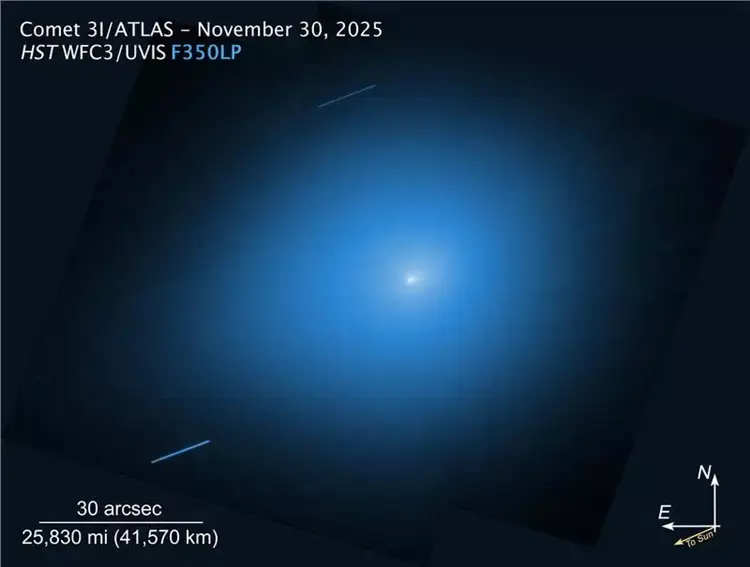
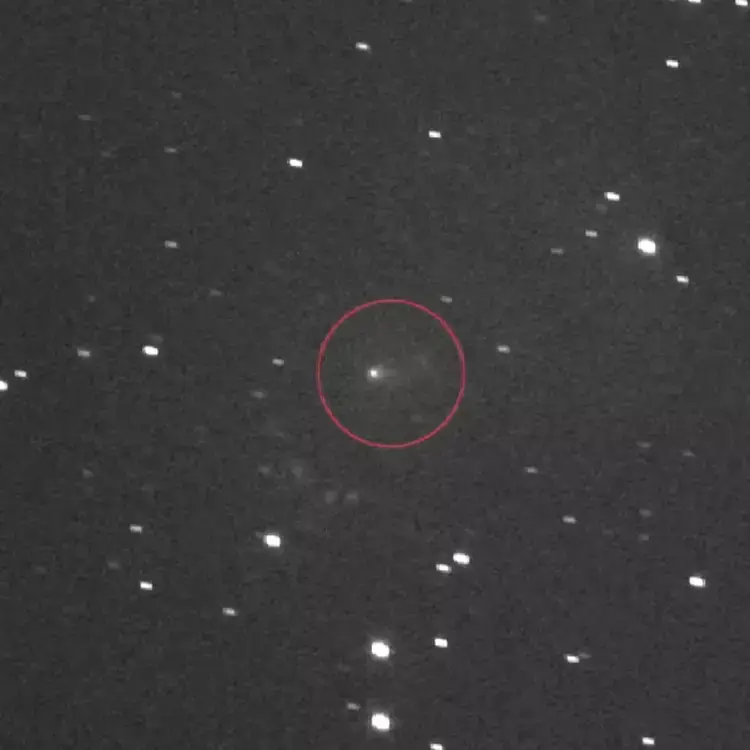
NASA have released more images of 3I/ATLAS as it travels through our solar system, and is soon to come within the closest point of reaching Earth.
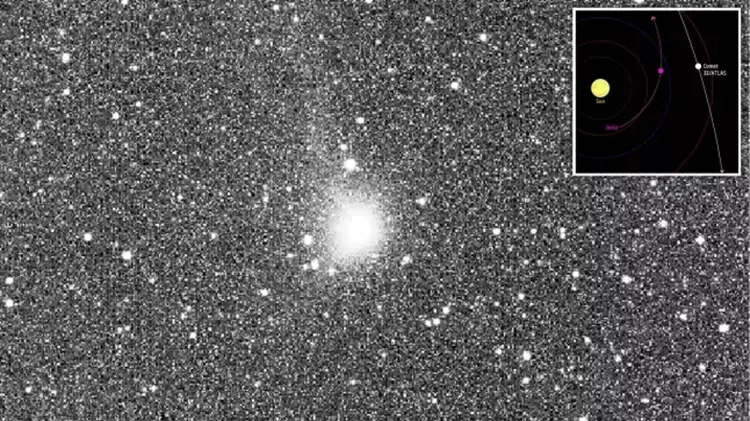
Some of those observing the interstellar object have pointed out details about 3I/ATLAS which they think are interesting, with the European Space Agency saying: "Not only do we clearly see the glowing halo of gas surrounding the comet known as its coma, but we also see a hint of two tails.
"The comet’s ‘plasma tail'– made up of electrically charged gas, stretches out towards the top of the frame."
Advert
However, the Harvard scientist Avi Loeb has claimed that the comet has jets pulsing out of it at intervals of 16.16 hours, which he suggests could be signs of an alien propulsion system trying to steer the object.
Dr Matthew Genge of Imperial College London said there was 'a periodic brightening of the comet' but it was 'nothing particularly unusual' with it possibly being a sign of ice on the surface of 3I/ATLAS.
When was 3I/ATLAS discovered?
The interstellar object was spotted earlier this year by the Asteroid Terrestrial-impact Last Alert System (ATLAS, hence the name) in Rio Hurtado, Chile.
That's a nifty bit of technology which helps spot potential incoming asteroids and serves as part of our early warning system.
Given that it's the third interstellar object we've spotted, and it was seen by ATLAS, that's where the name 3I/ATLAS comes from.
Detected on 1 July when it was around 420 million miles from Earth, experts were eager to learn more about it.
What's unusual about it?
Even if you don't think it's some kind of alien craft, there are some things about 3I/ATLAS which have been noted as rather strange.
The comet's composition has been flagged as peculiar, and scientists have noted it also has a strange colour, which may be the result of being hit by so many cosmic rays.
The strangeness about the comet has led some scientists to theorise that it could be up to 11 billion years old.
Since we only started being able to detect interstellar objects within the last few years and have seen some things we haven't got a simple answer for, many of the unusual features may stem from it just coming from somewhere else we don't have a solid reference for.
It's in these unusual features that many of the claims of alien activity lie, but just because we don't have a clear answer doesn't mean it's aliens.
Where did this interstellar object come from?
It's an interstellar object, which means it had a point of origin beyond our solar system, so it comes from elsewhere in our galaxy, the Milky Way.
Honestly, when the aliens do finally get here and ask us what we've been calling things, they're going to have a bit of a laugh.
The BBC reports that scientists from the Royal Astronomical Society have said 3I/ATLAS appears to have come from either our galaxy's thin disk of more recently formed stars or the thick disk containing some of the oldest stars in the Milky Way.
To be less specific about it, this interstellar object came from a very long way away.
How big is 3I/ATLAS?
Unfortunately, it's a little bit difficult to tell because it's so far away that even our best telescopes and technology can't get a really zoomed-in view of the thing.
The Hubble Space Telescope images of 3I/ATLAS taken in August left astronomers estimating that the diameter of the nucleus of the interstellar object was somewhere between 440 metres and 5,600 metres.
So whichever way you slice it, this is a chuffing big rock.
Is there a danger of this interstellar object hitting Earth?
Nope, not a chance.
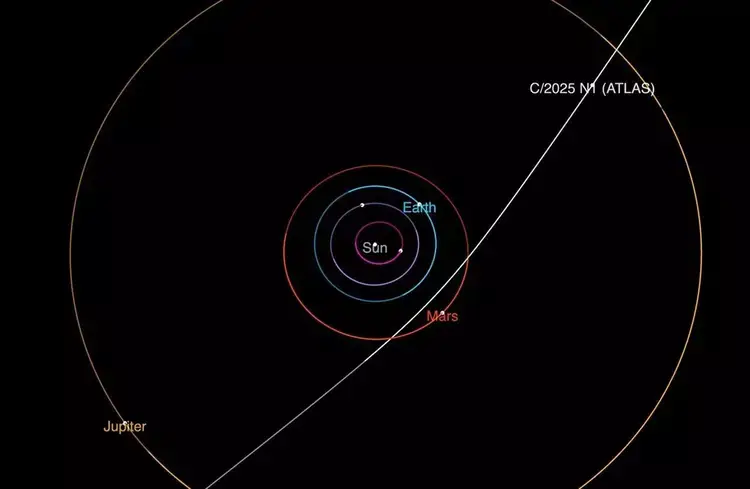
The closest 3I/ATLAS will get to Earth is on 19 December, which is when it will come within about 170 million miles of our planet.
For context, you'd have to travel all the way around the Earth over 6,800 times to cover that distance, so even if in the grand scale of the universe this thing is coming quite close to us, it's actually going to be a very long way away.
The closest planet in our solar system that the interstellar object came to hitting was Mars when it got within 19 million miles of the red planet in early October.
Barring a sudden and dramatic change in direction, there's zero chance of it hitting Earth, and we'd know about that if it happened.

How fast is it moving?
According to NASA, when we first spotted 3I/ATLA,S it was travelling at around 137,000 miles per hour, which is a fairly decent speed for something to be going.
However, the comet ended up accelerating to a speed of about 153,000mph as it got closer to the sun after it was being pulled by gravity.
NASA expects that by the time it leaves our solar system it'll be back to the speed it was when it entered our part of the galaxy.
It's travelling much quicker than the speed of sound, though much slower than the speed of light.

What have scientists said about it?
One scientist in particular has kept raising the possibility that the interstellar object has the potential to be a 'hostile alien threat'.
Professor Avi Loeb of Harvard University has repeatedly claimed that he sees evidence 3I/ATLAS is not a natural object and could have been artificially constructed.
He told LADbible: "There are many anomalies of this object, so you can't say conclusively that it's one thing or another. What we should be is curious, you know, wonder about what it is, and just collect more data."
It puts him on a different page to NASA, who have made it clear they consider the interstellar object to be a comet and exhibit the major signs of being such, while Loeb claims it has 'qualities that we've never seen for comets'.
Much of the rest of the scientific community accepts the explanation that it is most likely a comet as well, and some have grown tired of the discussion around 3I/ATLAS and the possibility of it being some kind of alien craft.
Professor Brian Cox wondered why the interstellar object wasn't already impressive enough as a comet and suggested people enjoy it for what it is.
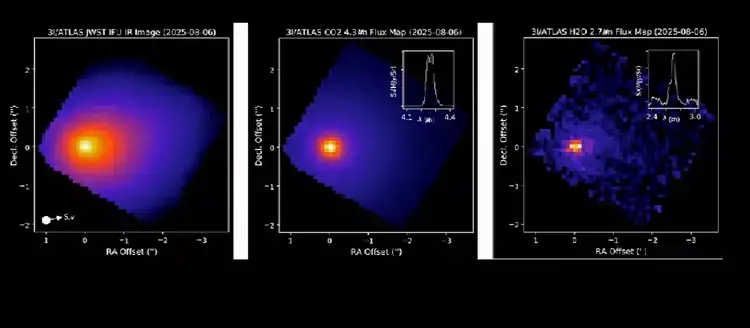
He wrote: “Comet 3I/ATLAS is a comet, made of carbon dioxide and water ices and bits of other stuff. It is entirely natural in origin, its orbit is as expected, and it will whizz around the sun and then disappear off into the galaxy again.
"If it ever encounters another inhabited solar system in the far future I hope the living things there are more sensible than us and enjoy it for what it is - a visitor from elsewhere in the galaxy - a pristine lump of rock and ices which formed around a distant, maybe long-dead star billions of years ago and many light years away, just passing through.
"Isn’t that wonderful enough?”
 Joe Harker