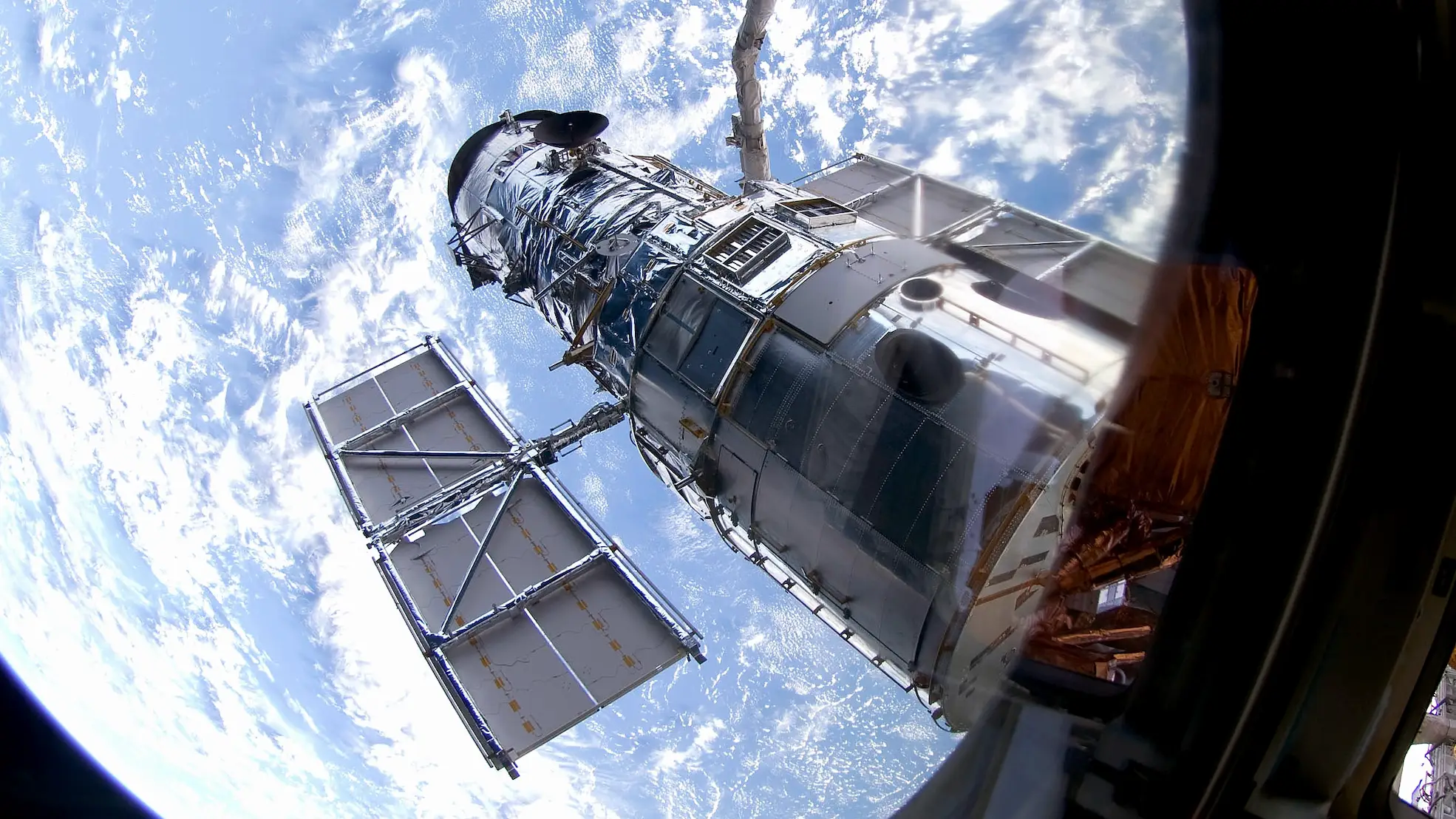
Hubble Space Telescope could crash down to earth soon and have devastating impact on humanity

For the last three decades, the Hubble Space Telescope (HST) has been one of the most reliable tools we have for peering life beyond our planet.
Launched in 1990, the device has already taught us so much, from confirming the existence of supermassive black holes at the centre of galaxies, to discovering Pluto's moons, Nix and Hydra.
In the last 35 years, Hubble has made more than 1.3 million observations while travelling around low Earth orbit at around 17,500 mph.
While the telescope continues to provide NASA with useful scientific data, Hubble's capabilities aren't quite what they once were, after some of its hardware, like the gyroscopes that help it to aim, have worn out. But there's life in the old dog yet.
Advert
Having said that, there is a very real issue facing the telescope, which could soon come hurtling straight back to Earth if scientists don't act soon. Hubble's biggest hurdle right now is gravity, as atmospheric drag continues to pull the device lower towards our planet.
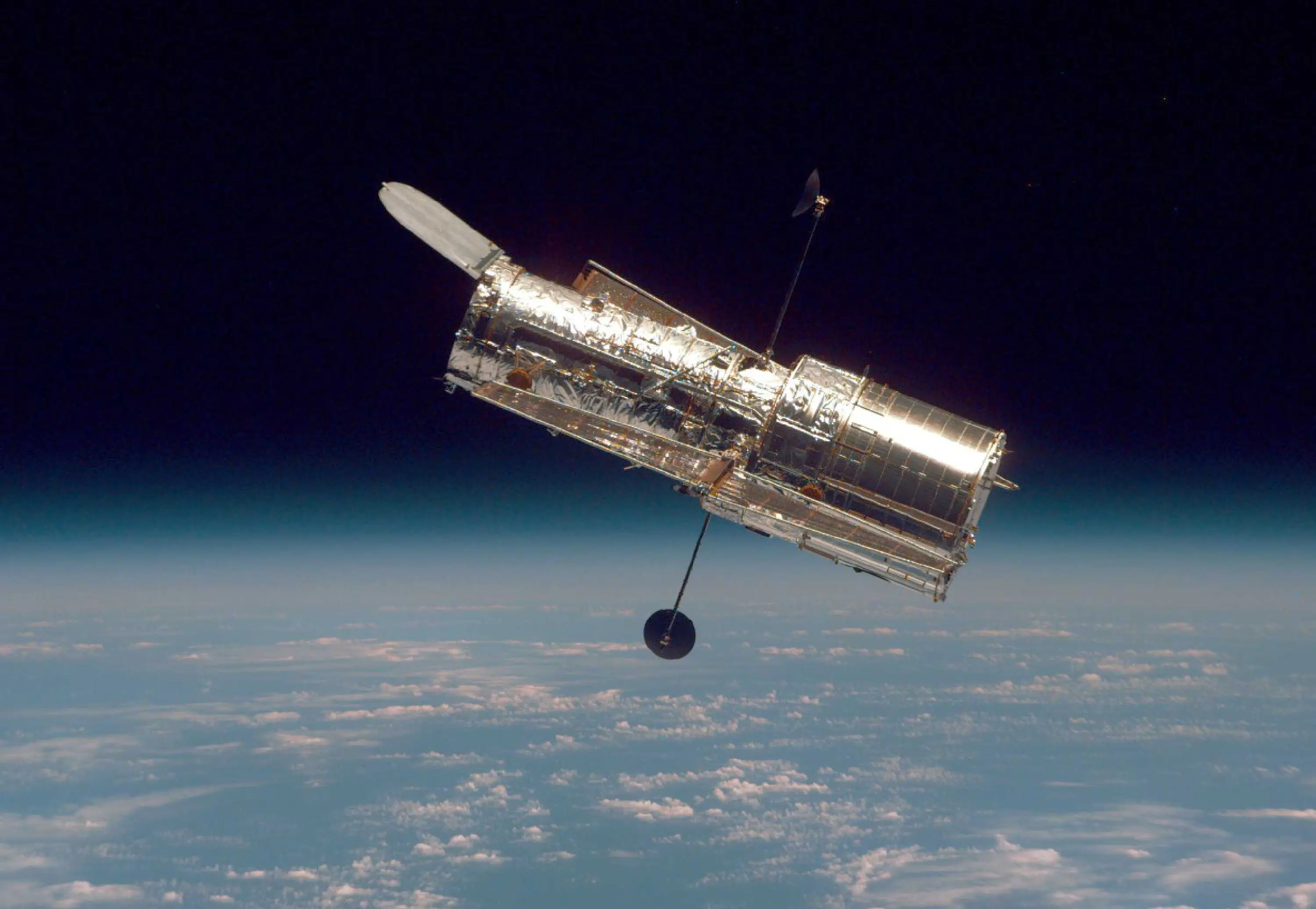
Although NASA scientists have already stepped in on a number of occasions to boost the telescope back to its original spot in low Earth orbit, they previously used the astronauts visiting Space Shuttle, which was retired in 2009, to boost Hubble's orbit.
"Once the astronauts completed all servicing tasks via a three- to five-day series of spacewalks, the STOCC controllers and Johnson Mission Control prepared the telescope for release," NASA previously explained. "Often this also involved using the shuttle’s thrusters to carry Hubble into a slightly higher orbit, a step that prolonged Hubble's life by keeping it from naturally deorbiting due to atmospheric drag."
The original plan was to use the Space Shuttle to retrieve Hubble when it reached the end of its life, but in a twist no one saw coming, the telescope ended up out living the Space Shuttle programme.
Back in 2022, SpaceX looked into plans to launch re-nudge mission to position the telescope into a safer space but the idea never came into fruition.
Now, new data from the American Astronomical Society suggests Hubble could come plummeting back to Earth as early as 2033, and there's even a one in 10 chance it could burn up by 2029.
"Results of this study conclude that for the nominal predicted solar activity, and average projected surface area, HST is predicted to re-enter Earth’s sensible atmosphere in 2033, with a debris footprint that ranges approximately 350 kilometers (km) to 800 km [217 to 497 miles] along the ground track," the orbit decay study explains.
"While the exact location of reentry and footprint were not estimated, the probability of casualty ranges from and average overall risk of 1:330 over the entire inclination region HST crosses to 1:31,000 over the most remotely inhabited region of the South Pacific Ocean from the two simulations conducted."
 Emma Rosemurgey