ladbible homepage
ladbible homepage
  • Home
  • News
    • UK
    • US
    • World
    • Ireland
    • Australia
    • Science
    • Crime
    • Weather
  • Entertainment
    • Celebrity
    • TV
    • Film
    • Music
    • Gaming
    • Netflix
    • Disney
  • Sport
  • Technology
  • Travel
  • Lifestyle
  • Money
  • Originals
    • FFS PRODUCTIONS
    • Say Maaate to a Mate
    • Daily Ladness
    • UOKM8?
    • FreeToBe
    • Citizen Reef
  • Advertise
  • Terms
  • Privacy & Cookies
  • License Our Content
  • About Us & Contact
  • Jobs
  • Latest
  • Archive
  • Topics A-Z
  • Authors
Facebook
Instagram
X
Threads
Snapchat
TikTok
YouTube
Submit Your Content Here
  • SPORTbible
  • Tyla
  • GAMINGbible
  • LADbible Group
  • UNILAD
  • FOODbible
  • UNILAD Tech
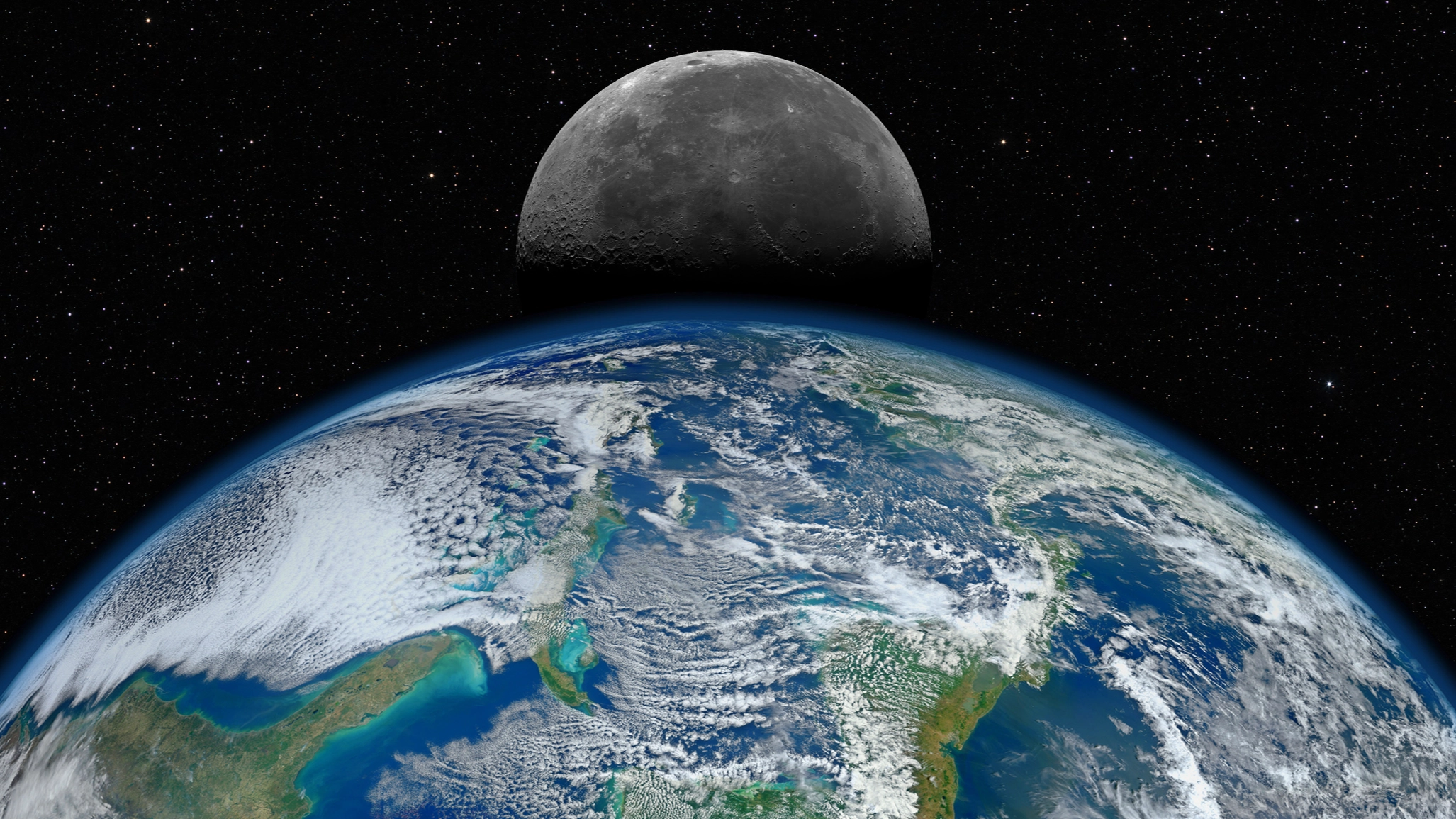
The Moon is moving away from the Earth and is causing shocking changes to time
Home>News>Science
Updated 11:00 5 Apr 2025 GMT+1Published 10:59 5 Apr 2025 GMT+1

The Moon is moving away from the Earth and is causing shocking changes to time

The Moon is slowly spinning away from Earth

Anish Vij

Anish Vij

google discoverFollow us on Google Discover

The Moon is, very slowly, moving away from the Earth and one day, it's going to impact time as we know it.

The reason why it's been gradually pulling away from our planet is all because of gravity and something called tidal forces.

When the Moon’s gravity pulls on Earth, this causes the oceans to bulge out, creating tides.

However, when the Earth is spinning, the tidal bulge isn’t directly under the Moon. Instead, it’s slightly ahead of it.

Advert

This basically creates a sort-of 'gravitational tug-of-war', and because the tidal bulge is ahead of the Moon, it pulls the Moon forward in its orbit.

And the energy has caused the Moon to slowly move further away, at a rate of about 3.82 centimetres (1.5 inches) a year.

As our planet drifts away from the Moon, Earth’s days are getting longer by about 1.7 milliseconds every 100 years.

Scientists are able to calculate this after astronauts from Apollo missions left mirrors on the moon.

By bouncing lasers off the mirrors, the distance to the Moon can be measured pretty accurately.

"While 3.78cm may not seem like much, this small difference over a long enough period of time could affect life on Earth, making the planet slow down," space scientist Dr Maggie Aderin-Pocock told the BBC.
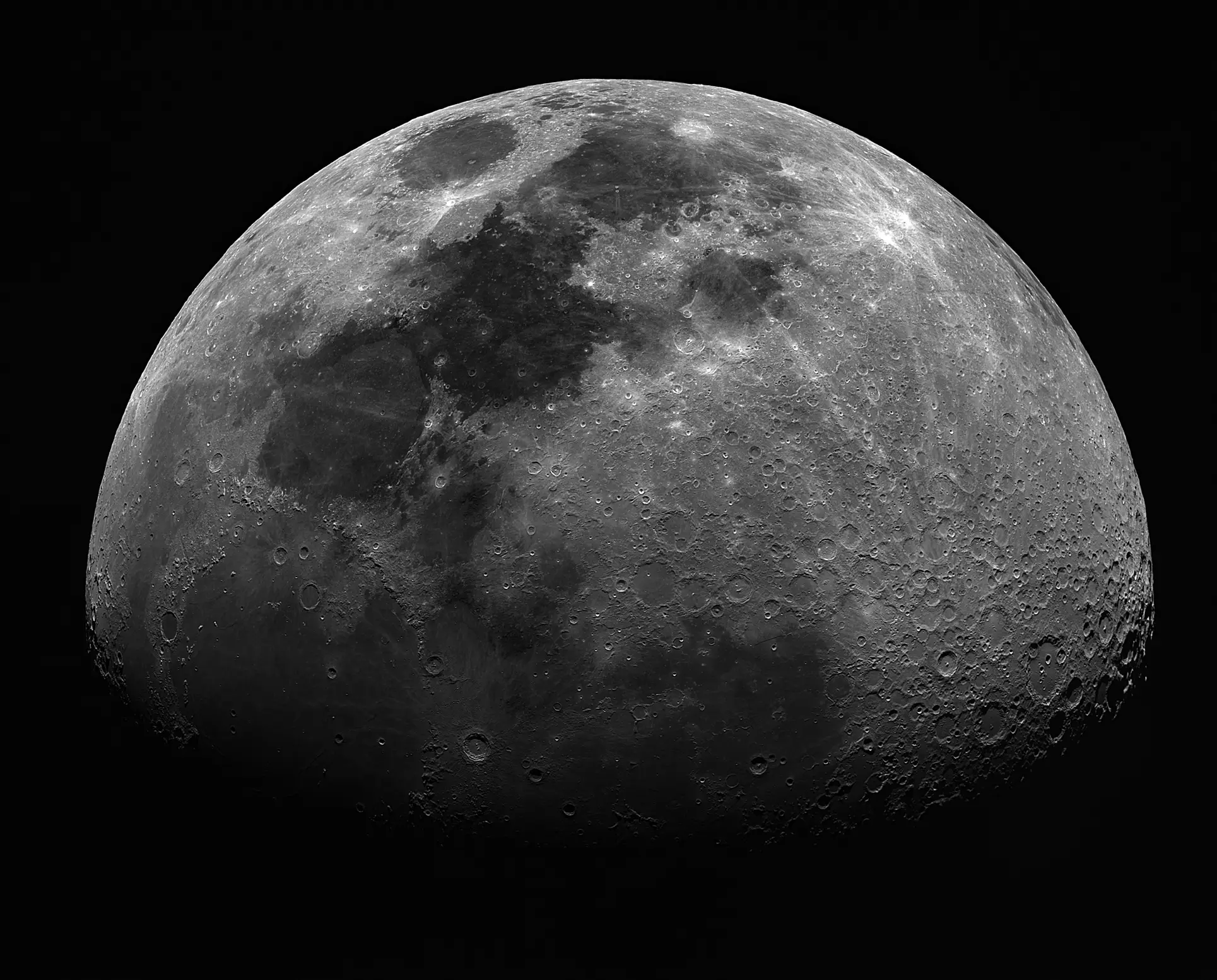
The Moon is moving away from Earth (Getty Stock Images)

"On early Earth, when the Moon was newly formed, days were five hours long, but with the Moon's braking effect operating on the Earth for the last 4.5bn years, days have slowed down to the 24 hours that we are familiar with now, and they will continue to slow down in the future."

On how this was calculated, the scientist explained: "By looking at the daily growth bands of corals we can calculate the numbers of days that occurred per year in past periods, and from this we can see that days are getting longer, at a rate of 19 hours every 4.5bn years.

"The length of a day, or in other words the rotation speed of the planet, plays a big part in its stability."
The Moon is moving away at a rate of about 3.82 centimetres (1.5 inches) a year (Getty Stock Images)

Dr Aderin-Pocock compared it 'a plate spinning on a stick,' and that the 'key is to have the plate spinning fast, as if it slows down it crashes to the floor'.

She warned: "In a similar way, as the Earth's rotation slows down, our whole planet may start to slowly wobble and this will have a devastating effect on our seasons."

Although 'the human race has little to fear,' the scientist notes that 'most animals are not so adaptable and if these changes happened rapidly due to an unstable planetary wobble, then most animals would not be able to evolve quickly enough to hibernate or migrate out of harm's way'.

If it makes you feel any better, you and everyone you've ever known will be long dead by then.

Featured Image Credit: Getty Stock Images

Topics: Space, Science

Anish Vij
Anish Vij

Anish is a Journalist at LADbible Group and is a GG2 Young Journalist of the Year 2025. He has a Master's degree in Multimedia Journalism and a Bachelor's degree in International Business Management. Apart from that, his life revolves around the ‘Four F’s’ - family, friends, football and food. Email: [email protected]

X

@Anish_Vij

Recommended reads

Gina Carano lost million-dollar Star Wars deal over one social media postPatrick T. Fallon / AFP via Getty ImagesNew study finds weight loss jabs could halve the number of sick days people take off workGetty Stock PhotoHayden Panettiere says she was 'groomed' as she opens up on dark side of growing up in HollywoodJon Kopaloff/Getty Images'Super El Nino' wiped out nearly all life in event worse than dinosaur apocalypseX/@forallcurious

Advert

  • 'Potentially hostile alien threat' is moving through space thanks to 'jets' as it nears Earth
  • People all thinking the same thing after 'awesome' picture of ISS from Earth is shared
  • NASA reveals the Earth is getting darker and it could have a major impact on humanity
  • NASA astronaut's stunning time-lapse of Earth lightning storm from ISS has to be explained to be believed

Choose your content:

24 mins ago
an hour ago
2 hours ago
4 hours ago
  • Getty Stock Photo
    24 mins ago

    New study finds weight loss jabs could halve the number of sick days people take off work

    A new study says it could free up millions of GP appointments too

    News
  • X/@forallcurious
    an hour ago

    'Super El Nino' wiped out nearly all life in event worse than dinosaur apocalypse

    An 'El Nino' is a devastating weather phenomenon

    News
  • Mohamad Salaheldin Abdelg Alsayed/Anadolu via Getty Images
    2 hours ago

    Huge update on two orcas 'left for dead' in abandoned marine park

    The mother and son orcas might be able to be saved

    News
  • Getty Stock
    4 hours ago

    Common supplement could prolong your life by slowing down biological clock

    A new study examined the impact of the supplements over a two year period

    News