Simulation shows what would happen if asteroid hit ocean as scientists solve 20 year mystery

If the world wasn't scary enough already, we're also regularly warned that a gigantic asteroid might come crashing into our home planet.
While we've fortunately managed to narrowly avoid the recent rocks from space doing catastrophic damage, there's no doubt that in the days before NASA and high-tech telescopes that we would have been far more vulnerable to crash-landings from above the Earth's atmosphere.
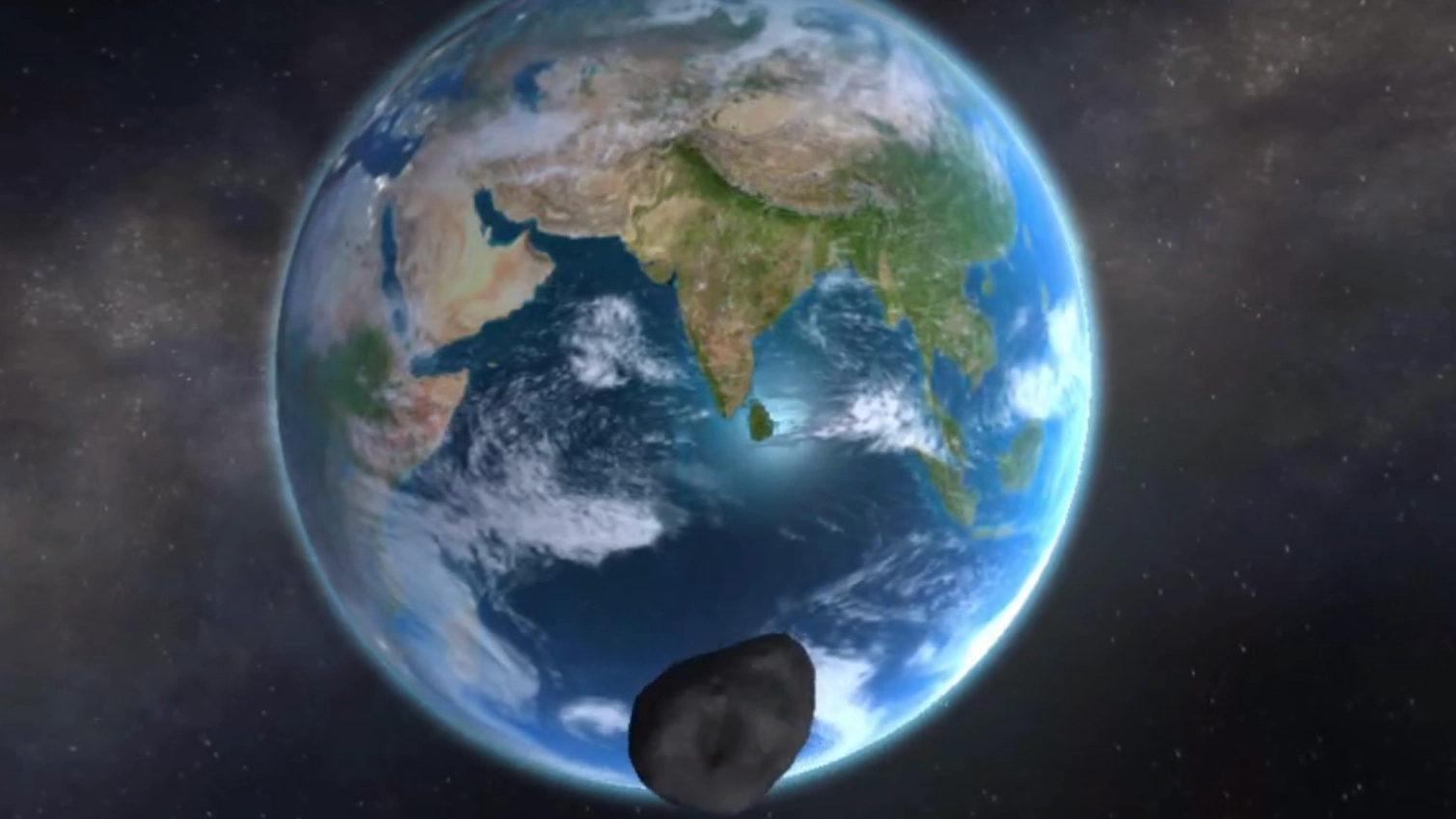
If an asteroid were to crash into the sea, it would likely cause significant destruction, particularly if it were to trigger a tsunami, with a YouTube simulation emphasising exactly that.
And it turns out that's exactly what happened to cause a crater 80 miles off the coast of Yorkshire around 43–46 million years, not that it was known as Yorkshire or God's Own County back then.
Advert
Back in 2002, scientists discovered what has come to be referred to as the Silverpit Crater beneath the southern North Sea, with no real explanation as to what had caused it.
However, researchers at the Heriot-Watt University have now used combined seismic imaging, microscopic analysis of rock fragments, and computer modelling to provide the clearest evidence yet that the crater was caused by an asteroid from space.
Dr. Uisdean Nicholson, a sedimentologist in Heriot-Watt University's School of Energy, Geoscience, Infrastructure and Society, said: "New seismic imaging has given us an unprecedented look at the crater.
"Samples from an oil well in the area also revealed rare 'shocked' quartz and feldspar crystals at the same depth as the crater floor.
"We were exceptionally lucky to find these -- a real 'needle-in-a-haystack' effort. These prove the impact crater hypothesis beyond doubt, because they have a fabric that can only be created by extreme shock pressures."
The evidence suggests that the asteroid was around 160 metres wide and it hit the seabed from the west at incredible speeds, creating a humongous tsunami which was over 100 metres high.
As the above simulation shows, the impact would have produced a violent explosion at the seafloor and sent enormous waves spreading across the region, so it's fortunate that humans wouldn't show up until around 40 million years later.
Professor Gareth Collins, who attended a 2009 debate about the crater, also weighed in with some new opinions after the recent research.
He said: "I always thought that the impact hypothesis was the simplest explanation and most consistent with the observations.
"It is very rewarding to have finally found the silver bullet. We can now get on with the exciting job of using the amazing new data to learn more about how impacts shape planets below the surface, which is really hard to do on other planets."
This is not only a rewarding research project because of the mystery that its managed to solve, but also because of how it might help in the future if we're hit by an asteroid.
Dr. Nicholson said, "Silverpit is a rare and exceptionally preserved hypervelocity impact crater.
"These are rare because the Earth is such a dynamic planet -- plate tectonics and erosion destroy almost all traces of most of these events.
"Around 200 confirmed impact craters exist on land, and only about 33 have been identified beneath the ocean.
"We can use these findings to understand how asteroid impacts shaped our planet throughout history, as well as predict what could happen should we have an asteroid collision in future."
 James Moorhouse