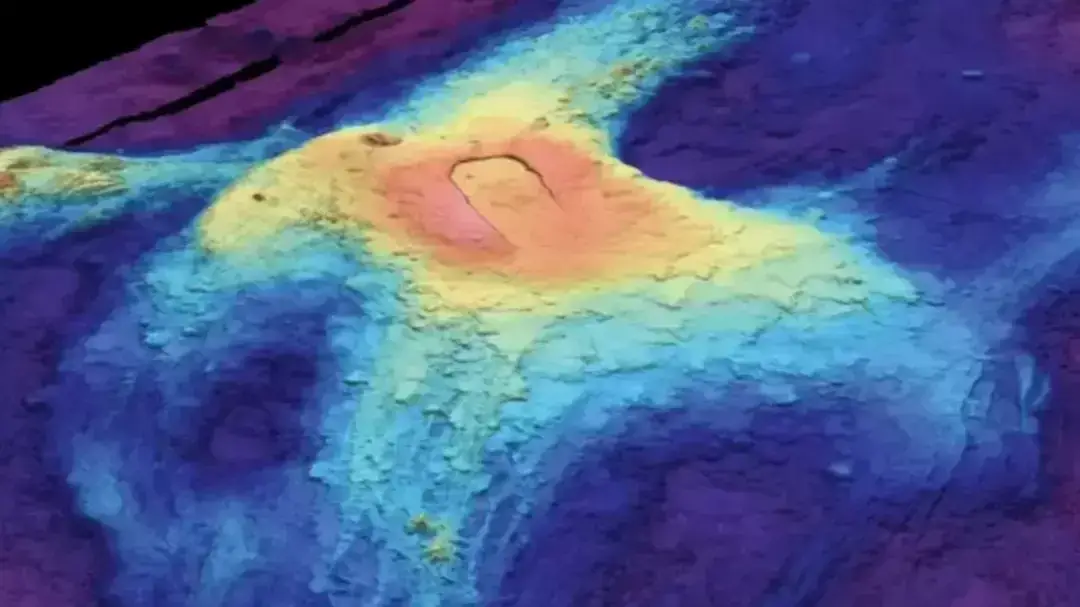
Massive underwater volcano expected to erupt this year as risk to life explained

A huge underwater volcano located around 300 miles from the coast of Oregon in the US is very likely to erupt this year.
Experts previously warned Axial Seamount, one of the most active submarine volcanoes, could erupt as early as late 2025, however this turned out not to be the case.
Now, scientists believe the volcano is likely to erupt by mid to late 2026, which isn't actually as scary as you might think.
Axial Seamount is located on a divergent plate boundary of the Juan de Fuca Ridge and it's already pretty active, having previously erupted in 1998, 2011 and 2015 that we know of, though it's possible there could have been more.
Advert
Now, a research associate at Oregon State University has confirmed Axial has gone through a period of high seismicity and steady ground inflation caused by magma rising below the seafloor, which means an eruption is fairly imminent.
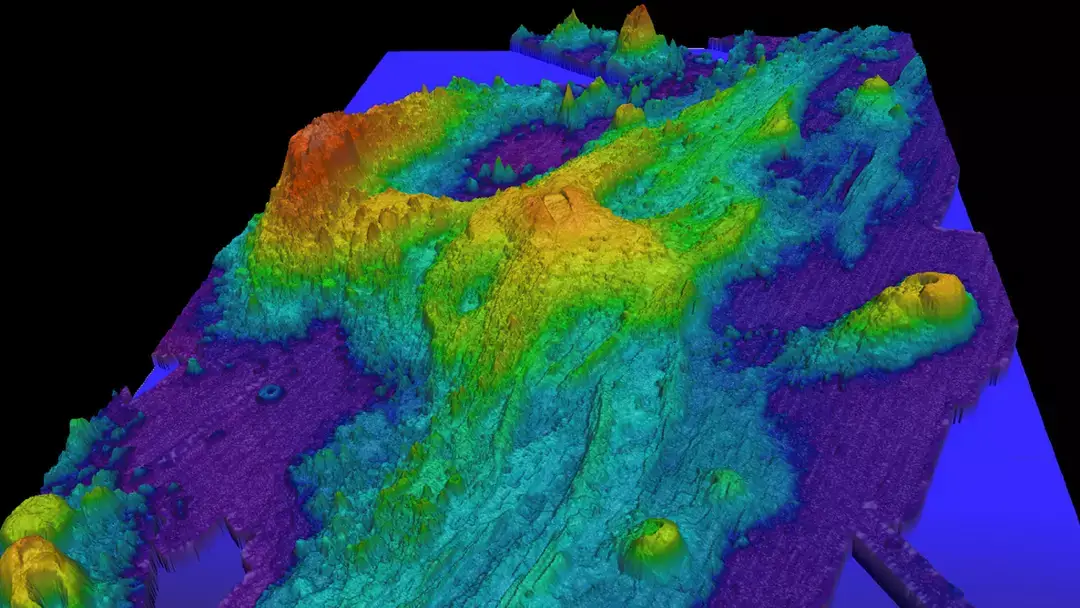
Bill Chadwick, who runs a blog about the volcano, told Live Science we can expect to see this later on this year.
The main concern most people have when they learn about a ginormous volcano erupting, whether it's on land or submerged by water, is whether it will pose any threat to human life.
What actually happens when an underwater volcano erupts
While there are many potential repercussions of an underwater volcanic eruption, the main one is the risk of the sea floor collapsing.
When the volcano first erupts, lava begins flowing from the volcano and onto the sea floor. It cools very quickly thanks to the temperature of the water, forming pillow lavas and sheet flows.
Unfortunately, this is bad news for some underwater organisms, which are likely to be killed by the heat of the lava pillows.
Meanwhile, heat from the volcano boosts activity at hydrothermal vents, which can lead to the release of large amounts of hot, mineral-rich water, creating black smokers.
Each time the volcano erupts, the magma rises in the shallow chamber underneath the seafloor, causing the volcano to inflate and the seafloor to bulge upwards.
When plenty of magma has spilled out onto the seafloor, the chamber is left empty and loses support, causing the caldera to drop.
In 1998, the caldera dropped by around three metres, in 2011 it dropped by 2.4 metres and most recently, in 2015, it dropped by 2.1 metres.
However, if the entire volcano were to drop, it has the possibility of causing a catastrophic flank collapse, in which the volcano's sides collapse inwards.
Risk to human life
If Axial Seamount's sides were to collapse inwards, it could have catastrophic repercussions in the form of a tsunami, though this is very unlikely.
So, to cut a long story short, is the underwater volcano a threat to us? Most likely no. Unless Axial becomes unstable and a flank collapse takes place, it isn't believed to be any potential danger to human life.
Topics: Science
 Emma Rosemurgey