FIFA weather delay rules explained as huge warning issued ahead of England vs Norway tonight

Welp, it’s happening again - there’s talks of another England match being delayed.
Tonight’s (11 July) World Cup quarter-final clash with Norway is currently scheduled for kick-off at 10pm BST.
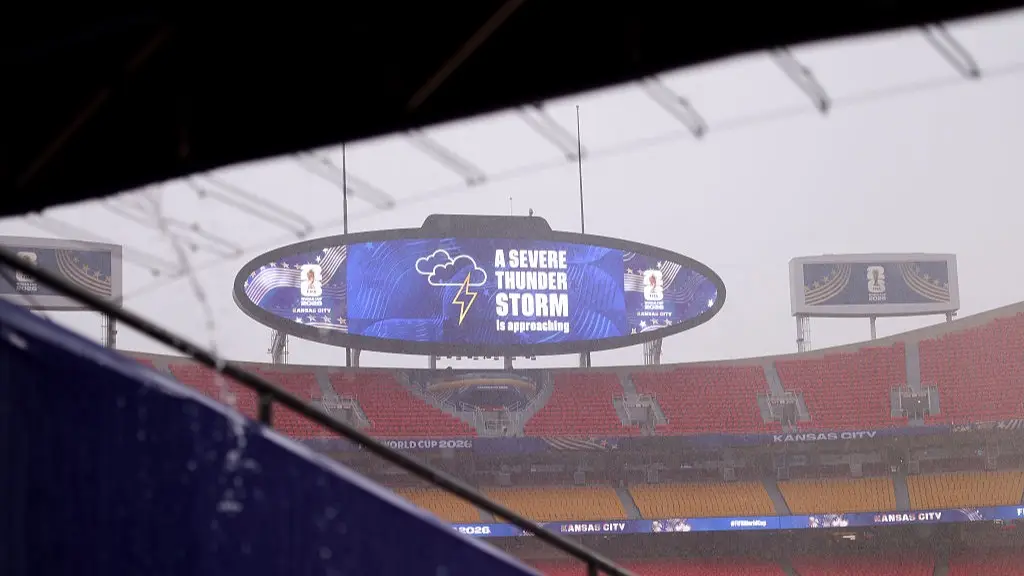
However, it’s been reported that significant delays are feared due to stormy forecasts in Miami, Florida.
We had the same nightmare at the start of the week when FIFA U-turned on the supposed decision to bring the match with Mexico forward and it ended up being delayed by an hour due to the weather.
Advert
These delays come as a result of the football body’s safety protocol for the World Cup which are taken from the rules that are already in place around sporting events over in the US.
So, while England v Norway hopefully won’t end up kicking off at 2am, we could still be waiting around in the pub a little longer – even if the storm has already passed.

The 30-minute weather rule explained
Essentially, if any lightning or electrical activity is detected within an eight-mile radius of an open-roofed stadium then the the event has to be suspended for a minimum of 30 minutes.
This delay is mandatory and absolutely not optional.
If there are no further strikes of lightning during that half an hour period, then the game can resume once the players are ready to go – typically after a 15-minute warm-up.
However, if electrical activity gets detected before that wait time elapses, then the clock will restart once more. So, yeah, you can see where this is going – more strikes mean the 30-minute delay starting again, and again, and again.
Additionally, play will get halted again if lightning gets spotted within that radius at any point – even if the lads have literally only just kicked the ball again.
If lightning is detected before the match starts, then the game will be delayed until the 30-minute buffer period has been completed.
There is no limit for how long a game could be delayed, with it being at the referee and officials' discretion as to whether a game is abandoned completely – imagine the heartbreak.
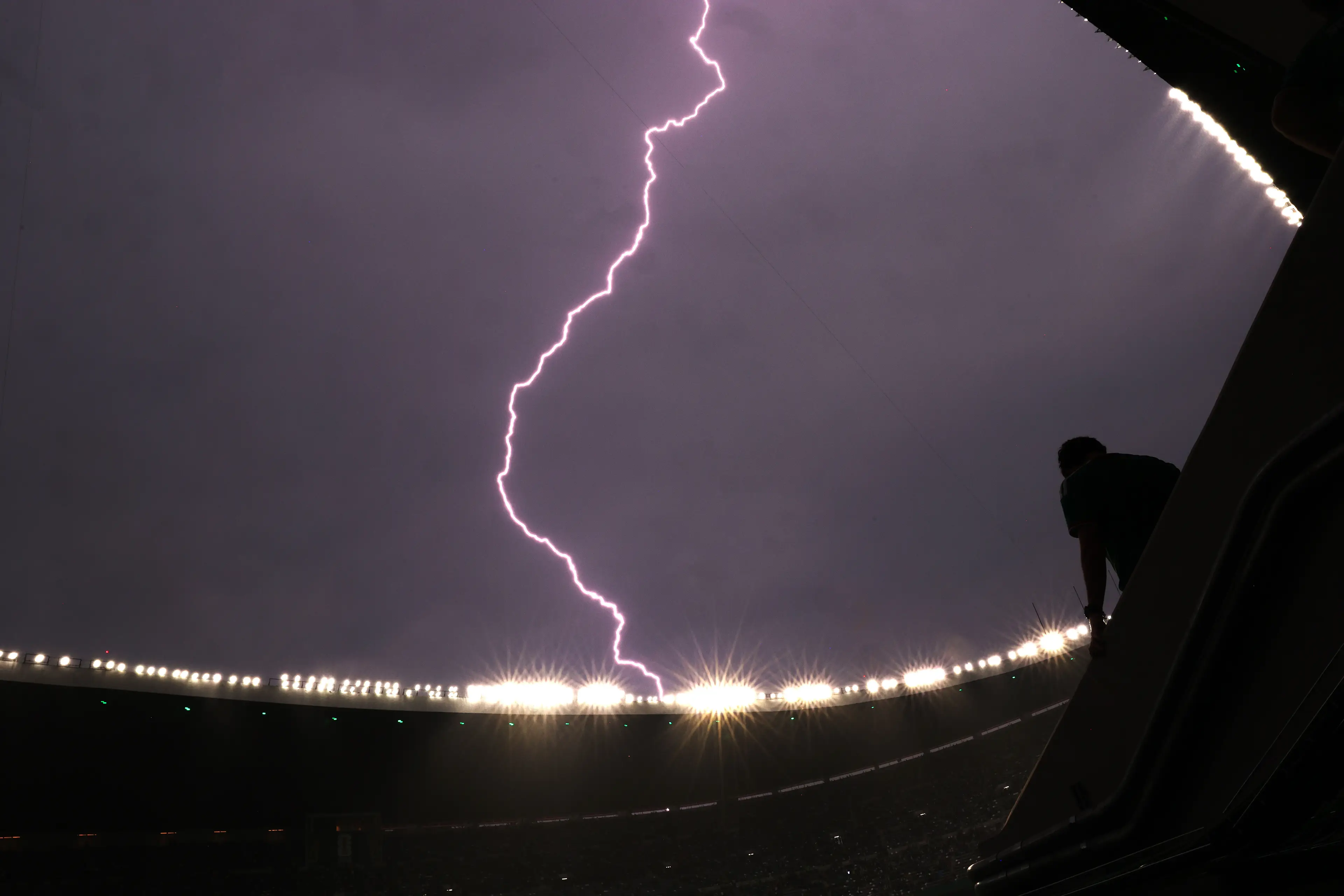
Entry into the stadium could even be delayed during electrical activity and if supporters are already inside, they’ll be told to leave their seats in the open bowl and seek shelter in designated safe zones.
Staff will also leave outside areas and players will have to remain in their changing rooms.
Several World Cup games have so far been delayed due to weather, both before kick-off and during play itself.
A thunderstorm has been forecast for Miami today, predicted to start building about five hours before the scheduled kick-off time.
New rules for the FIFA World Cup 2026
This year, there’s been a whole host of rule changes, many of which are designed to speed up the game and penalise players who drag things out. Some of the new regulations are likely to prove controversial.
10-second substitution
Subbed players now have to get a move on and leave the pitch within ten seconds by the nearest exit point. If they haven’t, their replacement will get held up by one minute until the next stoppage of play, and until then, their side will have to play with 10 men.
5-second throw-ins and goal kicks
If a referee thinks a player is taking too long for a throw-in or goal kick, they’ll start a five-second countdown, by which time the ball needs to be back in play. If it’s not, for throw-ins the opposing team will get their own throw-in, or for a goal kick the other side gets a corner.
Injured players to remain off the pitch for one minute
An injured player treated by medical staff off-field has to stay off the pitch for one minute, leaving their side with just 10 players.
More VAR
VAR can now be used to review an incorrectly awarded corner kick; second yellow cards resulting in a red card; when a player is incorrectly awarded a yellow or red card for another player’s actions; and any attacking fouls that occur before the ball is in play.
Players can’t cover their mouths
Players who cover their mouths in confrontational situations will be handed a red card. It’s believed players might cover their mouths to guard against lip readers while racially abusing other players, which some suspect has happened in the past.
Red cards for players leaving the pitch
Any player who leaves the pitch in protest over a referee’s decision will be handed a red card, and if a team walks off and causes a match to be abandoned, they’ll forfeit the game.
 Jess Battison