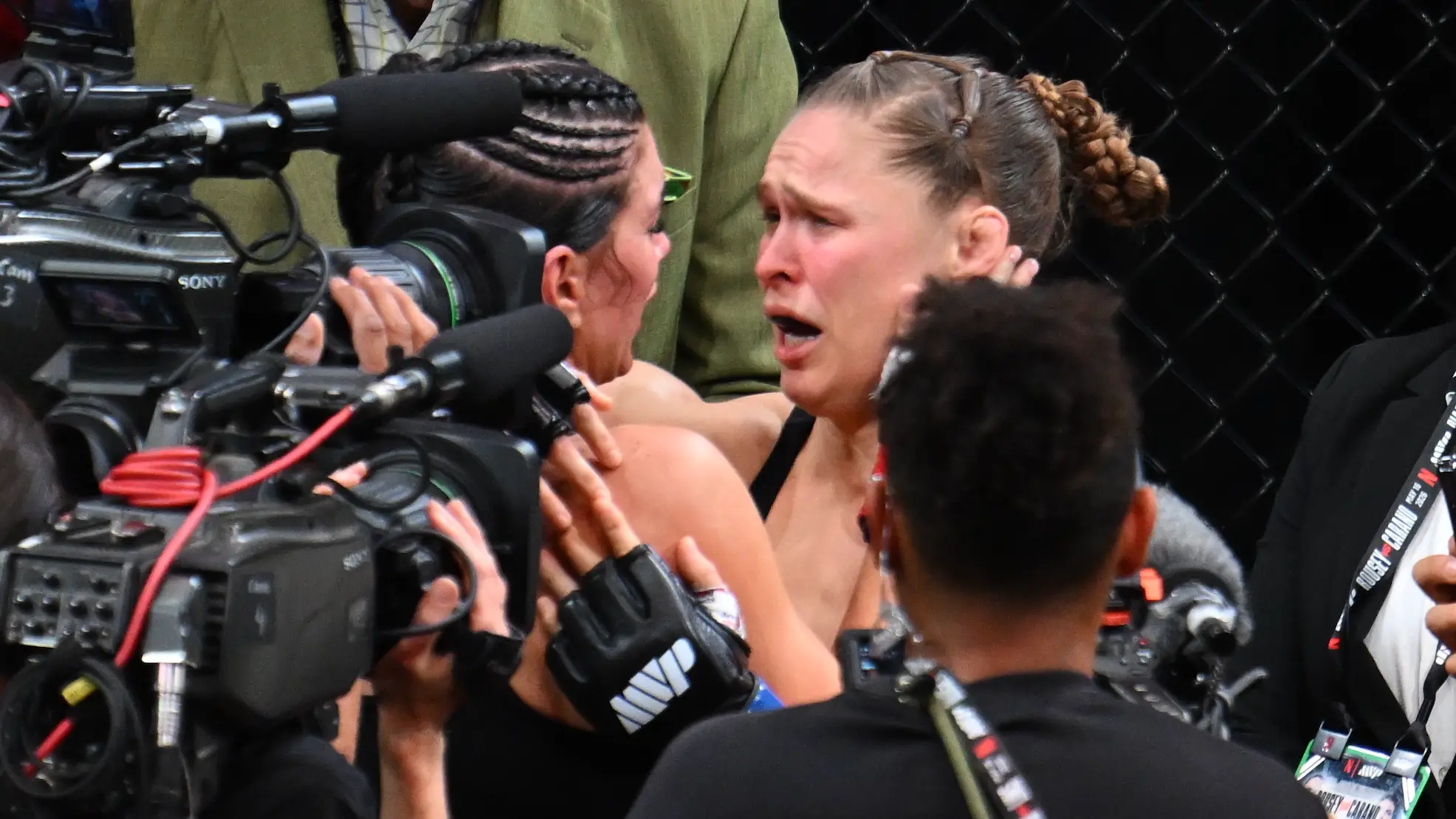
Gina Carano immediately suspended from MMA after 15 second loss to Ronda Rousey

Gina Carano was hit with a suspension from MMA fighting right after losing to Ronda Rousey in just 15 seconds, but with good reason.
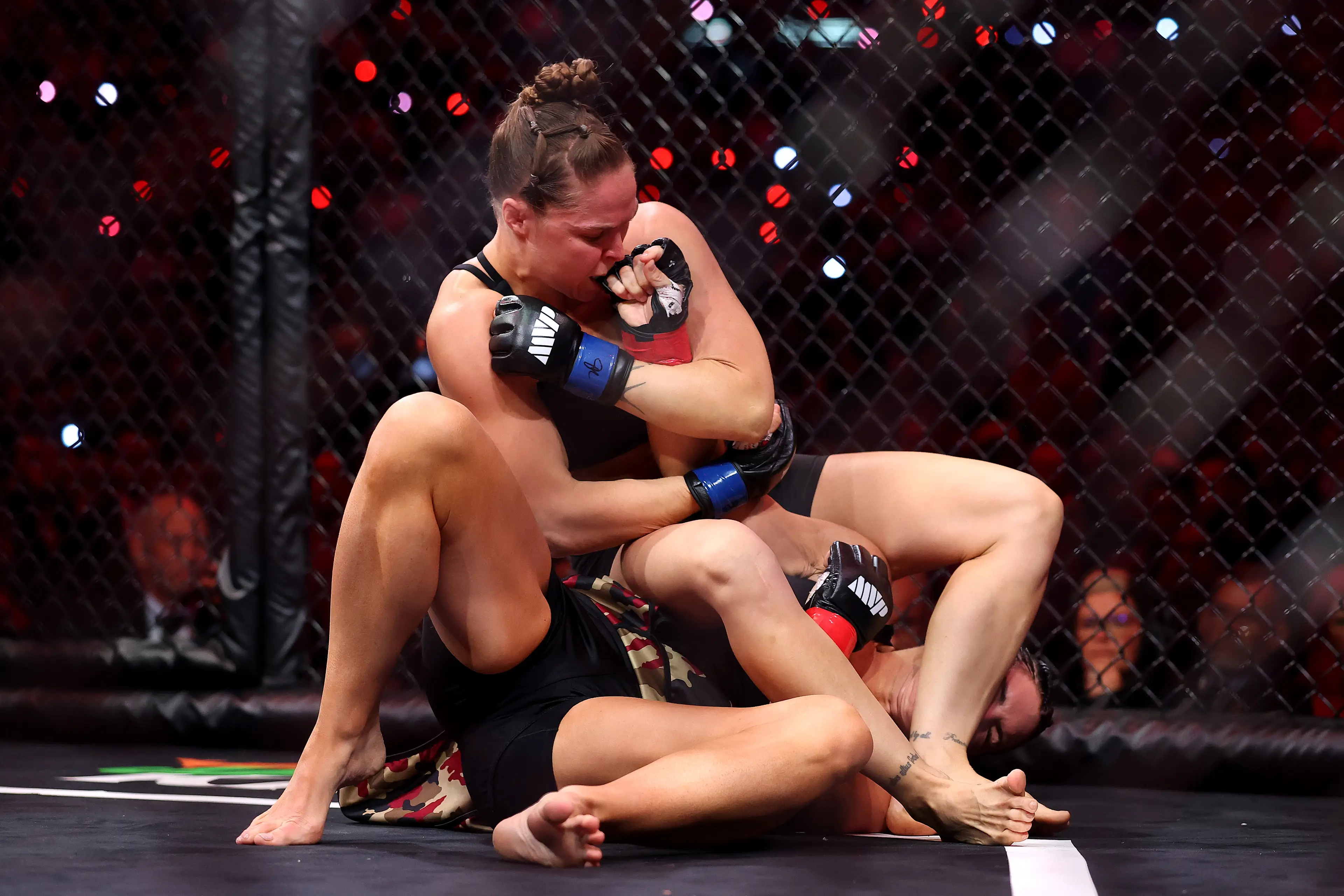
Rousey, 39, romped to victory on Saturday night (16 May), submitting Carano with an armbar within just seconds in their comeback fight after being absent from MMA for 10 years.
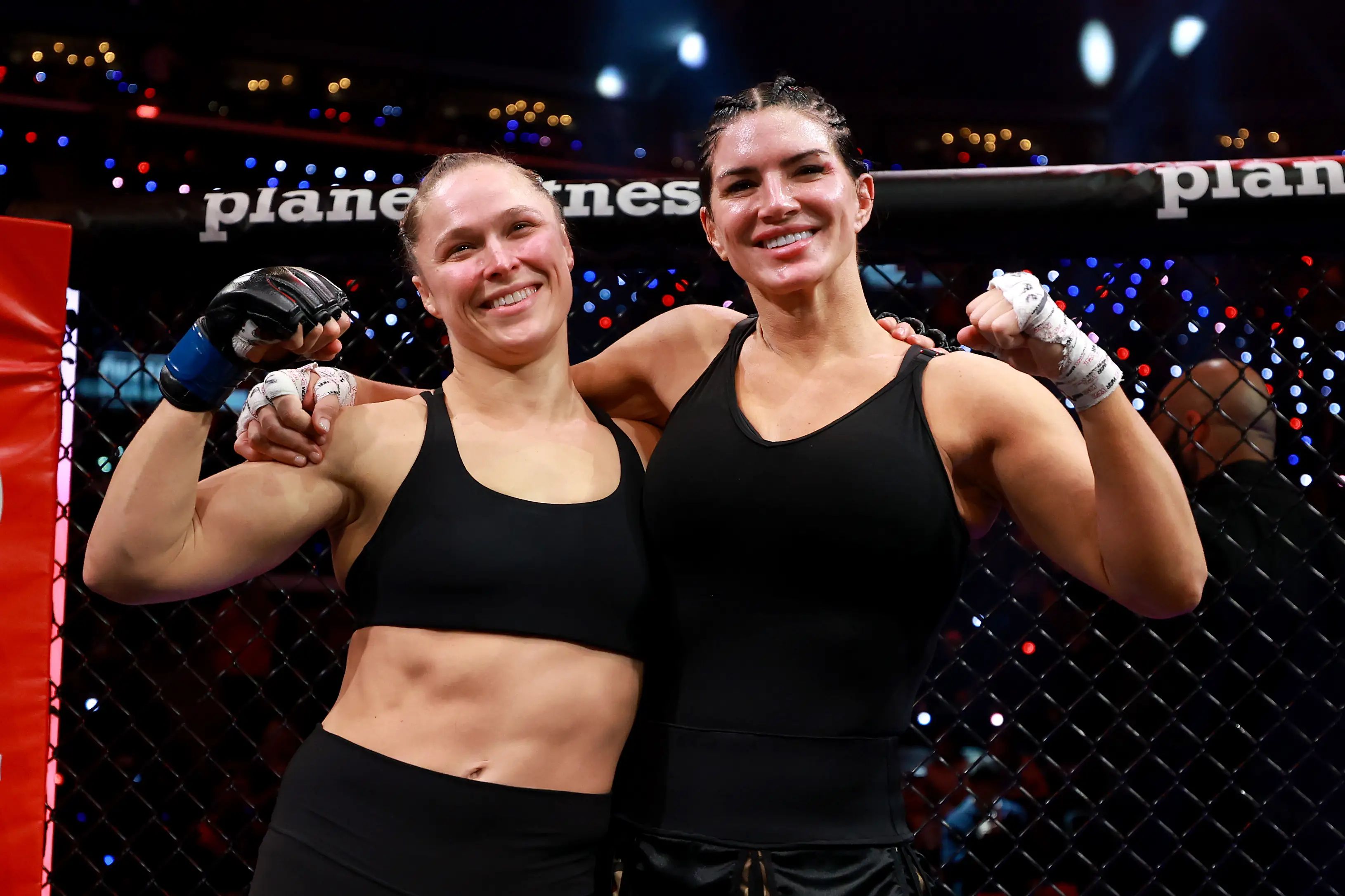
Prior to the bout, Rousey had said that she had wanted to 'rewrite her ending in the sport', and called Carano - who lost an incredible 100lb in preparation - her 'hero'.
"Gina is a person who brought me into MMA, she is the only person who could bring me back into MMA. She's my hero," she said.
Advert
For her part, Carano said she had 'wanted that to last longer', but said it was a 'victory' to return to the sport 17 years after she retired.
But following the highly anticipated event, which was live-streamed on Netflix from LA’s Intuit Dome and earned the stars a pretty penny, Carano has now been suspended.
Why has Gina Carano been suspended from MMA?
Combat sports like MMA and boxing can take a big toll on an athlete's body, which is unsurprising given that you are effectively beating each other up.
This results in bad injuries, including broken ribs and jaws, eye injuries, and of course trauma to the head.
So athletes are routinely barred from fighting for a set period after a match in order to make sure that they can properly recover.
Let's put it this way - you wouldn't go back to work with three broken ribs, so sporting bodies will bar athletes from competing for a mandatory rest period.
It's unclear if Carano would actually want to fight again.
When asked post-fight whether she would go up against another opponent, she said: "I don’t know. I think 17 years was a lot. Being 44 years old is a lot and I don’t know if I can put my family back through that.
"But I’m going to go look at this, I didn’t get anything out, I didn’t get to do anything in this fight, so you just never know with me."
How long does the suspension last?
How long someone is suspended for depends on several factors, including the assessment of a ringside physician who will determine whether someone needs a rest period.
While some suspensions are just for a set period of time, for example one week, others require an athlete to meet certain conditions before being cleared to compete again to demonstrate that are fit enough.
There are different levels to suspension as well, depending on the physical condition of an athlete after a match.
One level, the lower, is a no competition suspension, meaning that the athlete can't go into any competitive matches for this period.
However, they will be allowed to spar with contact during training.
The second higher level is a 'no contact' or 'no sparring' suspension, where someone's injuries are deemed to be serious enough that they require a period of no contact sport at all to allow their body to recover.
These might be paired with a clearance requirement, such as being signed off by a doctor, getting certain medical scans, or even being signed off by a specialist.
Another example of such suspensions was in the fight between Jake Paul and Anthony Joshua, which took place last December.
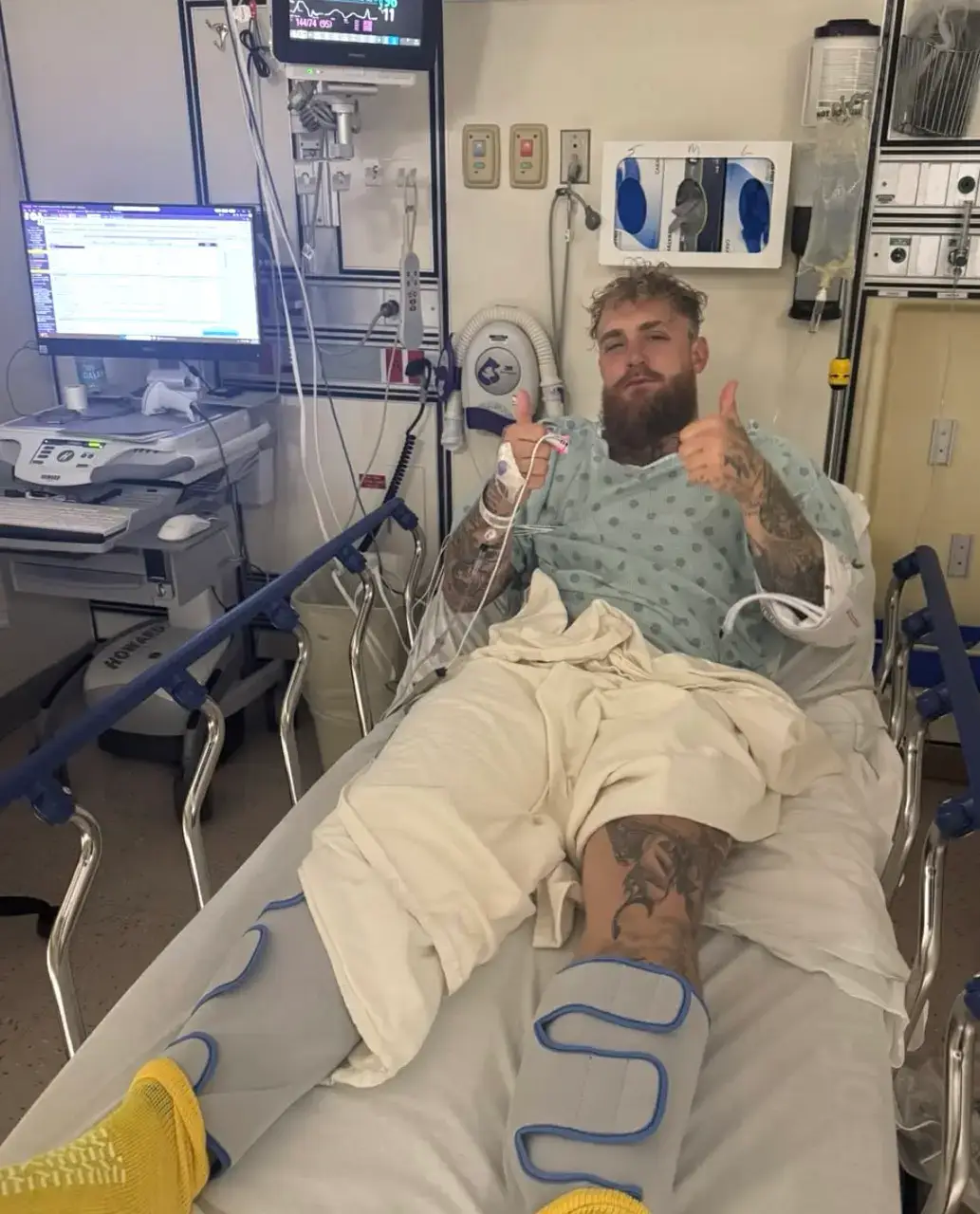
This saw Joshua breaking Paul's jaw during the bout, claiming victory.
Under boxing regulation, the fighters were required to have three days' rest per round, and if someone has a technical knockout then they are suspended for 30 days to allow them to recover, while a full knockout is at least 60 days.
How much did Gina Carano get paid for the fight?
Despite being over in a flash, according to Forbes, the fight purses for both women topped $1 million apiece, with Carano reportedly scooping $1.05 million (£786,200) and Rousey earning $2.2 million (£1.6m).
This figure also doesn’t include any potential earnings from broadcast, ticket sales or bonuses, meaning the final payout for both fighters could be a lot higher.
Not too shabby, eh?
 Kit Roberts