FIFA confirms Leandro Paredes was not shown red card after World Cup final brawl as decision clarified

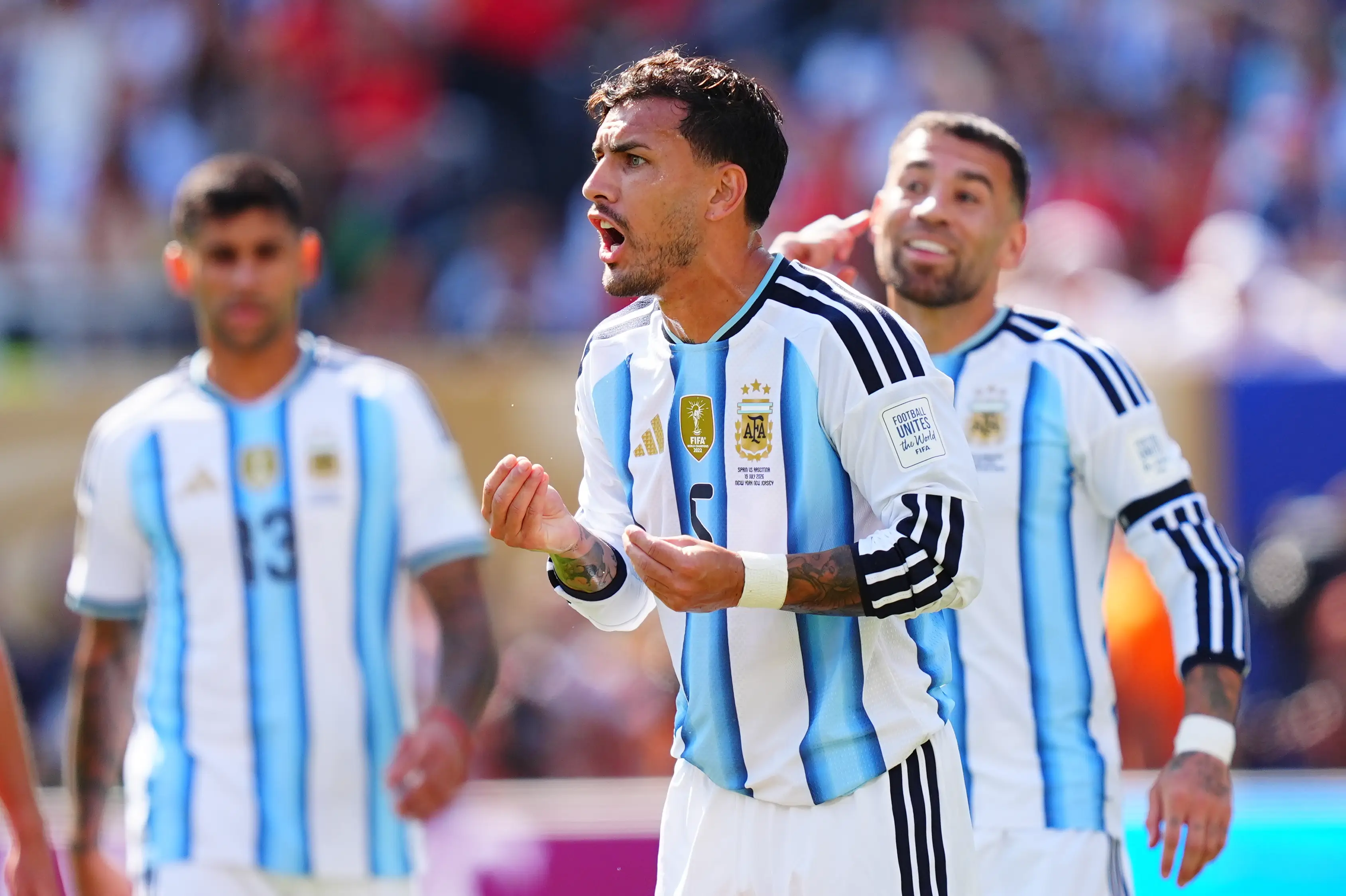
Despite earlier reports, FIFA has confirmed that Leandro Paredes was not given a red card following the ugly scenes on Sunday (19 July).
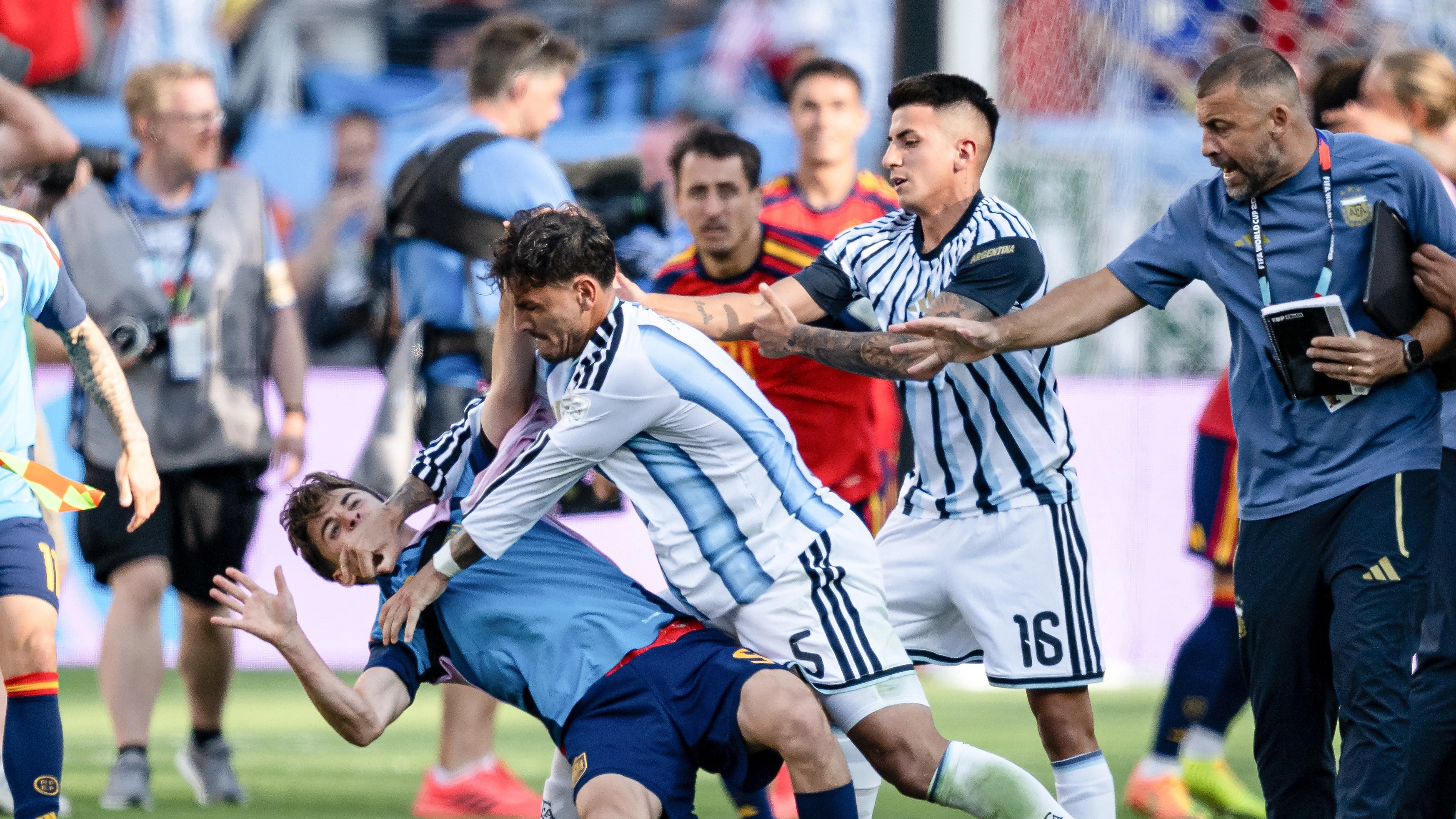
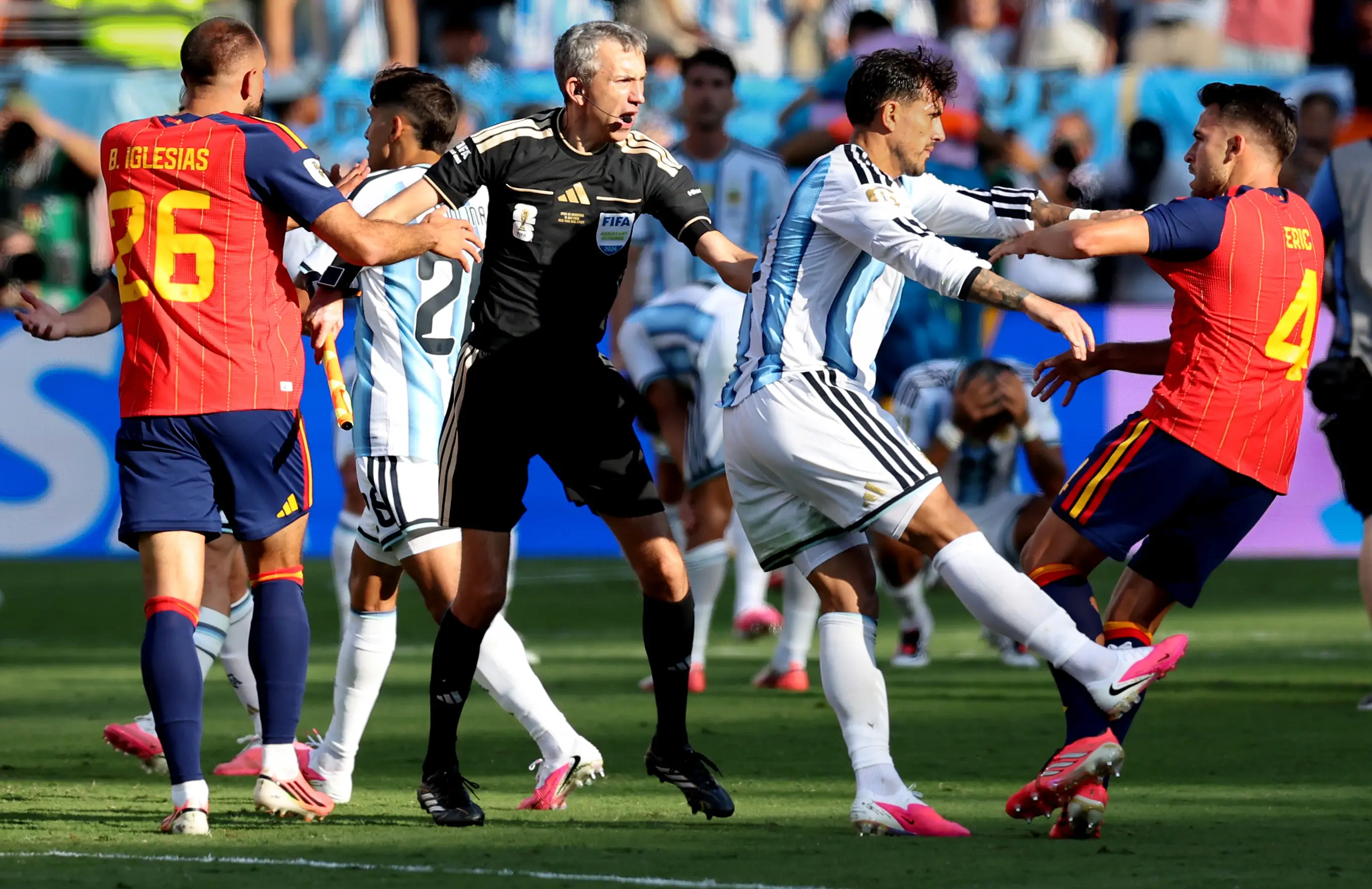
Following the end of the World Cup final, violent behaviour appeared to break out on the pitch.
And the Argentinian player was seemingly involved, with it incorrectly reported on FIFA's commentator information system that he'd been sent off by referee Slavko Vincic for pushing Spain's Eric Garcia by the throat.
The red card was then deleted shortly afterwards and the football body has now confirmed to BBC Sport that no disciplinary action was taken at the time.
Advert
It had been widely believed however that Paredes had received a straight red after the final whistle. Footage appeared to show him as one of the worst aggressors in the on-pitch conflict, as he not only allegedly assaulted Garcia but also reportedly threw Spain' Gavi to the ground.
The BBC's Football issues correspondent, Dale Johnson, took to X this morning to clear up the confusion: " There was no rescinded red card. Because there was no red card.
"It was incorrectly displayed on Fifa's commentator information system and then deleted."
FIFA is however investigating just what went down after the final whistle on Sunday at MetLife Stadium.
It's said that as well as Paredes, Nahuel Molina, Thiago Almada and assistant coach Roberto Ayala all appear to have been involved.
“Following an assessment of the relevant match reports for the FIFA World Cup final between Spain and Argentina, and in line with article 36 of the FIFA disciplinary code (FDC), the FIFA disciplinary committee has appointed a disciplinary and ethics prosecutor to investigate potential breaches of the FDC with regard to the post-match incidents,” a FIFA statement read.
“Further details will be communicated by the FIFA disciplinary committee once the prosecutor’s report has been completed.”
Those involved could likely face suspension could face suspension, while the Argentine Football Association (AFA) may also get a fine.
Where is the next World Cup?
Morocco, Portugal and defending champions Spain will co-host the FIFA World Cup in 2030, marking the football tournament’s 100th anniversary.
It’s set to run from 8 June 2030 to 21 July 2030, making it the longest World Cup in history at 44 days.
FIFA also announced that three separate matches will take place in Argentina, Paraguay and Uruguay, as a tribute to the first-ever World Cup back in 1930.
All six host nations will automatically qualify, which means we'll definitely be seeing Morocco, Portugal, Spain, Argentina, Paraguay and Uruguay in at least the group stages.
In Spain, matches will take place in Barcelona, Bilbao, Las Palmas, Madrid, San Sebastian, Seville, Valencia, Vigo and Zaragoza.
In Portugal, stadiums in Lisbon and Porto have been earmarked, while the games in Morocco will be played in Agadir, Casablanca, Fez, Marrakesh, Rabat and Tangier.
Plus the three special opening centenary games will be played at the Estadio Monumental in Buenos Aires, Argentina; the Estadio Centenario in Montevideo, Uruguay; and the Estadio Osvaldo Dominguez Dibb in Asuncion, Paraguay.
 Jess Battison