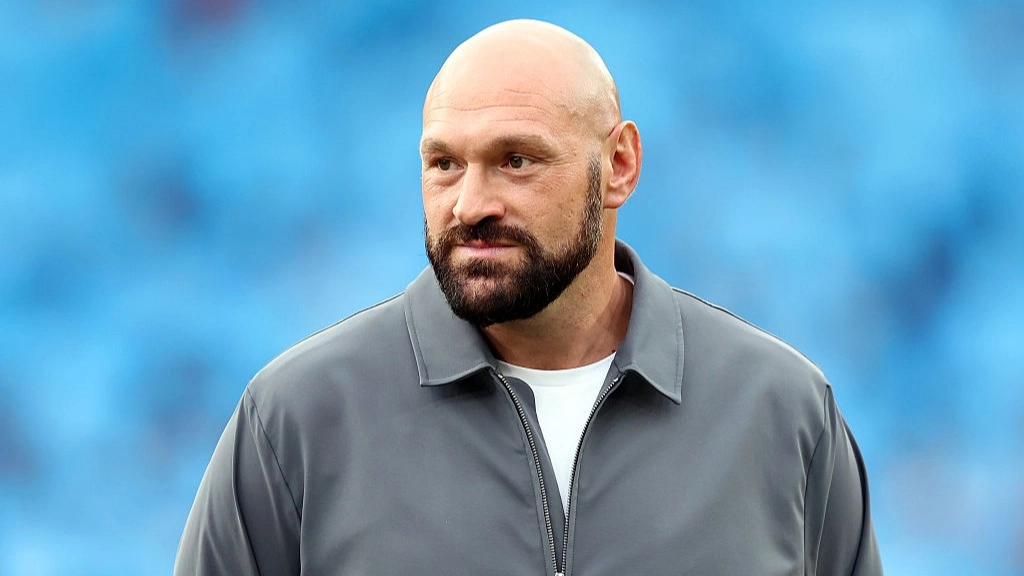
Signs of schizophrenia as Tyson Fury, 38, 'diagnosed' with condition

An upcoming Netflix documentary about Tyson Fury reveals he was diagnosed with schizophrenia after he beat Wladimir Klitschko in 2015.
Tyson Fury details how the boxer used alcohol and drugs after his win and fell into depression, before being taken to hospital in June 2016 with a suspected heart attack, and his wife Paris said he believed people were trying to kill him.
Fury said he later spoke with a psychiatrist, while Paris said he'd been diagnosed as a 'mild schizophrenic', which she struggled to come to terms with at first as she explained 'even then the penny didn't drop'.
She said: "I was like ‘don't be silly, what's she on about schizophrenic? Maniacs are schizophrenic, you're not schizophrenic’.
Advert
"I'd never heard of bipolar. When someone actually explained it to me, it was wow, that's him to a T."

The signs of schizophrenia
Schizophrenia has both 'positive' and 'negative' symptoms, which Mental Health UK says doesn't mean they're good or bad but instead denote whether are something which add to a person's perception of reality or reduce their ability to function.
The 'positive' symptoms of schizophrenia include hallucinations, delusions and disorganised thinking, so someone with the mental health condition might see, hear, feel or believe things that others don't.
They may also speak without making sense to other people, or suddenly change conversation topic without warning and seemingly without connection to what they were just saying.
The 'negative symptoms' include:
- Lack of motivation
- Slow movement
- Change in sleep patterns
- Poor grooming or hygiene
- Difficulty planning or setting goals
- Becoming withdrawn: Not saying much, change in body language, lack of eye contact, less interested in usual hobbies and activities
- Affective flattening: Reduced range of emotions and emotional expression
- Low sex drive and inability to experience pleasure of all kinds
- Cognitive experiences: Low attention span, memory problems, unable to absorb information, poor decision making
Being diagnosed doesn't mean someone has all of these symptoms.

They also note that schizophrenia tends to come in 'repeating episodes or cycles', beginning with someone becoming withdrawn, struggling to concentrate and having issues with memory.
Afterwards is the 'active phase' which is where the 'positive' symptoms are likely to occur, though sometimes a person with schizophrenia will go right into this phase without the first step.
Then there typically follows a 'recovery phase' where the 'positive symptoms' are either gone or less pronounced than before but 'negative' symptoms will still be present.
LADbible reached out to Tyson's representatives for comment through email.
Tyson Fury will be released globally on Netflix on Friday, 27 November.
Topics: Tyson Fury, Mental Health, Sport, Netflix
 Joe Harker