
Why Argentina's 'urgent request' could be a bad omen for England as FIFA grant permission ahead of semi-final

FIFA has confirmed that Argentina will be wearing the navy-and-black away strip for tomorrow's match against England - a decision that's been celebrated as a good luck charm by the South American country.
Yesterday, the South American side asked to wear their away kit instead of the famous blue-and-white striped shirts for Wednesday's semi-final against England.
Given that Thomas Tuchel's team are the designated 'home' side for the match, it was likely that Lionel Messi and co would've been in navy anyway.
So why the push to shun the famous blue-and-white stripes?
Advert
The answer could lie in England's long-running rivalry with Lionel Scaloni's side, with the strip previously being worn during decisive wins for Argentina over the Three Lions.
The significance of Argentina's 'lucky' blue kit
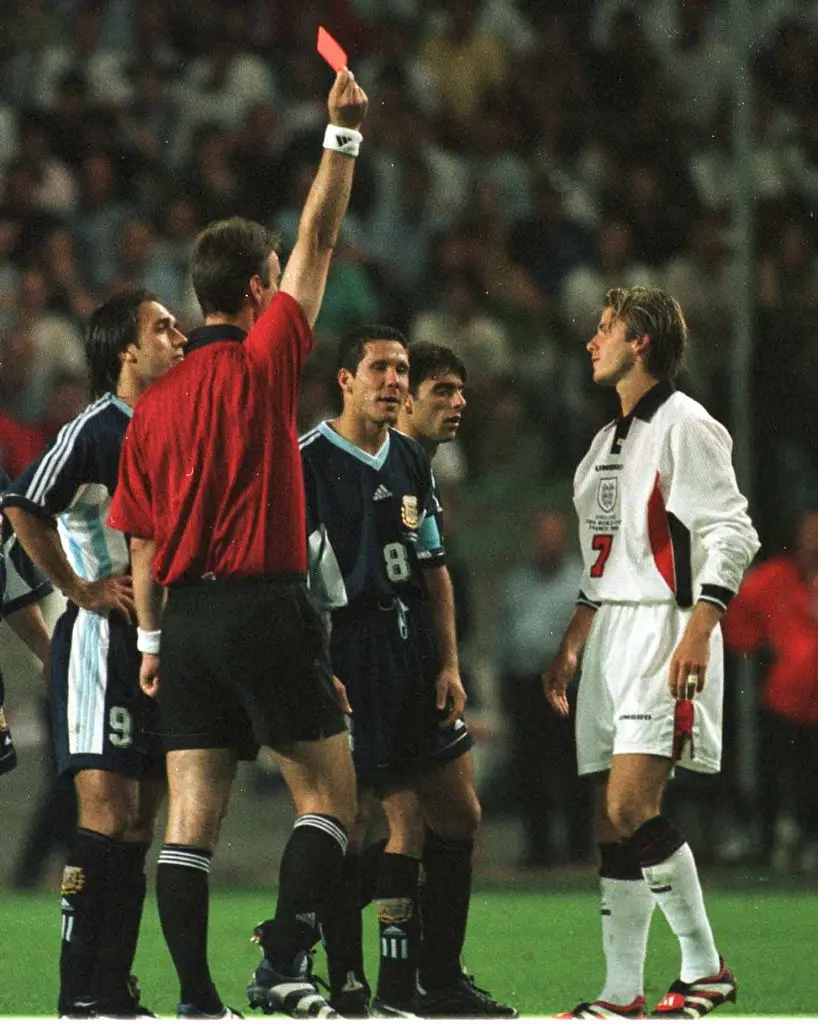
Anyone who's clued in on footballing history will be more than aware that the 'lucky' kit was worn by Argentina during 1986 and 1998 World Cup matches against England, both of which resulted in losses.
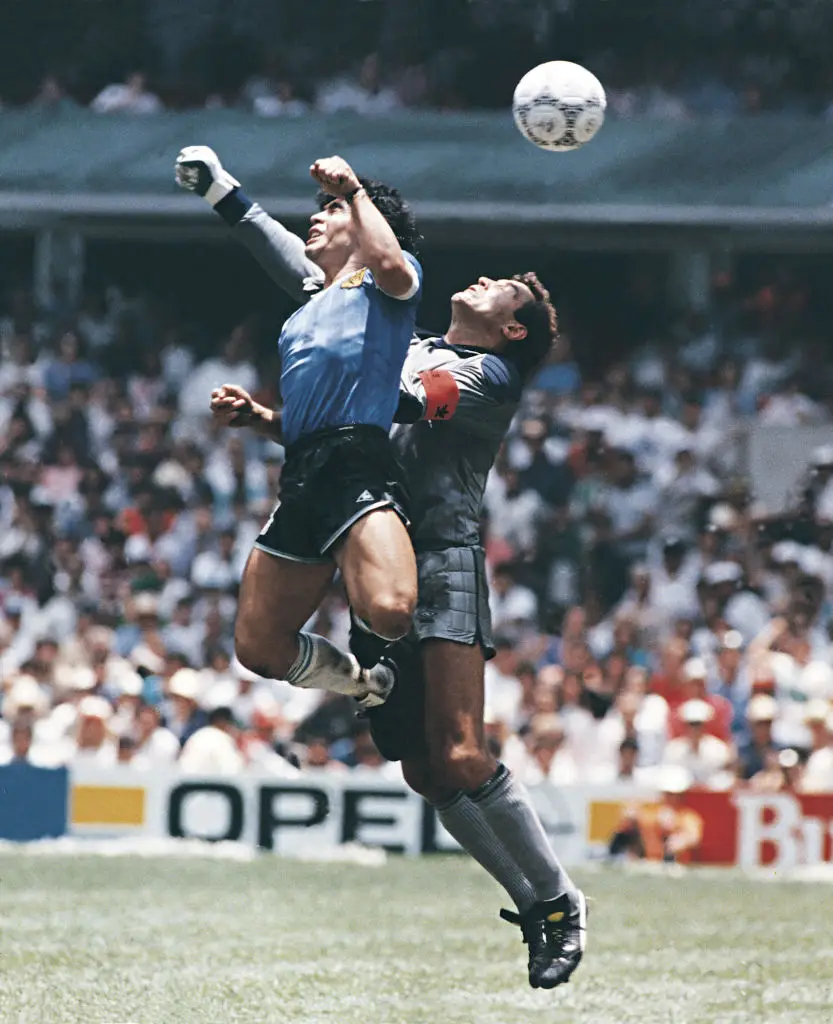
1986 was of course Diego Maradona's infamous Hand of God moment, a historic injustice which needs no further explanation, while the 1998 clash saw David Beckham sent off for retaliating to a foul from Diego Simeone.
The match was tied 2-2 at the time and ultimately went to penalties, where England were knocked out. This theory is also supported by the result of the 2002 meeting in Japan, when England beat Argentina 1-0 while wearing their red kit, with Beckham scoring a penalty awarded for a foul by Argentine defender Mauricio Pochettino.
To add to the superstition, England will be wearing the all-white strip, which was worn in both the 1986 and 1998 clashes.
Argentinian publication Clarín wrote that 'few colour choices could be so steeped in history' and the decision to wear navy 'will inevitably fuel superstition'.
England have actually beaten Argentina in navy shirts twice during their history, once during a 2005 international friendly and once in 1962.
But given the history, you can see why Argentina was keen to don their away kit.
Clarín wrote: "The 1962 precedent prevents us from speaking of perfect effectiveness, but it doesn't erase the symbolic power of Mexico 1986 and France 1998."
They added that Argentina have played 15 World Cup matches in their navy kit: winning seven, losing two, and drawing five.
We can only hope the Three Lions bring their lucky boots to the match...
England's rivalry with Argentina explained
Excluding the incidents mentioned above, the long-standing rivalry started when England knocked Argentina out of the World Cup group stages in 1962 before heating up in 1966, when a quarter-final game became so heated that midfielder Antonio Rattin had to be escorted off the pitch by police after being sent off.
It later emerged that Rattin had not understood German referee Rudolf Kreitlein, an incident which led to the implementation of red and yellow cards.
Rattin passed away last week, with the Argentine team wearing black armbands in remembrance during their quarter-final against Switzerland.
There is also a significant history between the two nations off the pitch, with English referees unable to officiate matches involving Argentina due to geopolitical sensitivities.

This is of course related to the 1982 Falklands War fought between the two countries.
Known as the Islas Malvinas in Spanish, the Falklands are an archipelago in the South Atlantic Ocean, located around 300 miles from the coast of Argentina. They have been in British control since 1833, excluding a 74-day period when Argentina invaded and occupied the 3,662-person islands.
Despite losing the conflict, Argentina continues to claim sovereignty over the Falklands to this day. In fact, the topic recently came up after Argentina's defeat over Switzerland, when the team were heard chanting songs referring to the topic in the dressing room.
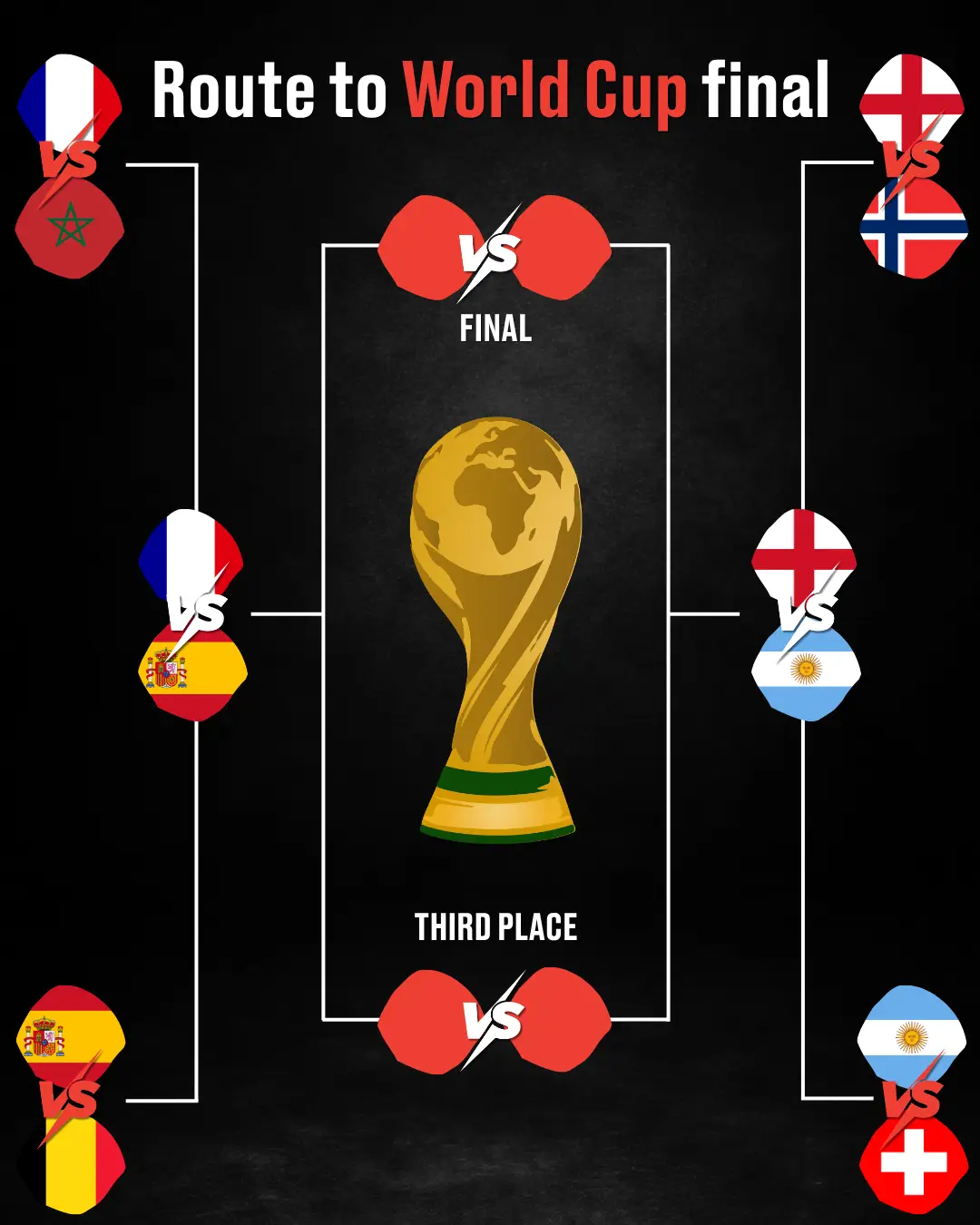
If England win the World Cup, do we get a bank holiday?
Now that the Three Lions have made it to the semi-finals of the World Cup, thoughts have turned to the possibility that football really could be coming home - and what better way to celebrate England’s success than a day off work?
Outgoing Prime Minister Sir Keir Starmer previously hinted at the prospect of a bank holiday if Thomas Tuchel’s side win the tournament.
“On the question of a bank holiday, I think I don't want to jinx it, but ask me again if we get to the final,” he told reporters at a Nato conference on 8 July.
With the final taking place on Sunday (19 July), it’s believed that the celebratory bank holiday would likely fall on the following Friday (24 July).
Only time will tell!
Topics: World Cup, Sport, Football, Lionel Messi
 Brenna Cooper