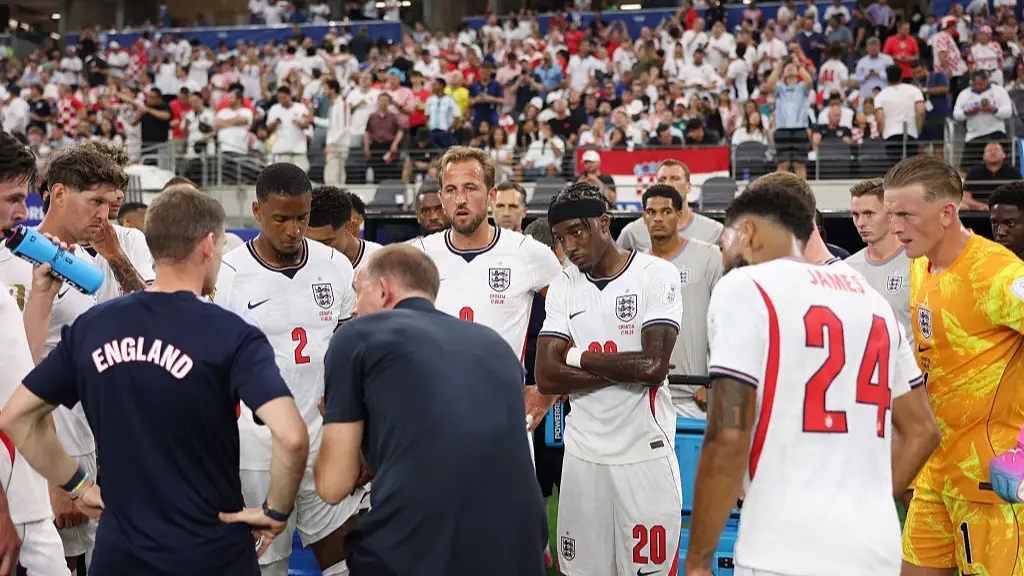
England fans boo hydration breaks during Croatia game as true cost of adverts revealed

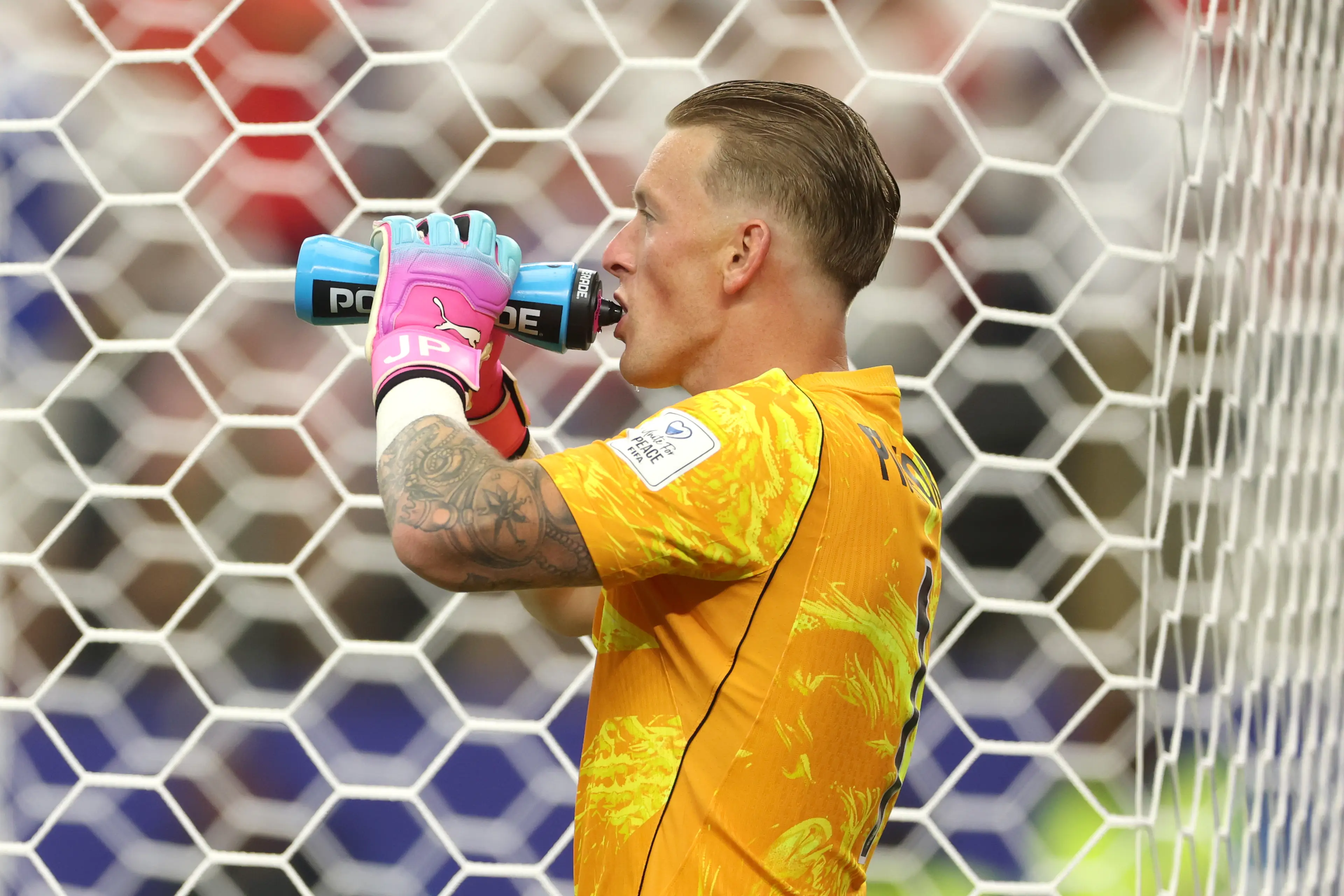
The crowd at England's first World Cup clash against Croatia made it clear they aren't too keen on the hydration breaks that FIFA has introduced.
Although supporters don't begrudge players quenching their thirsts when required, it appears that most people in attendance don't agree with the game coming to a complete stop for them to do so.
Fans of the Three Lions who packed out the Dallas Stadium on Wednesday (17 June) evening let out a chorus of boos at these intervals, which essentially divide the match into four parts.
People cheering England on from home also shared their complaints about the hydration breaks on social media - pointing out that a lot of football stars aren't even taking a sip.
Advert
On top of that, organisers of the international tournament are filling these gaps with advertisements, leaving a lot of viewers frustrated that the beautiful game is supposedly being overshadowed by commercial interests.
What happened to a good old kick about with some top line commentary, eh?
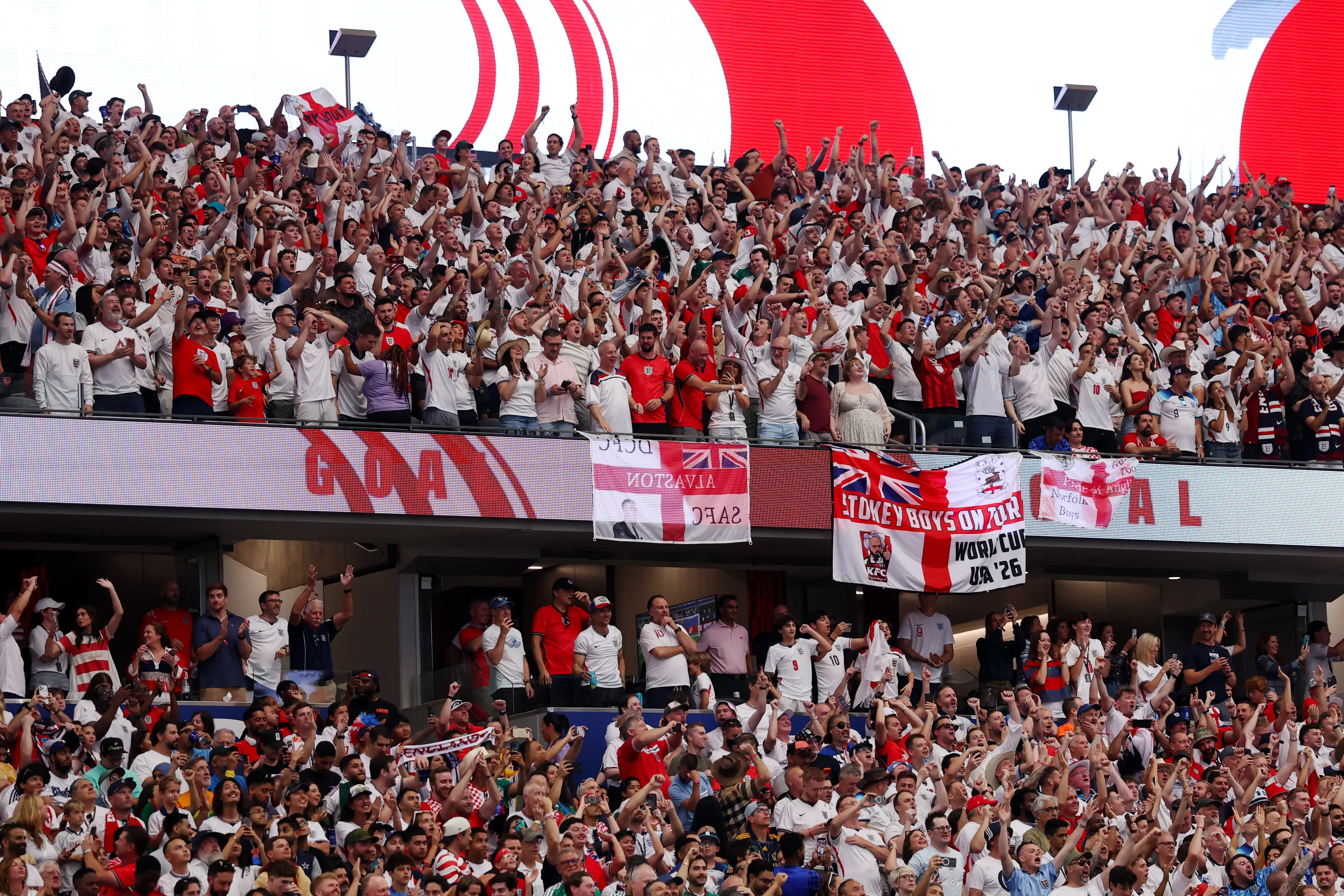
Sports journalist Henry Winter was among those sharing their disapproval of the hydration breaks online, as he wrote: "Widespread boos for the hydration break midway through the half.
"For a game indoors, played at 22C. Crazy new ruling that kills the momentum. Please make the pause stop."
He then followed this up with another post explaining that fans had got a chant going in relation to the hydration breaks, which went: ""What the f**king hell was that?"
Valid question, to be fair - and social media was set alight with similar questions and complaints too.
One person wrote in a post on X: "Fans have every right to boo the hydration break. England v Croatia is in an air conditioned stadium. And there’s no problem with overheating.
"This is blatantly USA changing the game so they can run commercial breaks."
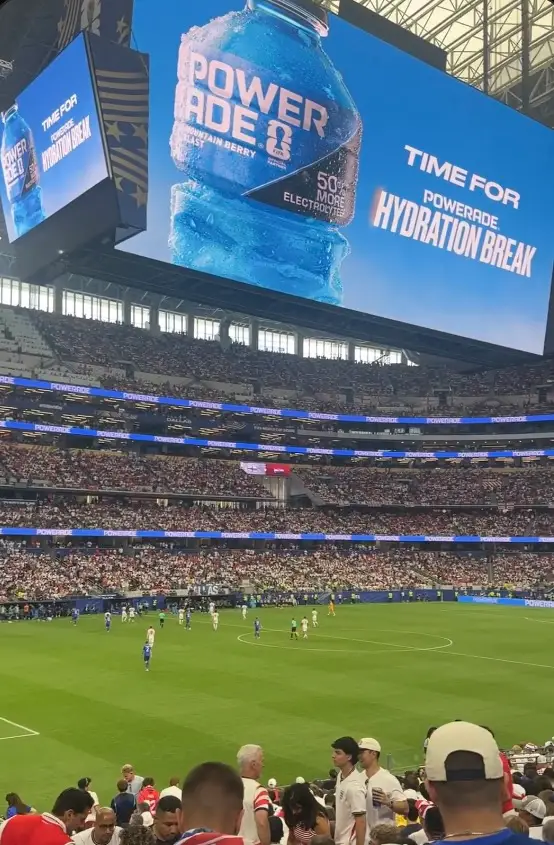
A second said: "Hydration breaks are really ruining this World Cup viewing for me. Not a single player with a drink in his hand and just a quick five minute tactical break to change the flow of the game."
Another commented: "It is a capitalism commercial break. Totally unnecessary."
While a fourth chimed in saying: "Roof closed, air conditioners on, so why the f**k are they going on a hydration break? I hate this American World Cup."
And a fifth added: "A game like this Croatia-England game should not be interrupted for hydration breaks. It takes the whole flow of the game out to a screeching halt."
For those who are unaware of what all the fuss is about, the three-minute hydration breaks have been causing quite the stir since the 2026 World Cup kicked off last week.
FIFA announced that during each of the 104 games that take place during the tournament, players will come to a halt 22 minutes into the first and second halves.
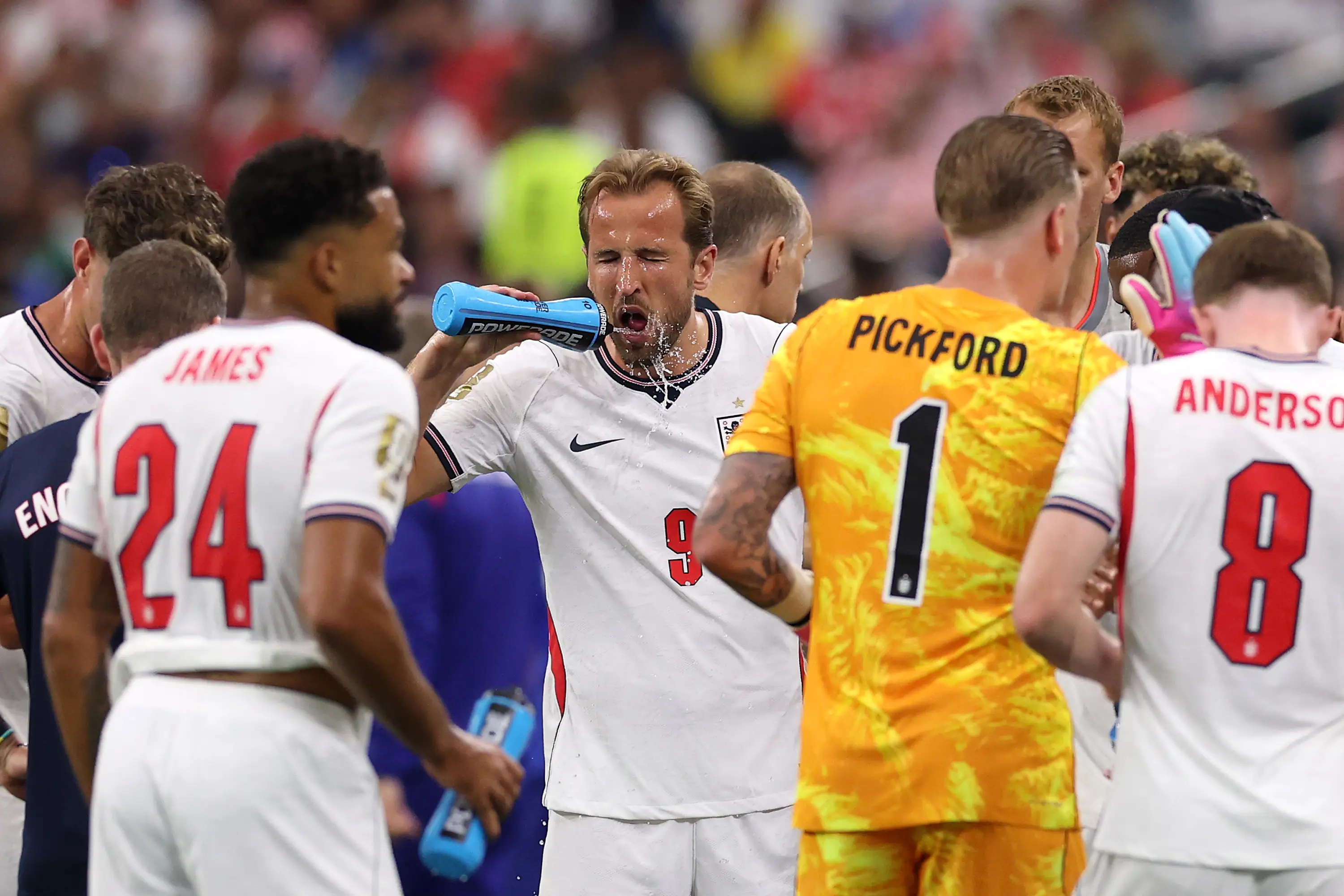
The referee blows his whistle and the ball isn't booted for 180 seconds, as the teams each duck off to rehydrate themselves with some water - and FIFA say this helps protect 'player welfare'.
Given the climates of Mexico, Canada and the United States, it was thought that these hydration breaks could come in handy while football aces battle against the heat and humidity.
They still go ahead even if the weather is on good form or if a game is taking place at a stadium that is climate controlled or has a retractable roof - and the breaks wearing thin on fans, managers and even players already.
USA's head coach Mauricio Pochettino described the hydration breaks as 'unnecessary' and confessed he 'doesn't like' them, while Netherlands captain Virgil van Dijk has also voiced his disapproval.
Describing them as 'not great', the defender also took aim at the adverts that appear, saying: "I was obviously watching all the games up until today and obviously, every time going to commercial is a bit...not really that I like it.
"I think for the neutral watchers on TV, it's also not great. If it's really hot, obviously it would be good to put them in. But I think you have to look at it in every game, separately, in my opinion."
Arsenal legend Ian Wright also shared his thoughts on them, saying: "I just think it's another way of getting adverts into it from an American point of view. They've used the fact that it's for the players, but it's not for me."
A lot of people online reckon that teams are taking advantage of the hydration breaks by simply talking tactics, which football fans claim is altering the natural course of the matches.
Others are a bit more supportive of FIFA's move, as a few social media users said it gives them a chance to nip away from the TV without missing out on any action.
England coach Thomas Tuchel was also looking on the bright side about them too, as he reckoned it's a good chance to check in with his men during matches.
"It will be a good problem to have if we go into the hydration break and we are leading,” he said prior to Wednesday's game. "We need to adapt to that, and in terms of fairness, every match has the hydration break as a chance to regroup.
"It gives you the chance to change and reset. We will use them as a hydration break, but it will not be needed tomorrow; it will be needed when we are outside and we are hot."
But after the reception the hydration breaks received during England's clash against Croatia, it appears that Brits aren't best pleased with them being introduced.
How much does an advert during a World Cup game cost?
FIFA announced in March that it would allow broadcasters to cut away from the live events to show adverts during hydration breaks.
Though there is a strict two minute and 10 limit applied to the break, which must end 30 seconds before the game restarts, the rules were broken the first time they were in place.
Fans tuning into the opener between Mexico and South Africa via Fox complained that they missed out on the first few seconds of the match's resumption due to commercials overruning during the live coverage.
But seen as though broadcasters are forking out millions upon millions for the rights to broadcast the tournament, it's no surprise they are looking to maximise revenue.
Michael Johnson, a research analyst covering the U.S. sports industry for S&P Global, explained just how lucrative the additional advertising space could be.
"[It's] extremely valuable and could potentially command those Super Bowl level prices within that seven-to nine-million-dollar range," he told Reuters.
Thankfully for viewers watching the World Cup in the United Kingdom, rights holders ITV and the BBC are not showing adverts during the breaks and are instead continuing to broadcast live from the stadiums while the players have their drinks. It was an easy decision for the BBC, given the state broadcaster famously does not carry advertising, aside from briefly promoting their own programming.
ITV, however, did consider showing commercials and held talks with advertisers, according to The Guardian, and showed similar mid-game adverts during the Six Nations.
However, they confirmed in April they wouldn't be doing so, with OFCOM regulations limiting the amount of advertising allowed during a broadcast potentially influencing the decision, according to The Times.
 Olivia Burke