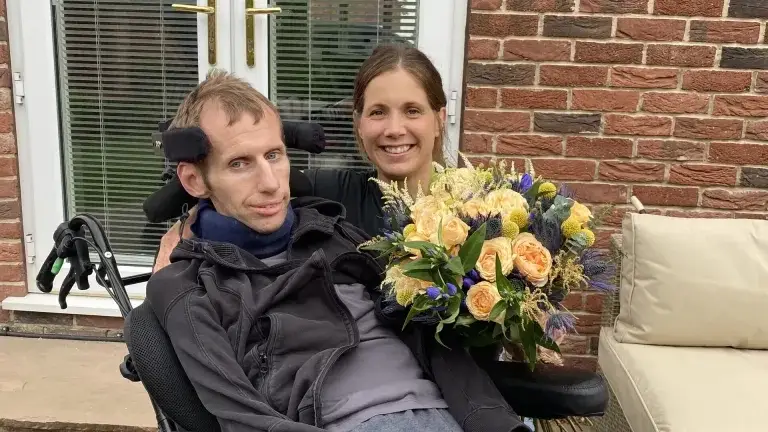
Rob Burrow’s widow shares ‘signs’ from late husband two years after his death from MND

The widow of rugby star Rob Burrow has opened up about how she believes her late husband continues to guide her through life.
Leeds Rhinos star Burrow passed away in June 2024, nearly five years after being diagnosed with motor neurone disease (MND).
Reflecting on the loss of her husband in a new interview with The Mirror, Lindsey Burrow revealed how Rob is still a part of her daily life, saying that she often sees feathers during 'important moments'.
"A day after Rob passed, right by his chair, there was a little white feather on the floor," Lindsey explained.
Advert
"And we've seen lots more feathers, at important moments. Is that a coincidence? I like to think not."
According to various spiritual and cultural beliefs, feathers are considered to be a symbol of connection to a loved one who has passed away.
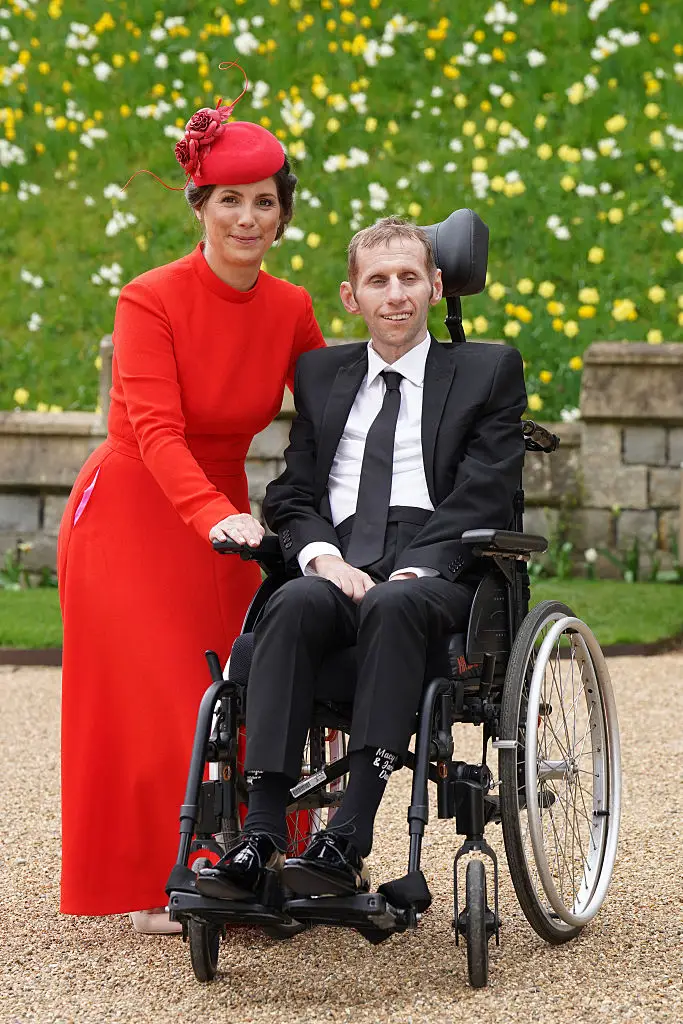
"For many people grieving the loss of someone important, feathers become signs from them, almost like a silent 'hello' and a reminder that they’re still near, watching over and reassuring you when things feel overwhelming," writes memorial jewellery website Inscripture.
Feathers aren't the only sign which Lindsey reports seeing either, with the NHS physiotherapist explaining that there is a robin which frequently returns to her garden.
"There's also a robin that keeps coming into the garden, and Rob's mum said there's a butterfly that comes," she added. "That makes me smile."
Like feathers, robins are also associated with grief and the loss of a loved one, popularised through the phrase 'When robins appear, loved ones are near'.
According to Country Living, the association between robins and grief has its roots in both English and Irish folklore.

Burrow was diagnosed with MND in December 2019, after noticing problems with his speech during an awards ceremony.
According to the MND Association, MND is a progressive neurological condition which impacts the nerves controlling muscle movement.
Symptoms of MND include:
- muscle weakness and wasting
- speech and communication difficulties
- difficulty swallowing
- breathing difficulties
Around six people die each day in the UK.
The prognosis for MND varies from individual to individual, with Marie Curie noting the average person dies from the disease around two to three years after diagnosis. However, some people can survive longer, with Stephen Hawking living for 55 years after his diagnosis.
"I'm not putting my head down and sulking, I'm just keeping positive and getting on with it," he told Sky News the following January.


"I don't want pity. Apart from my voice going a bit, I feel fine. So as long as that continues, I'll just keep going."
In 2022, Burrow accused the government of having 'blood on their hands', telling the BBC: "I've heard it is curable but underfunded in the past, with the money supposedly coming from the government. The money Kevin [Sinfield] has raised, over £6m, would start it off.
"I'm sorry, but this Tory government has blood on their hands, because [MND] kills six people every day."
 Brenna Cooper