ladbible homepage
ladbible homepage
  • Home
  • News
    • UK
    • US
    • World
    • Ireland
    • Australia
    • Science
    • Crime
    • Weather
  • Entertainment
    • Celebrity
    • TV
    • Film
    • Music
    • Gaming
    • Netflix
    • Disney
  • Sport
  • Technology
  • Travel
  • Lifestyle
  • Money
  • Originals
    • FFS PRODUCTIONS
    • Say Maaate to a Mate
    • Daily Ladness
    • UOKM8?
    • FreeToBe
    • Citizen Reef
  • Videos
  • Advertise
  • Terms
  • Privacy & Cookies
  • License Our Content
  • About Us & Contact
  • Jobs
  • Latest
  • Archive
  • Topics A-Z
  • Authors
Facebook
Instagram
X
Threads
Snapchat
TikTok
YouTube
Submit Your Content Here
  • GAMINGbible
  • LADbible Group
  • UNILAD
  • SPORTbible
  • Tyla
  • FOODbible
  • UNILAD Tech
Residents warned as mysterious skull from 40-ton creature washes up on beach
Home>News>US News
Updated 20:12 17 May 2024 GMT+1Published 20:13 17 May 2024 GMT+1

Residents warned as mysterious skull from 40-ton creature washes up on beach

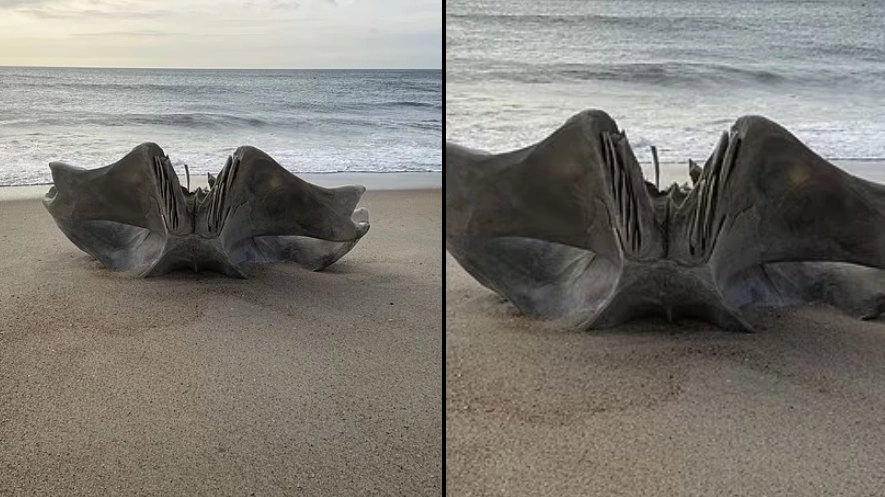
The warning was issued after part of a 40-ton skull washed ashore on a US beach

Brenna Cooper

Brenna Cooper

google discoverFollow us on Google Discover

Residents have been warned against moving a mysterious skull fragment from a 40-ton sea creature after it washed up on a US beach.

With around 95% of the ocean unexplored, our seas are home to a bizarre and often frightening array of aquatic life.

Sometimes parts of the creatures of the deep will fins their way onto shore, with onlookers left to marvel at the creatures which live below the waves.

Beachgoers in Hatteras Island, North Carolina got the opportunity to get up close and personal with the remains of a skull this past week, but authorities have issued a warning to anyone looking to travel down to the beach.

Advert

Sharing the discovery on social media, the US National Park's Cape Hatteras Facebook page posted an image of the fragment, believed to be from a humpback whale, alongside an interesting insight into the whales' skull.

"We're only halfway through the week and still finding fascinating discoveries on the beaches of Cape Hatteras," they wrote.

"Take a look at this large portion of a Humpback whale skull on Hatteras Island."

Park officials have since explained that the portion of the skull recovered was part of a sea creature's 'cranial cavity,' with the average humpback whale reaching up to 60 feet in length and weighing around 40 tons.

"Humpback whales (Megaptera novaeangliae) have specialized skull structures to support their unique feeding behaviours," park officials explained.

"Their skulls are relatively flexible, especially around the jaw joints, which enables them to open their mouths wide to consume large volumes of water and prey. The also have mandibles (lower jaws) that are not fused to their skulls."
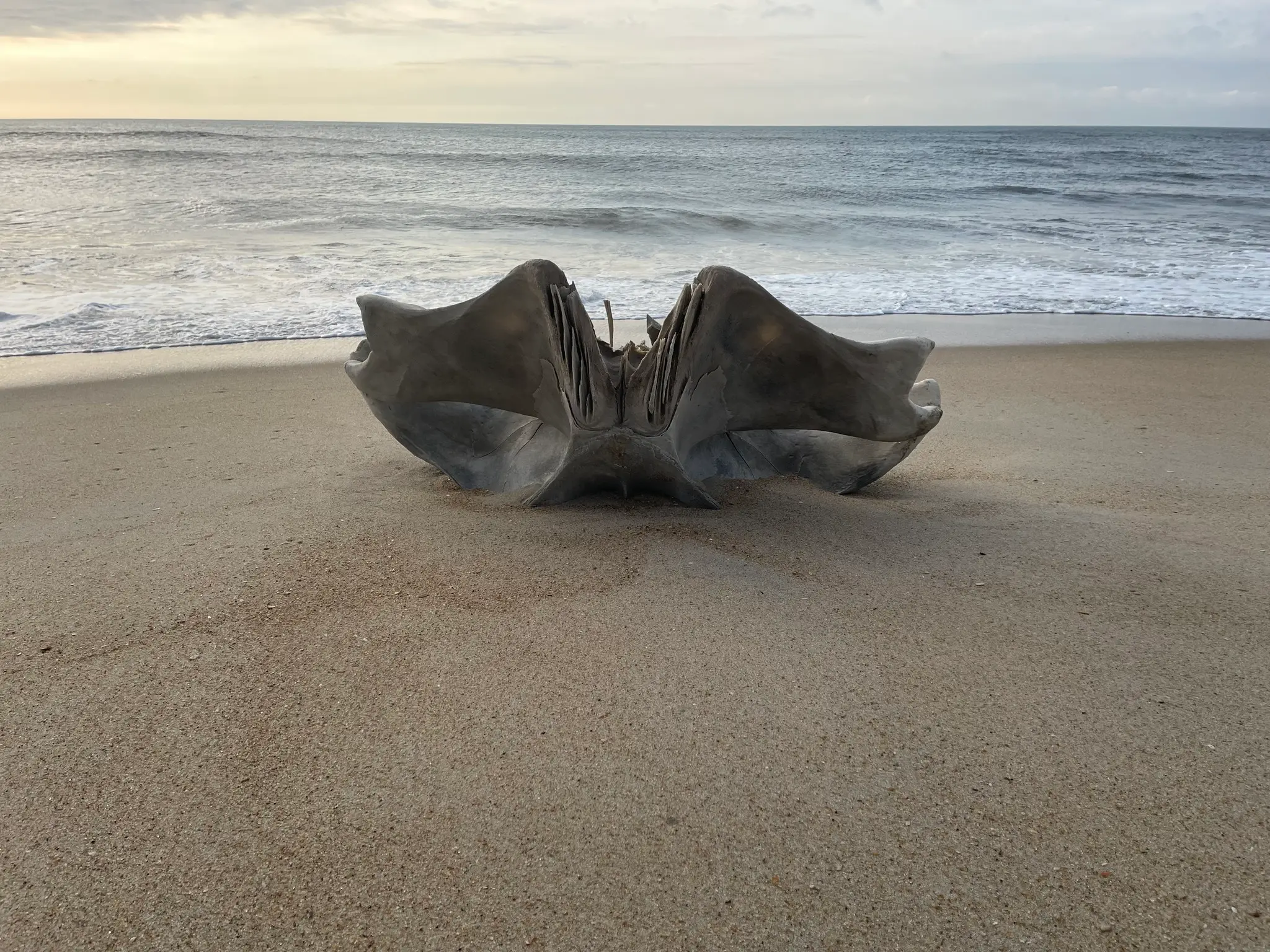
Humpback whale skull fragment (E. Dlutkowski/ US National Park Service)

After seeing the fascinating discovery, beachgoers may feel inspired to take a piece of the whale's skull home as a souvenir, with several people questioning if they could take the skull home in the comments.

However the park has warned against any visitors moving the skull, revealing that it is against the law to take parts or marine mammals washed up ashore.

"Under the Marine Mammal Protection Act, it is illegal to possess any parts of a marine mammal carcass and/or bones," the page responded to one curious commenter, adding that bones are either used for research or buried 'back in the environment'.
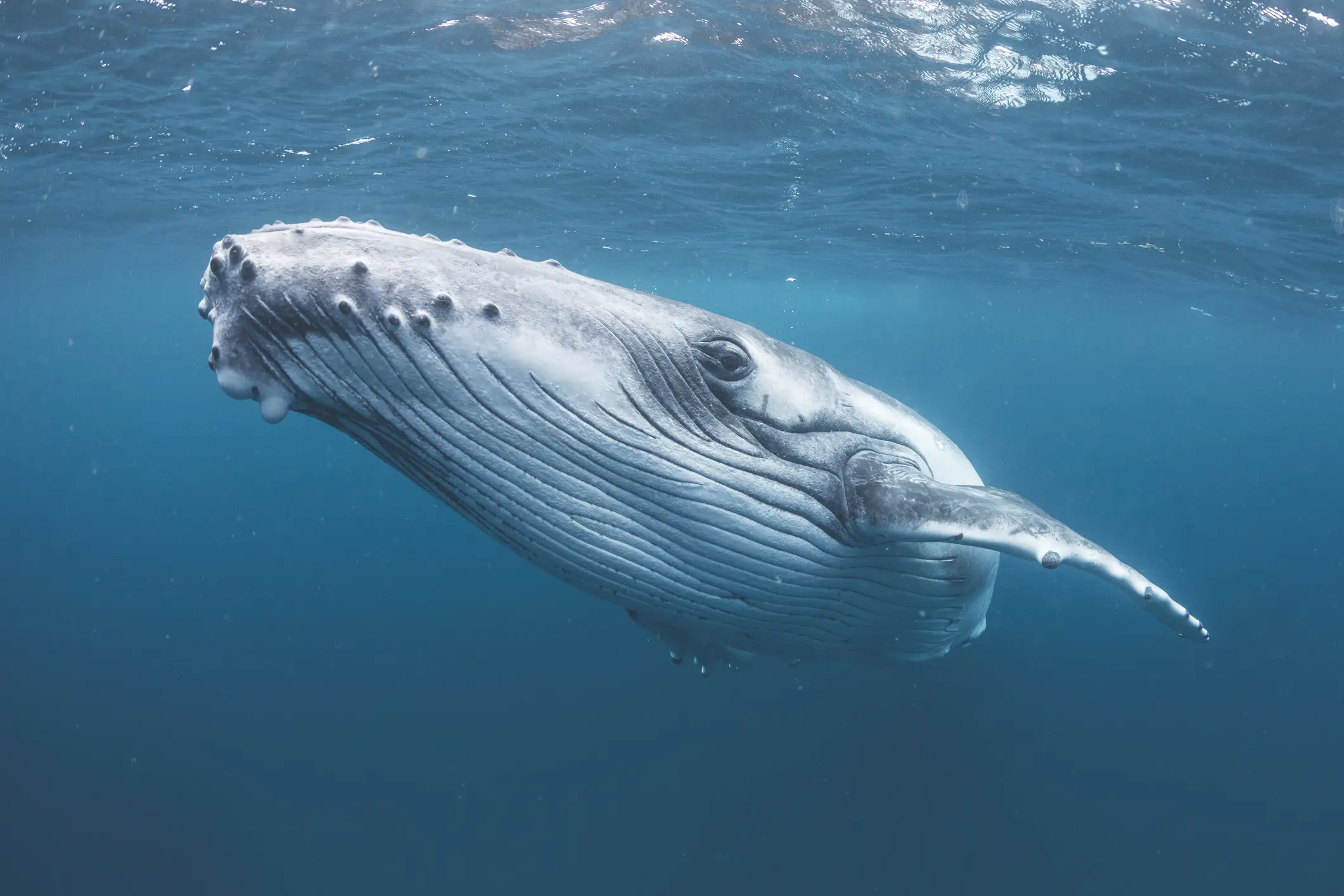
Humpback whale (
Getty Stock Image)

Discoveries like this are common in the area, with the Park adding that the region is a 'hotspot for marine mammal activity.'

"At any given time, a wide arrangement of marine mammals move-about and feed very close to Cape Hatteras beaches, influenced by the southern Gulf Stream and the northern Labrador Current colliding off our coast," they added.

So, there you go. Feel free to marvel at the traces of marine life that wash up on our shores, just don't try and force it into the back of your car.

Featured Image Credit: National Park Service

Topics: Animals, Environment, Science, Travel, US News

Brenna Cooper
Brenna Cooper

Brenna Cooper is a journalist at LADbible. She graduated from the University of Sheffield with a degree in History, followed by an NCTJ accredited masters in Journalism. She began her career as a freelance writer for Digital Spy, where she wrote about all things TV, film and showbiz. Her favourite topics to cover are music, travel and any bizarre pop culture.

X

@_brencoco

Recommended reads

Harry Styles fans think he made sweet tribute to his ex-girlfriend Taylor Swift on her wedding dayGareth Cattermole/Getty ImagesParasite causing 'explosive diarrhoea' is spreading across the USGetty StockWoman with 44 siblings answers the biggest question she always getsSWNSDoctor reveals what it means if you have cracks around the corners of your mouthGetty Stock

Advert

Choose your content:

7 hours ago
8 hours ago
9 hours ago
12 hours ago
  • Getty Stock
    7 hours ago

    Parasite causing 'explosive diarrhoea' is spreading across the US

    US health officials have reported a spike in cases

    News
  • SWNS
    8 hours ago

    Woman with 44 siblings answers the biggest question she always gets

    Janet opened up about what it was like to grow up with 44 siblings

    News
  • Getty Stock Images
    9 hours ago

    Experts say walking below this speed could be a warning sign for dementia

    Slowing down is not a good sign for your health

    News
  • YouTube/David McIntosh Jr
    12 hours ago

    Wee Man reveals the 'most disgusting' Jackass stunt that nearly made him throw up

    Even the toughest Jackass stars have a limit

    News
  • Urgent warning as world’s most dangerous jellyfish-like creature dubbed 'floating terrors' spotted on UK beach
  • 'Pink jellyfish' washes up on shore as scientists issue grave warning about terrifying detail
  • Mysterious 'dragon' skull washes up on UK beach and sends internet into overdrive
  • Brit tourist lucky to be alive after taking picture on a beach