
Only one other person in history has survived a full execution

Last month, Christa Pike received the honour of becoming the second person in US history to survive a full execution process.
The 50-year-old had been sentenced to death for the 1995 murder of Colleen Slemmer and was meant to die via lethal injection on 30 September.
But after two rounds of pentobarbital, a powerful sedative which is fatal in high doses, Pike was still breathing, meaning that the state of Tennessee was now in what seemed like uncharted territory.
However, Pike isn't the first person to undergo a full execution process and come out the other end alive, as the same thing happened to inmate Willie Francis, who survived the electric chair in 1946.
Who was Willie Francis?
Born in Louisiana, Francis was sentenced to death at the age of 16 for fatally shooting pharmacy owner Andrew Thomas in December 1944.
Advert
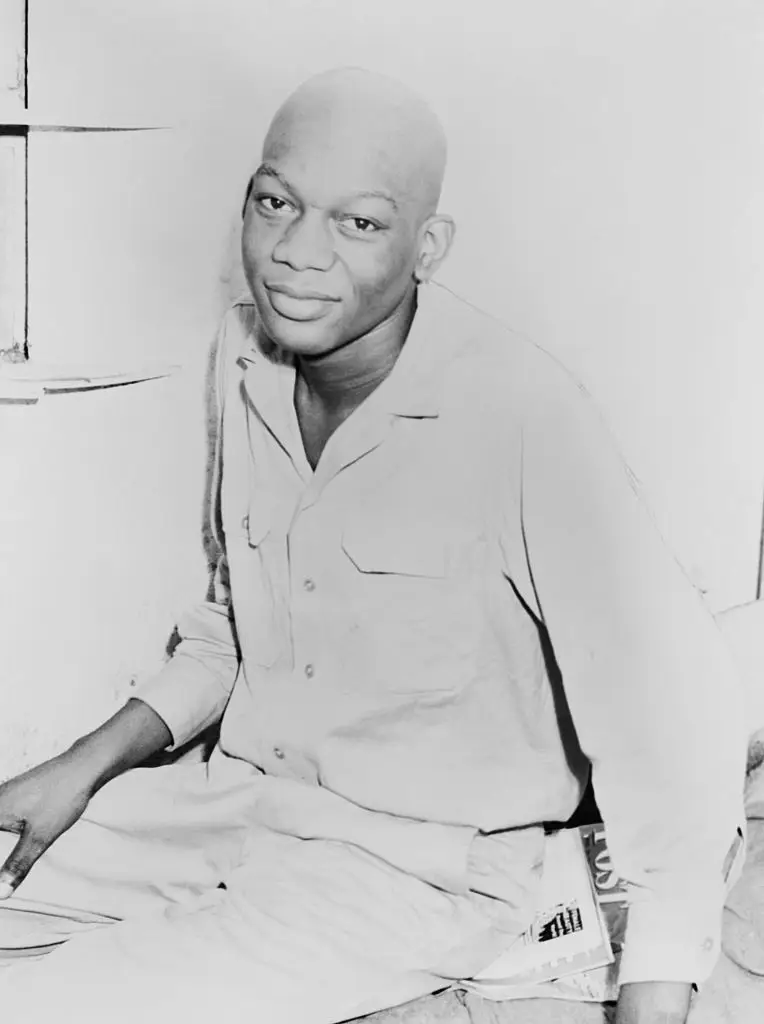
Francis was sentenced to die via the electric chair, with his execution date scheduled for 3 May 1946.
However, the chair malfunctioned, meaning that Francis did not receive a shock high enough to kill him. It was later found that the chair had been set up incorrectly by an intoxicated officer and an inmate assistant.
According to witness testimonies from the time, Francis could be heard screaming beneath the hood as the voltage discharged failed to kill him.
He was then returned to his cell and remained on death row for another year while an unsuccessful appeal against the sentence was filed.
Francis was eventually executed on 9 May 1947, a year after the state's unsuccessful attempt.
Reflecting on the case, Austin Sarat, a professor of law and politics at Amherst College in Massachusetts, told 8WVLT that he was shocked but not surprised by history repeating itself.
"There is no method of execution that is foolproof," he said. Sarat went on to add that while failed executions aren't rare, both Pike and Francis were extraordinary cases as the only people who have 'gotten to the point where the execution mechanism was fully engaged and ended up surviving their execution'.

What happens next for Christa Pike?
Lawmakers will soon have to decide whether or not to execute Pike again at a later date.
At the time of writing, the state of Tennessee has temporarily suspended all executions until the end of the year while a full investigation into the process is carried out, and a decision on whether or not to schedule a second execution for Pike remains in the hands of the US Supreme Court.
Pike's team are currently arguing for her death sentence to be commuted, allowing her to serve life in prison instead.
 Brenna Cooper