Experts say Learjet's fatal crash could have been caused by 'coffin corner' phenomenon

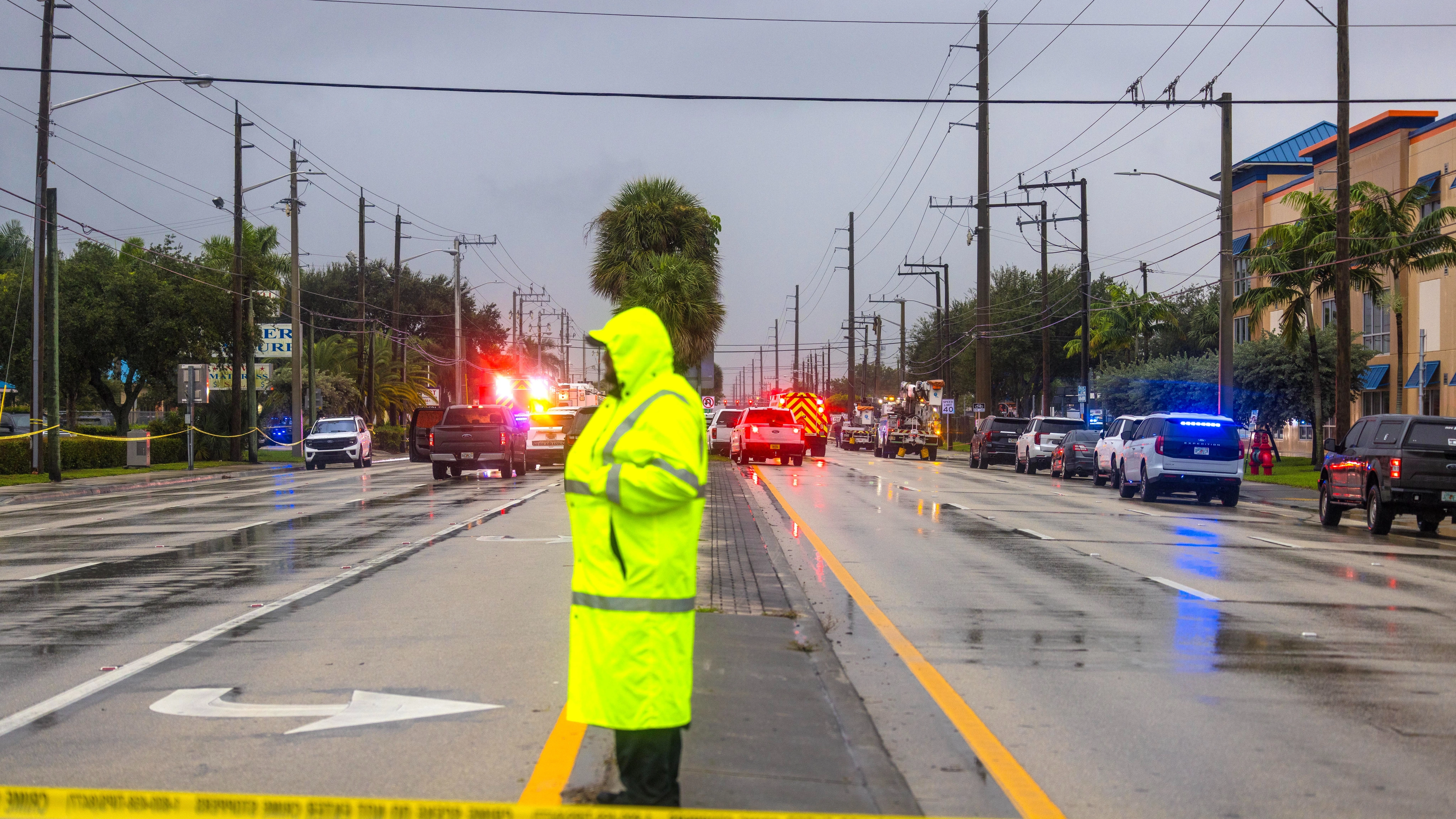
Experts have shared their thoughts after investigators announced that weather conditions are part of the focus in the investigation of the Florida plane crash that left nine people dead.
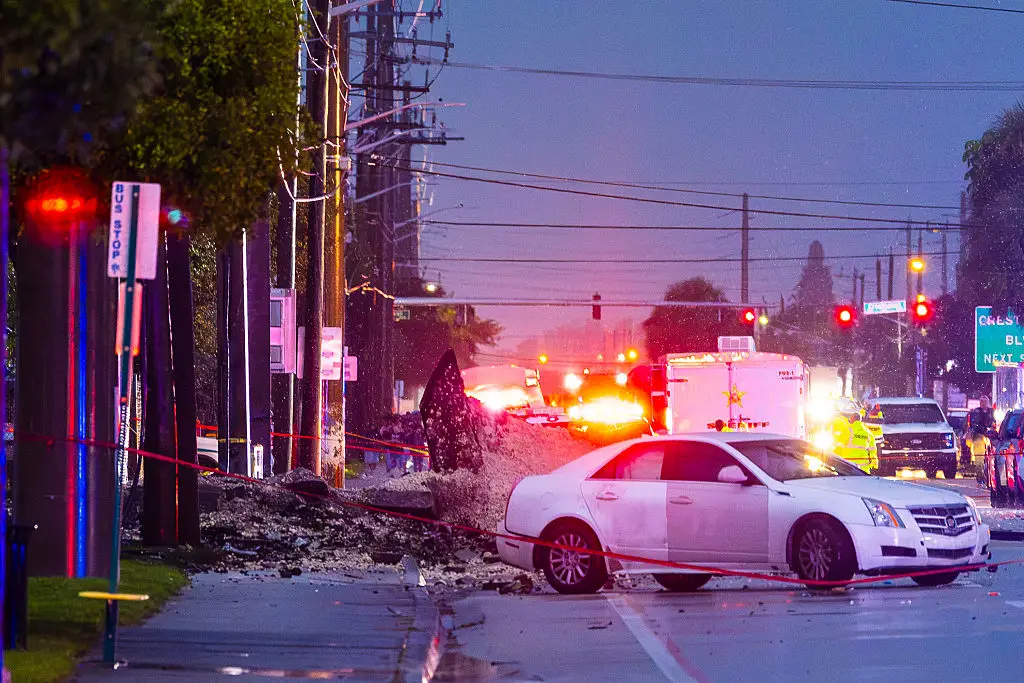
The Learjet 60 private plunged from the sky and crashed into the ground near West Palm Beach on Sunday (1 November) at around 12.50pm local time.
All nine people on board, which included two crew and seven passengers, died in the incident.
Earlier this evening, Palm Beach Post reported that businessman Adam Robinson, his wife Helen, their two children, two of their friends and a nanny were the passengers on board the plane.
Advert
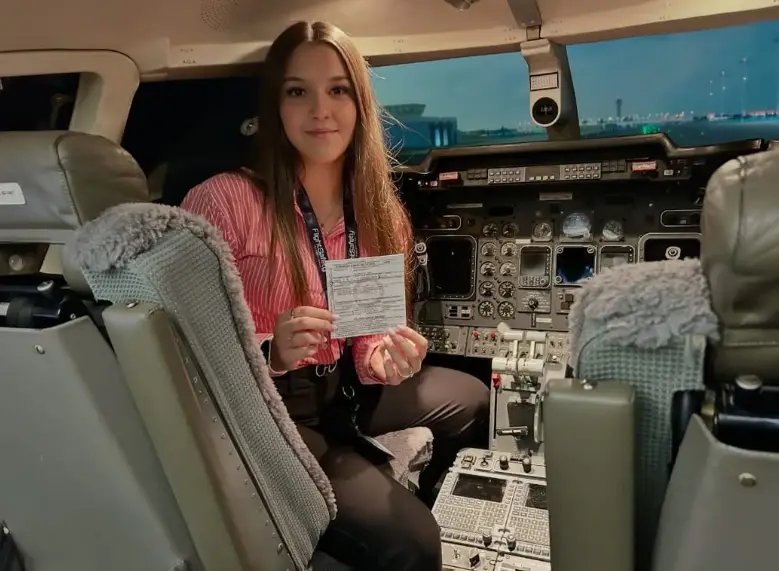
Twenty-year-old co-pilot Nathalia Gadelha Filgueiras has also been identified as one of the victims.
Her step-dad told the New York Post that about 10 minutes before the fatal crash, she texted her boyfriend to say: “I’ve got turbulence, I’ve got ice.”
During a press conference earlier today (2 November), NTSB Member Tom Chapman was asked about 'ice and turbulence' and said that was 'certainly a factor' of their investigations.
According to the Palm Beach Post, several experts who have reviewed flight data and radar say the plane may have flown into a thunderstorm before the crash.
Meteorologist Matthew Cappucci told the outlet, the storm’s clouds had climbed 15,000 feet in 20 minutes and reached 48,300 feet tall by the time of the crash.
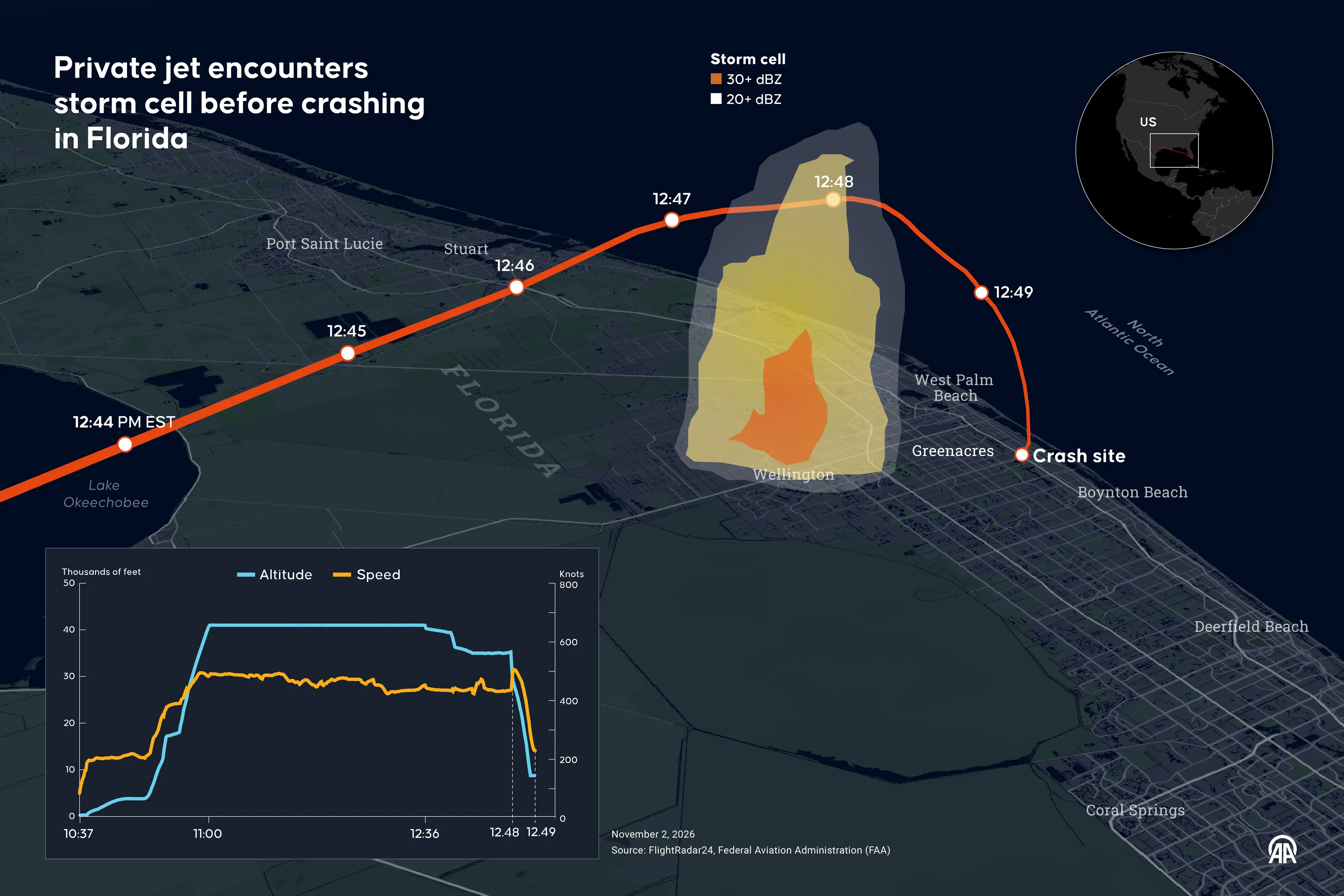
Former pilot Martin Varsavsky has also shared his thoughts on the incident, suggesting that it could have been caused by a dangerous ‘coffin corner’ phenomenon while attempting to climb above two storm systems, known as ‘cells’.
Coffin corner is a name given in aviation when a plane’s minimum safe speed and maximum safe speed narrow into a very small range at high altitude, which makes flying extremely dangerous.
If the plane goes too fast or too slow it can stall and the pilot will lose control of the aircraft.
In a post on X, Varsavsky said: “The radars clearly showed those cells; in light jets, the rule is to deviate with a good margin, not to fly through them—this could be an error by the woman who was piloting.
“What storms do by changing the outside temperature is that airplanes can no longer stay aloft at the same speed.
“It’s called the coffin corner. Or they become very difficult to keep under control.”
Pilot Justin Crabbe, commercial pilot CEO at Jettly, also highlighted that ice on the wings of a plane ‘can significantly affect how an aircraft flies and how turbulence can also impact an aircraft'.
He told LADbible that it 'changes the shape of the wings, reduces lift, increases drag and can make the aircraft much more difficult to control', and could possibly have made a turbulent situation worse.
Topics: US News
 Claire Reid