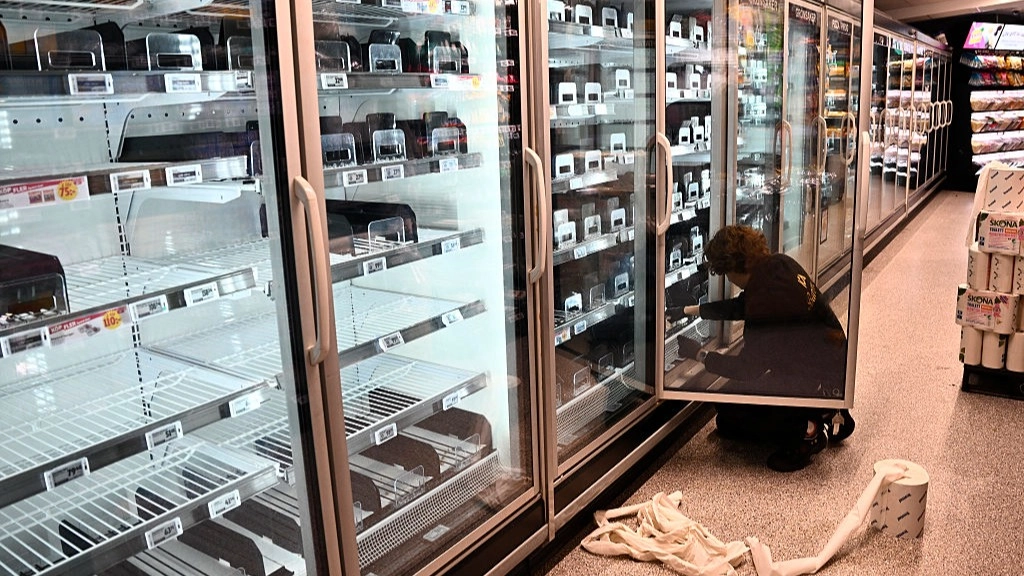
Will UK supermarkets be targeted after fridges in European supermarkets hacked in cyberattack

A cyberattack targeting refrigerators across Europe has put UK supermarket chains on alert over potential threats to food supply chains, according to reports.
On Monday (2 November), it was reported that supermarkets in Sweden, Belgium, Luxembourg, Finland, Ireland and Estonia were forced to throw away spoiled food after a coordinated cyberattack caused their fridge-freezers to defrost.
Pictures showed huge bags of spoiled produce being thrown into waste trucks as fridges and freezers in supermarket aisles were cleaned out.
It's understood the freezers had been accessed remotely and set to 50°C, with some as high as 80°C.
Advert
Belgian supermarket chain Delhaize confirmed that the attack was caused by an overnight 'IT incident', while Carrefour also confirmed the cause as a cyber attack.
While no UK supermarkets have been impacted by the attack, the incident has highlighted potential risks to food security, with the UK National Cyber Security Centre working to highlight potential threats to British food chains.

It followed hacks in France last month which affected fridges supplied by Danish engineering giant Danfoss, which is also a supplier to some British chains, including the likes of Tesco and Sainsbury’s.
According to a report from The Telegraph, there is concern that some supermarket giants using similar equipment could be at risk in the future.
Despite this, no UK supermarkets have yet been hit by any sort of cyberattack affecting fridge temperature.
Responding to the incident, an NCSC spokesman told the newspaper: "The NCSC is working with its international partners and industry to fully understand details of an incident."
Danfoss is also the supplier of fridges which were hit by similar attacks last month, which affected French supermarkets.
Like today's incident, the 'extremely serious and unprecedented' incident saw units heat up to 50°C, causing fresh and frozen produce to spoil.
Danfoss later stated that the units affected by the cyberattack were older models or systems running on outdated software.
Meanwhile, a spokesperson for the British Retail Consortium (BRC) confirmed it was in contact with domestic retailers about the incidents in Europe.
Graham Wynn, Assistant Director for Consumer, E-Commerce and Regulatory Affairs, said: "Retailers invest heavily in their cyber security and are currently working with the National Cyber Security Centre to ensure their fridges and freezers are secure as possible against potential attacks."
How are appliances targeted by cyberattacks?
Like all pieces of smart technology, a fridge that is connected to the internet, a home network or cloud device can become a target for cyber criminals.
This was proven during a 2015 hacking conference in Las Vegas, when a Samsung smart fridge was hacked.
Once the hacker has access to the device, it can either steal information or, in this case, control the appliance remotely.

This means that other smart devices which are connected to the internet, such as doorbells, security systems and even toothbrushes.
Fears of disruption to UK food chains
As well as fears of cyber attacks, the incident also highlights potential vulnerabilities in UK food chains.
It comes as the UK government issued guidance for households to stockpile essential items, such as bottled water, tinned foods, battery-powered torches and a wind-up radio, in the event of national power outages, climate events or emergency scenarios.
The full list is as follows:
- Bottled water for three days, three litres per person per day for drinking.
- Extra water for cooking and washing.
- Non-perishable food for three days such as tinned meat, fish or vegetables, dried fruit and nuts.
- Hand sanitiser, wet wipes and bathroom products.
- Torch and spare batteries.
- Blankets, sleeping bags and warm clothing.
- FM radio (battery/wind-up).
- A list of frequencies of any national or local radio stations you use for news.
- Charged power bank.
- Cash (mix of coins and notes) and cards in case electronic payments or ATMs are disrupted.
- Printed copies of ID documents such as passports, birth certificates, insurance policy details and instructions for any medical equipment you rely on.
- Important phone numbers and contact information you rely on.
- A list of regular medication and doses.
- First aid kit including items such as waterproof plasters, bandages, a thermometer, antiseptic, eyewash solution, sterile dressings and gloves, medical tape for dressings, and tweezers.
Topics: Tesco, Sainsbury's, UK News
 Brenna Cooper