
Amelia Earhart mystery update as 'no conclusive evidence' of missing plane found in expedition

The mystery of Amelia Earhart's disappearance has baffled us for decades but a recent expedition has only provided more questions than answers.
Earhart, who is one of the most celebrated aviation pioneers in history, set off on a journey to circumnavigate the globe back in 1937 alongside her navigator Fred Noonan.
However, both would disappear in July of that year after losing contact with air traffic control over the Pacific Ocean, and they were never seen again, with the whereabouts of their plane still eluding us nearly 100 years on.
In recent years, efforts have stepped up to try and locate her Lockheed Electra 10e plane, with AI not even to pinpoint exactly where the explorer went missing, but the latest efforts have had a strange outcome.
Advert
Images believed to be the aviator's plane have turned out to be a 'clump of trees', while there's also a bizarre theory going round that she was eaten by giant crabs.
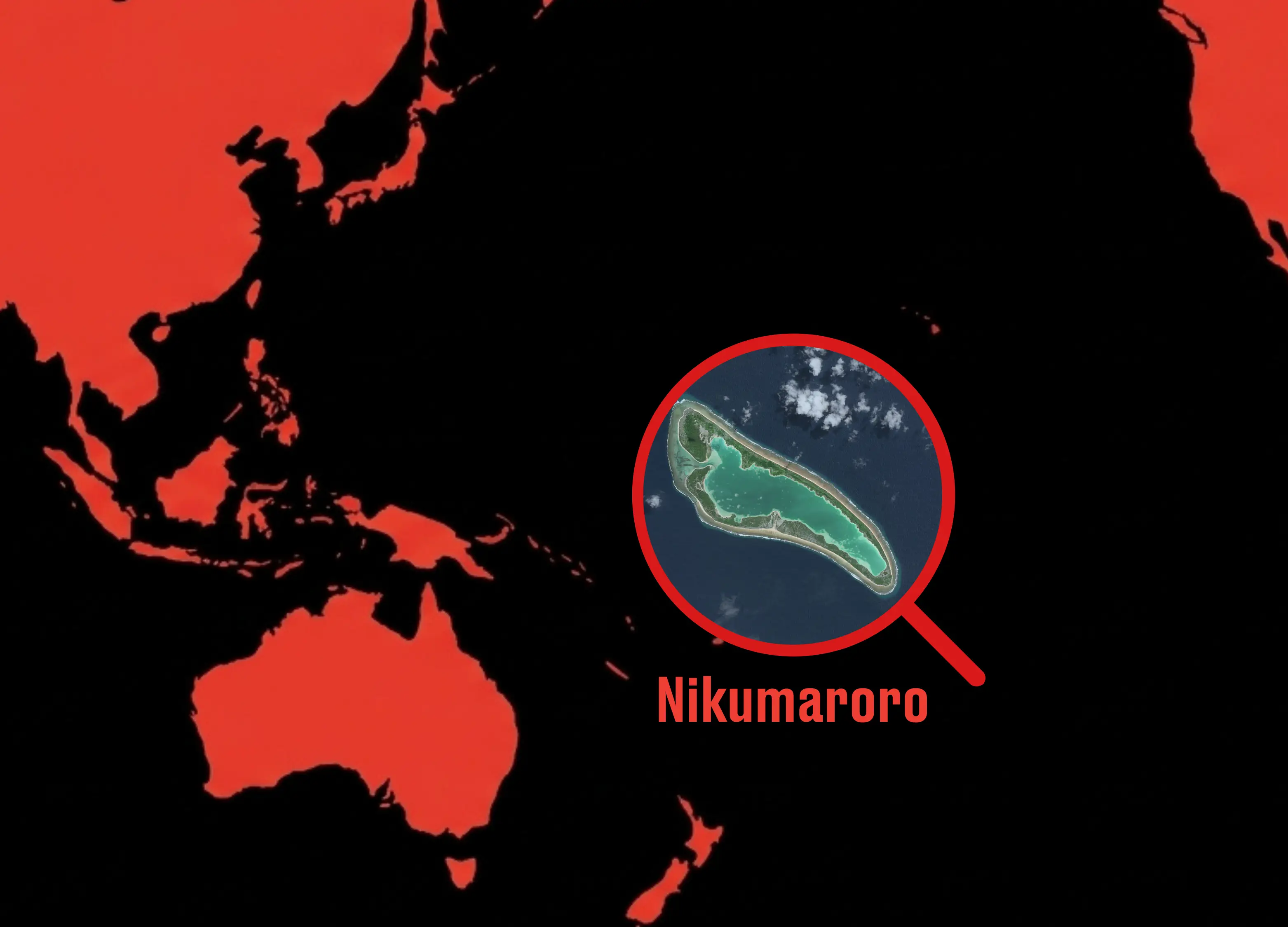
It has long been thought that Earhart went missing close to Nikumaroro, which is part of the Phoenix Islands, Kiribati, in the western Pacific Ocean, and that's where the recent US expedition has headed.
And to assist with the investigation, a New Zealand museum has released close to 50 photos from a 1938 aerial survey of the island, which you'd think they might have realised were at their disposal a little earlier into this 89-year mystery.

Sadly, Purdue University in Indianapolis, who are leading the investigation, suggested in a recent statement that there was no sign of the mysterious artefact known as the 'Taraia Object', an elongated shape in one of the island's lagoons which has long been thought to be associated with Earhart's missing plane.
The statement read: "The Taraia Object expedition, a joint effort by the Archaeological Legacy Institute (ALI), Purdue Research Foundation and Purdue University, announced Monday, Oct. 19, local time that it found no conclusive evidence to confirm a hypothesis that wreckage from Amelia Earhart’s Lockheed Electra 10-E was in a lagoon on a remote atoll in the South Pacific. Nikumaroro is 17 hours ahead of Eastern time in the U.S.
"Evidence gathered at the Taraia Peninsula on Nikumaroro confirmed that the visual anomaly first seen in satellite imagery in 2020 was likely a collection of large trees deposited along the peninsula’s sandspit. By the time the team arrived at the site, a good portion of the debris had fragmented and washed away, leaving only a single Y-shaped segment — a fraction of the anomaly’s original size observed in imagery when the Taraia Object hypothesis was developed."
Rick Pettigrew, the expedition lead and executive director of the Archaeological Legacy Institute, previously suggested that finding the plane would be a 'discovery of a lifetime'.
He added: “We understand the tremendous interest in what we’re doing at Nikumaroro, and we appreciate everyone’s patience. This is a complex scientific process. You don’t simply arrive at a site and immediately identify what’s there. We have to carefully collect the data, analyse it and reach sound conclusions."
Topics: Amelia Earhart, Archaeology
 James Moorhouse