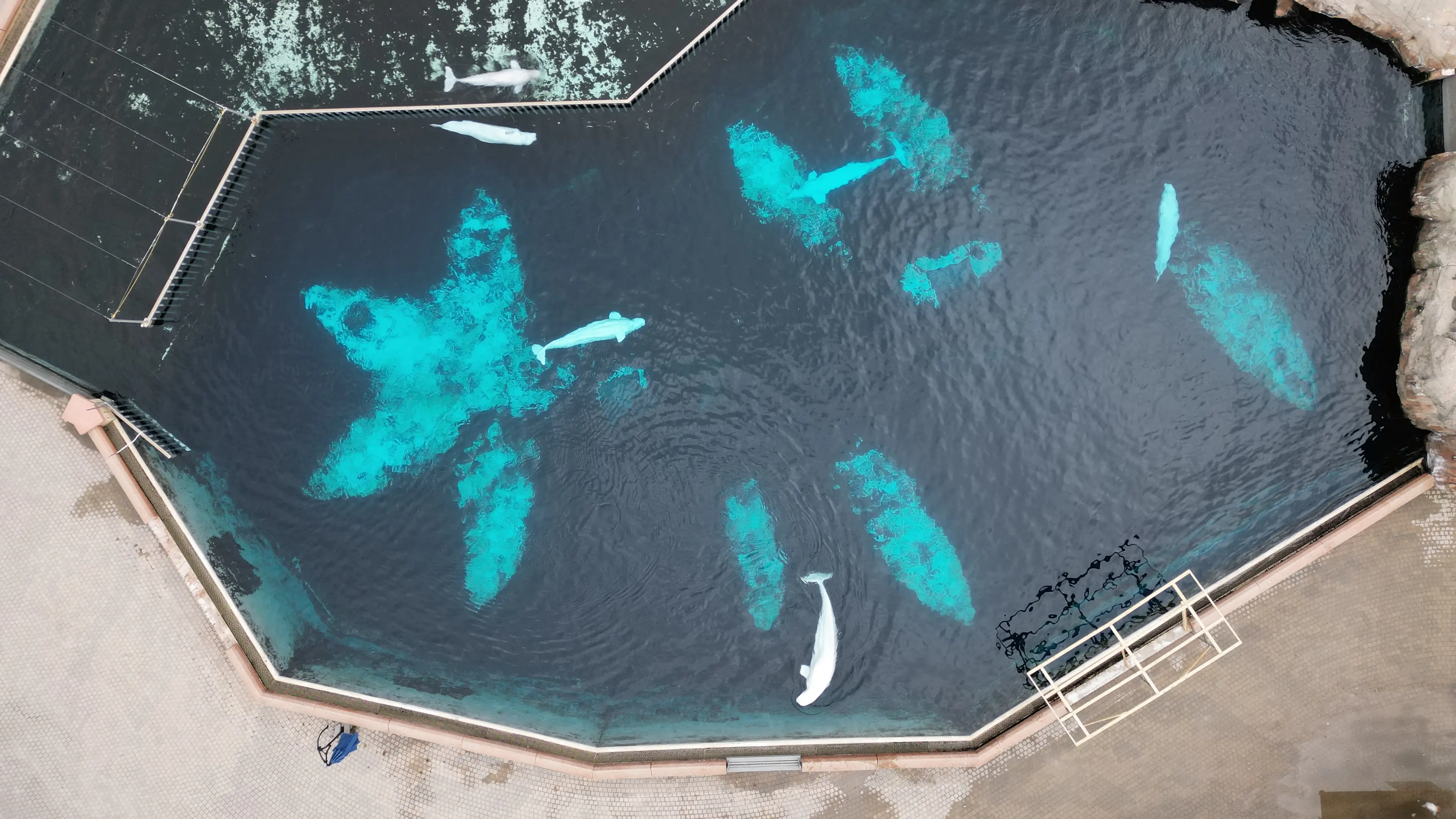
Heartbreaking reason two beluga whales died after being rescued from abandoned theme park

Further details about the deaths of two beluga whales who were rescued from an abandoned theme park have been released.
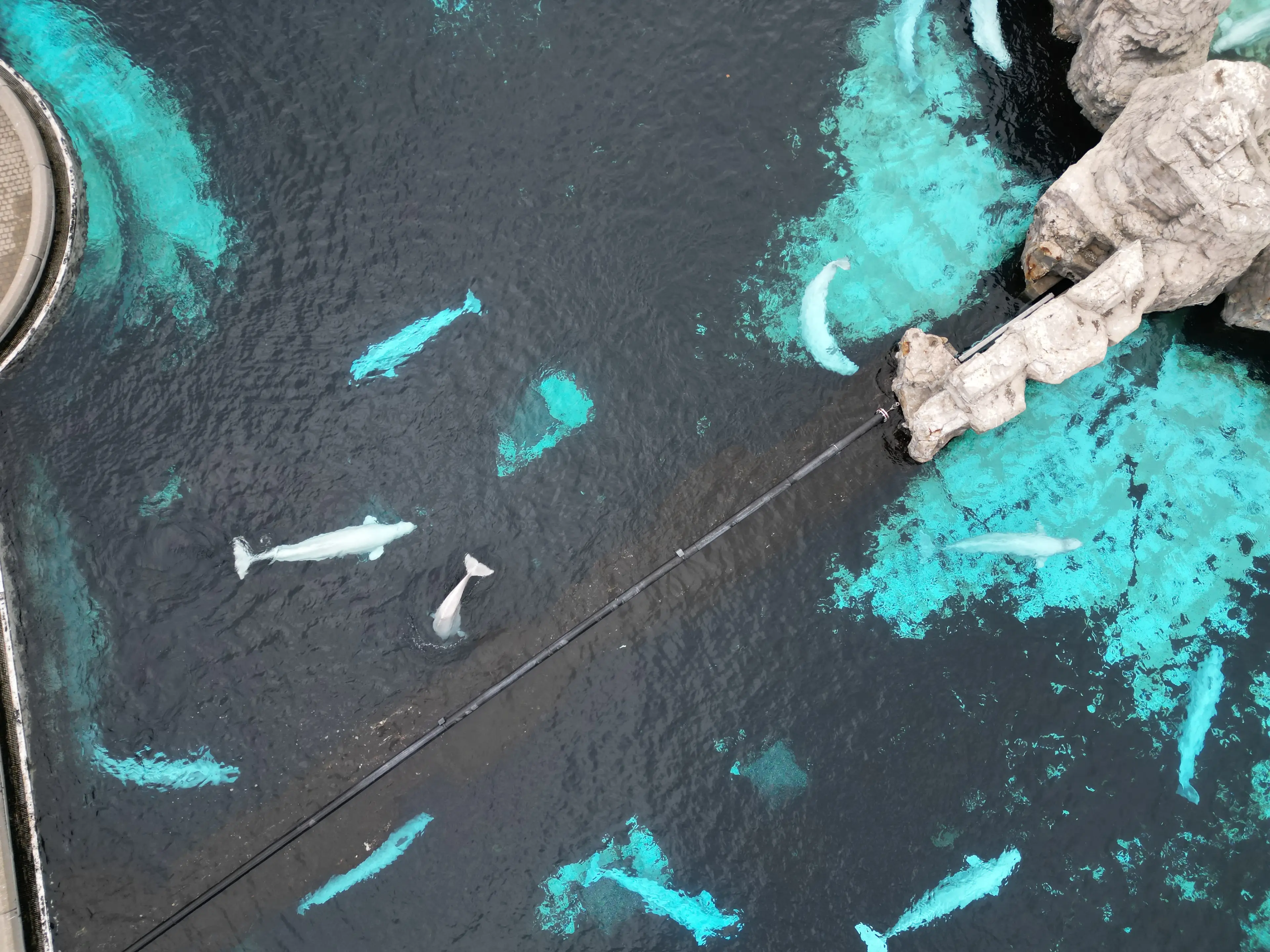
The pair - Peekachu and Rain - passed away just weeks after they were saved from Marineland Park in Niagara Falls, Ontario, and transferred into the care of The Shedd Aquarium in Chicago.
The team who helped the mammals, who can survive in the wild for decades, have now released the initial findings of a report into how the duo with 'serious, long-standing health needs' died.
Ontario's Marineland, which was founded in 1961, shut its doors permanently two years ago after years of controversy surrounding its treatment of animals.
Advert
A total of 20 whales, 19 belugas and one orca died in the care of the park between 2019 and 2024, according to the Canadian Press.

Efforts were launched to relocate the remaining creatures, but the Canadian government then blocked the planned export of the park's 30 beluga whales to the Chimelong Ocean Kingdom in China.
Fisheries minister Joanne Thompson said at the time: "To approve the request would have meant a continued life in captivity and a return to public entertainment."
Marineland said it could not 'provide adequate care for the whales' as it was in a 'critical financial state', while calling on the government to provide financial support.
It said that without it, it would have to 'face the devastating decision' of euthanising the beluga whales, which is when a deal was eventually struck to rehome the animals to various US aquariums, saving them from their fate.
Ten of these mammals in total were moved to Chicago's Shedd Aquarium, but sadly, Peekachu and Rain passed away.
What happened to Peekachu and Rain
A 34-year-old whale named Beethoven who had lived at the aquarium for three decades also died in close proximity, which the team described as 'extraordinarily difficult'.
The Shedd has now released 'important preliminary medical findings' amid its investigation into what caused the deaths of 23-year-old Peekachu and 20-year-old Rain.
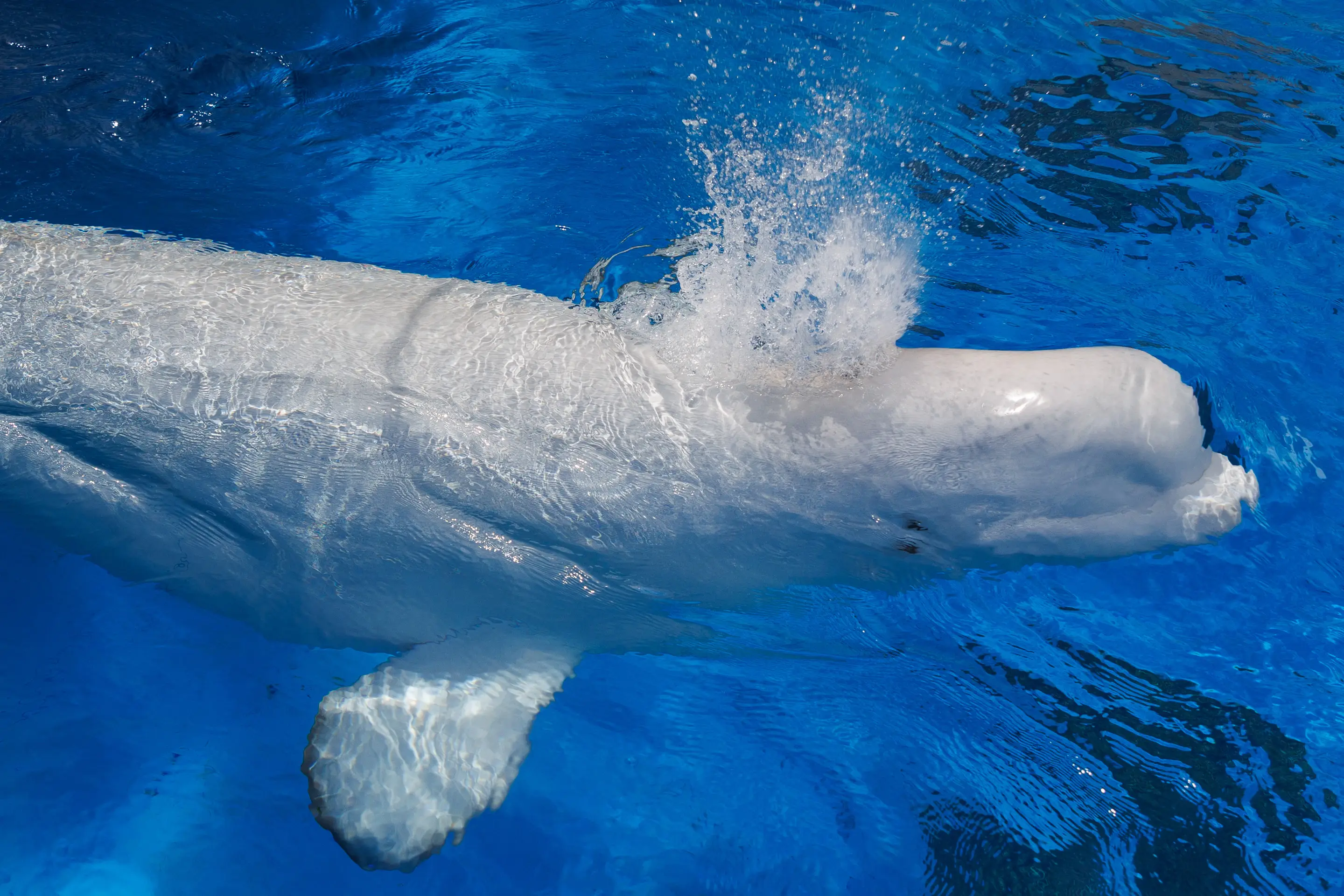
According to the WWF Arctic Programme, beluga whales typically have a lifespan of up to 80 years.
The aquarium explained that its experts 'identified significant, chronic gastrointestinal disease' in both of the rescued mammals, while Beethoven was found to have 'age-associated' health issues.
"Reviews to date have found no evidence of a shared infectious disease or common environmental factor connecting all three deaths," the statement said.
There was 'chronic inflammatory disease within the gastrointestinal systems' of both Peekachu and Rain, examination of their tissue and organs found.
"The significance of the inflammation, the types of immune cells present and the changes to the mucosa, the inner lining of the intestines, and the structure of the affected tissue all indicate that the disease had likely been present for an extended period," The Shedd said.
"These changes develop over time, potentially months or years, indicating that the disease began before the whales arrived at Shedd and compromised their health rendering them more vulnerable and sensitive.
"The timing of a visible decline does not necessarily tell us when a disease begins," it went on. "An animal with chronic gastrointestinal disease may continue eating and appear outwardly stable while underlying inflammation persists and the body compensates for its effects. These findings may not isolate every factor that have influenced their decline, but they do establish that an underlying chronic disease was present."
'Several foreign materials' - such as bird feathers, sticks and large, porous rocks - were also found in Peekachu’s stomach, which the aquarium said she 'could not have ingested' while in its care.
The Shedd stated that these are 'believed to have been present before her rescue', adding that pathologists also 'found small flecks of material that may be paint in Rain’s stomach'.
"We do not believe that the foreign bodies found in Peekachu or Rain’s stomach were directly related to their passing," it added. "That said, these findings are still relevant, as we have continued to stress the importance of regular nutrition for belugas and investigate the possible presence of gastrointestinal illness in the rescues."
Topics: World News, Animals
 Olivia Burke