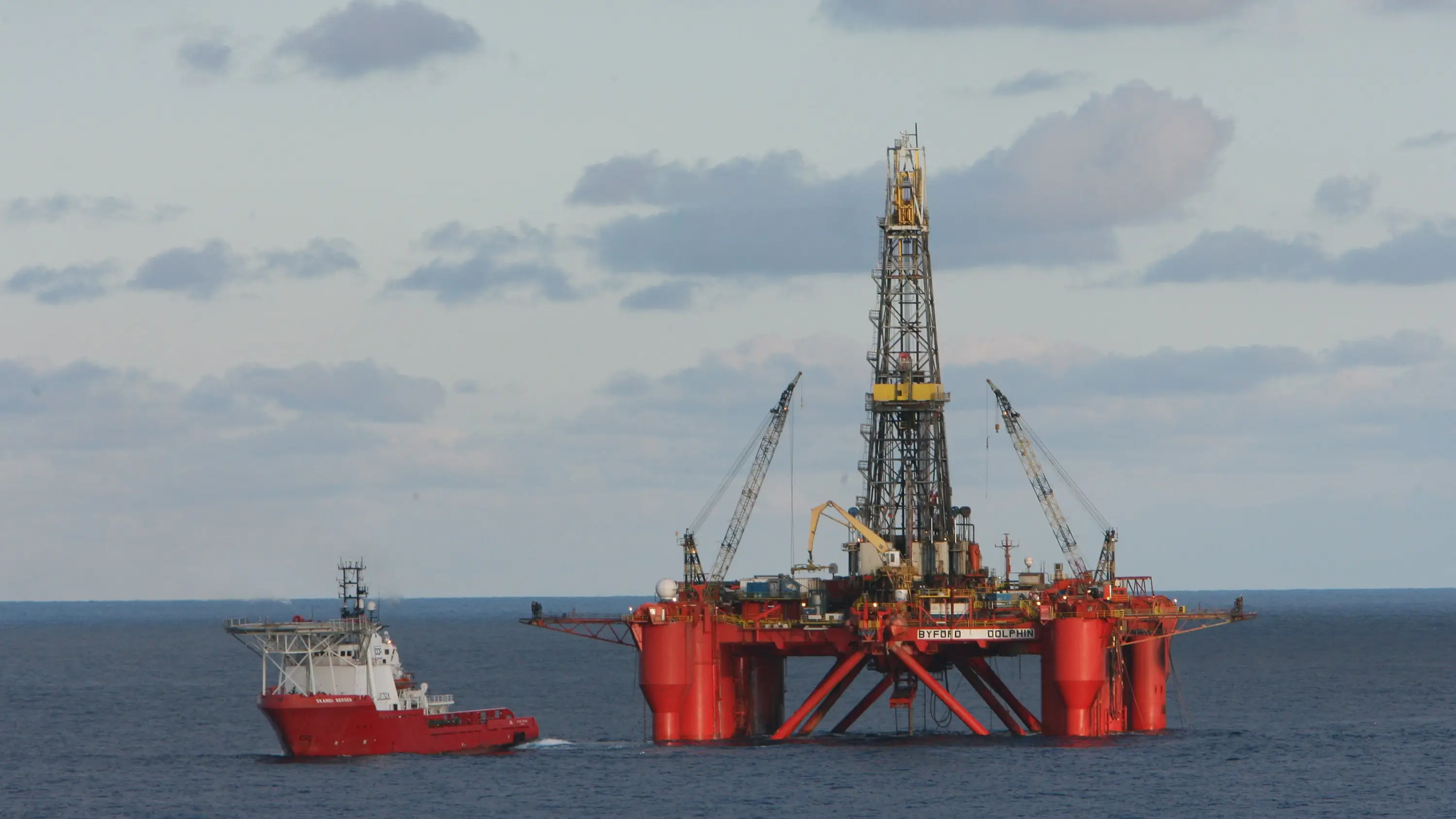
Five divers suffered most gruesome death imaginable on oil rig

When asked to picture the most gruesome way to go, most of us will likely imagine medieval torture devices or vicious animal attacks. Neither of which sound like an ideal situation to find yourself in.
Perhaps your mind is drawn to more recent events, such as the infamous 'Nutty Putty cave' incident.
But what if I told you about an incident in 1983 which saw five men meet their death in seconds after a fatal miscalculation 1,000 feet underwater?
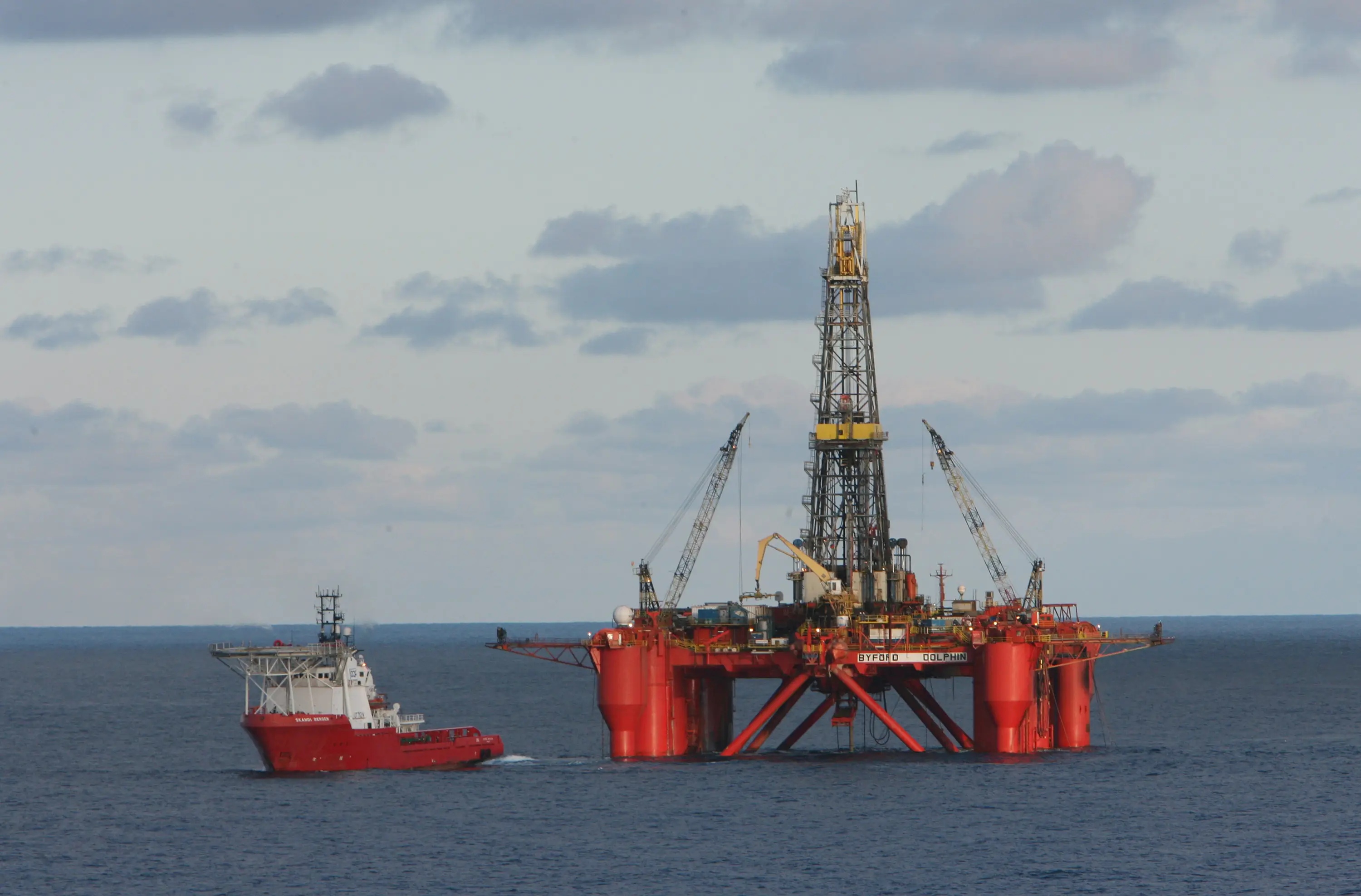
We are of course talking about the harrowing case of the Byford Dolphin accident, a disaster which has since been labelled as causing some of the 'most gruesome' deaths of all time.
Advert
Here's what happened.

What happened during the Byford Dolphin incident?
In November 1983, a group of men - named Edwin Arthur Coward, 35, Roy P. Lucas, 38, Bjørn Giæver Bergersen, 29, and Truls Hellevik, 34, as well as dive tenders William Crammond, 32, and Martin Saunders, 30 - were working as 'saturation divers' near the Byford Dolphin oil rig in the North Sea. This is where divers work at depths of 1,000 feet below the surface to carry out construction and maintenance work on deep-sea structures.
Spending prolonged periods of time underwater has an extreme impact on the body, with the team cautious of developing complications such as decompression sickness.
Also known as 'the bends', decompression sickness occurs when a diver surfaces too quickly, causing the nitrogen to form bubbles in the body.
To safely complete work at such depths, the men were confined to a series of compression chambers during their 28-day stint underwater, which helps alleviate excess build-up of nitrogen in the bloodstream.
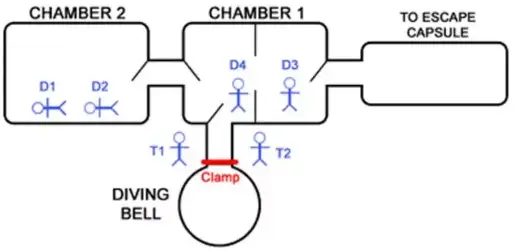
In order to travel between the pressurised living quarters and their work underwater, the group of men used a diving bell, which was sealed off from other parts of the underwater station.
Here is a rough map of what the facility looked like:
How did the Byford Dolphin divers die?
On 5 November 1983, two of the divers (Bergersen and Hellevik) were returning to the chamber via the diving bell, assisted by dive tenders Crammond and Saunders.
In order to safely move between the water and the highly pressured interior chambers, the men would make sure the diving bell was sealed before moving into the chambers to avoid rapid decompression.
However, a fatal mechanical failure would see the bell released too soon, seconds before Hellevik had been able to close the chamber door.
This meant that the area in which the crew lived went from nine atmospheres down to one - the normal surface air pressure - instantly.
The consequences were fatal.
William Crammond, a 'tender' who was assisting the divers, was hit by the dive bell as it flew away and killed.
However, things were much worse for the four divers: Edwin Coward, Roy Lucas, Bjørn Bergersen, and Truls Hellevik.
The rapid depressurisation caused the nitrogen in three of the divers' blood to turn into bubbles, effectively boiling them from the inside and killing them instantly.
Hellevik, who was closest to the partially closed chamber door, was also thrust through a 60cm wide gap, with the pressure expelling his organs.
Meanwhile, Saunders was the only man to survive the horrific incident, suffering from collapsed lungs, fractures in his back and a broken neck.
His injuries required multiple surgeries and a lengthy rehabilitation.
This wasn't the only tragedy to befall the Byford Dolphin, as a 44-year-old Norwegian worker on the rig was struck on the head and killed in a 2002 industrial accident.
In 2016, the Byford Dolphin rig was put to rest, now serving as a reminder of the risks involved with deep-sea industrial diving.
Topics: History
 Brenna Cooper