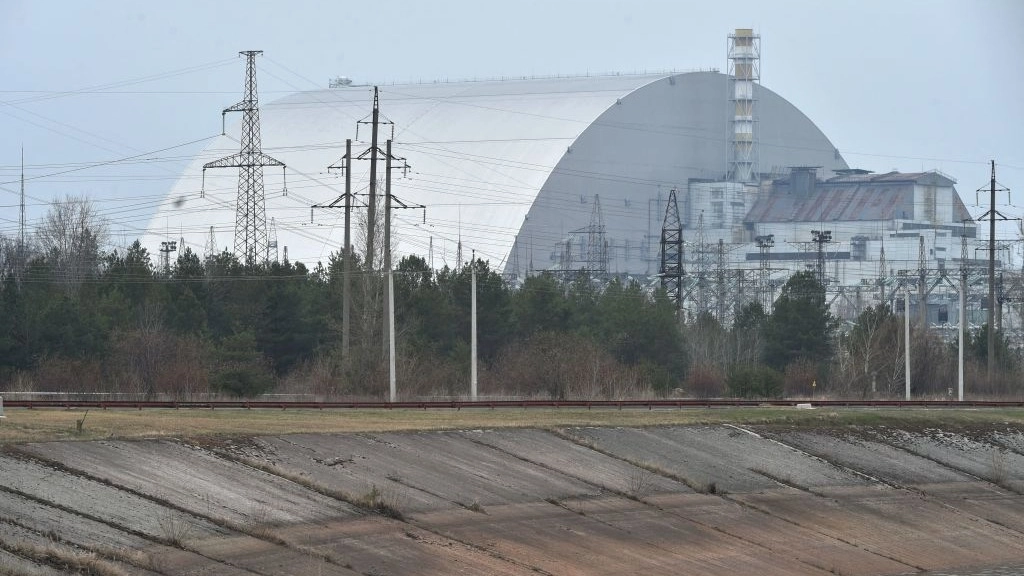
Chernobyl protective dome no longer blocking radiation following Russian strike

The dome covering the Chernobyl nuclear reactor in Ukraine has lost its 'primary safety functions' following a Russian drone strike earlier this year.
It was built over the site of the 1986 nuclear disaster after radiation poisoning caused a public health crisis across Europe.
After the sarcophagus, which only had a 30-year lifespan, was constructed, a protective shell - known as the New Safe Confinement (NSC) - was then built on top of it to avoid radioactive material leaking out.
Inspectors from the International Atomic Energy Agency (IAEA), the UN's nuclear watchdog, are now saying that Russia's February drone strike - in which they have denied - 'caused a major fire in the outer cladding of the massive steel structure built to prevent any radioactive release from the reactor destroyed in the 1986 accident'.
Advert
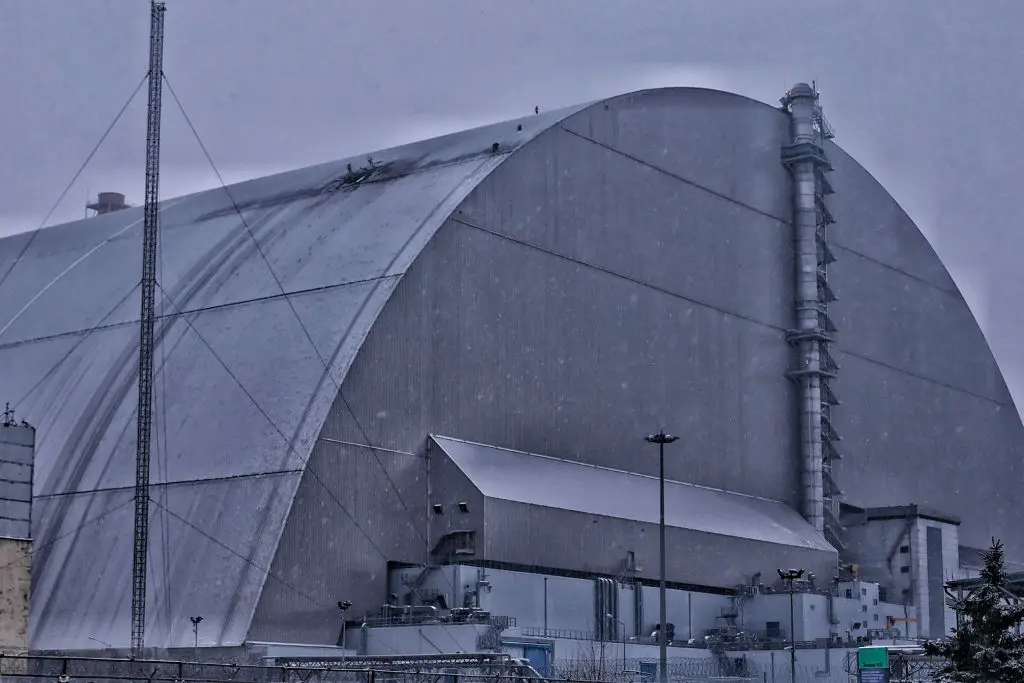
The researchers noted that 'there was no permanent damage to its load-bearing structures or monitoring systems'.
“Limited temporary repairs have been carried out on the roof, but timely and comprehensive restoration remains essential to prevent further degradation and ensure long-term nuclear safety,” Director General Rafael Mariano Grossi said.
“The IAEA – which has a team permanently at the site – will continue to do everything it can to support efforts to fully restore nuclear safety and security at the Chornobyl site.”
Environmental expert Professor Jim Smith, from the University of Portsmouth, also told the BBC that the risk of radioactive dust contamination 'is low' because it is contained within the thick concrete dome.
"It is not something to panic about," he added.
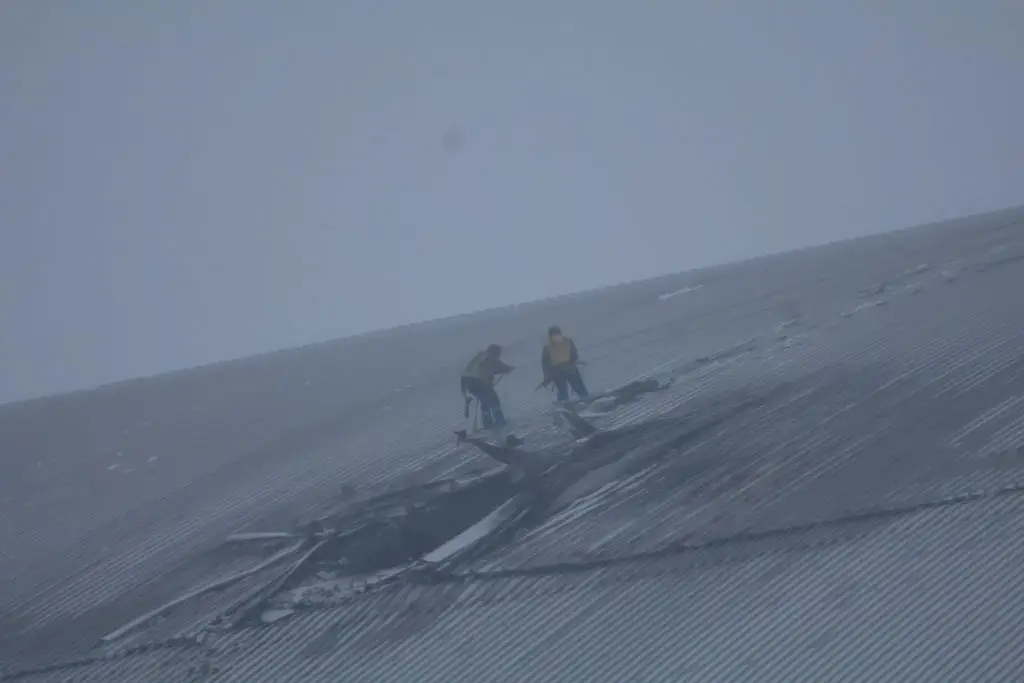
However, Artem Siryi, a Ukrainian Government official who manages Chernobyl’s protective cover, told The Sun that had the strike landed in a different area, it would have caused a more serious problem.
“We were very lucky that the strike did not hit the concrete shelter structure that holds the radiation in,” Siryi said.
“If it had landed in a different spot, it could’ve compromised the concrete sarcophagus enveloping the reactor. Then we’d be dealing with a very different situation.
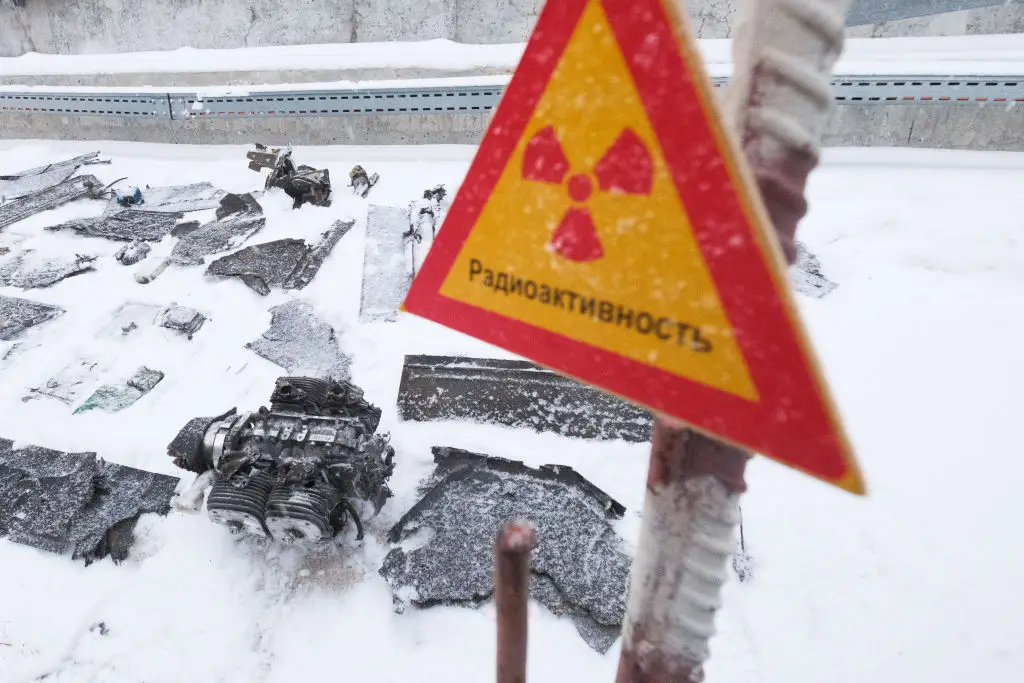
“If another drone hits, it could collapse part of the structure. That would mean radioactive dust, with particles of nuclear fuel from Unit 4, escaping into the environment.”
The IAEA said a 'full restoration' will take place next year and will be carried out once the war ends.
Ukrainian President Volodymyr Zelenskyy said in Downing Street today (8 December) that it is 'very important' to discuss 'very sensitive issues regarding peace talks'.
He added: “Things which are very important for today, I think unity between Europe and Ukraine, and also the United States.
“We can’t manage without Americans, we can’t manage without Europe, and that’s why we need to make some important decisions.”
President of France Emmanuel Macron also noted: “The Russian economy is starting to suffer.
“And now, the main issue [for Russia] is the convergence between our common positions and the US to finalise these peace negotiations.”
As Donald Trump continues his role as a broker for a peace deal, he told reporters that Russia 'is fine' with the proposed deal, but that he's 'not sure that Zelenskyy’s fine with it'.
“His people love it, but he hasn’t read it,” he said.
 Anish Vij