Doomsday Clock moves closer to the end of the world in 2026 update

The experts in charge of moving the Doomsday Clock have unveiled what the new symbolic time before humanity fails to prevent a catastrophe is.
After weighing up a multitude of factors, including the prospect of nuclear war or passing the point of no return with catastrophic climate change, they have made their decision whether to keep things where they are or shift that second hand closer to midnight.
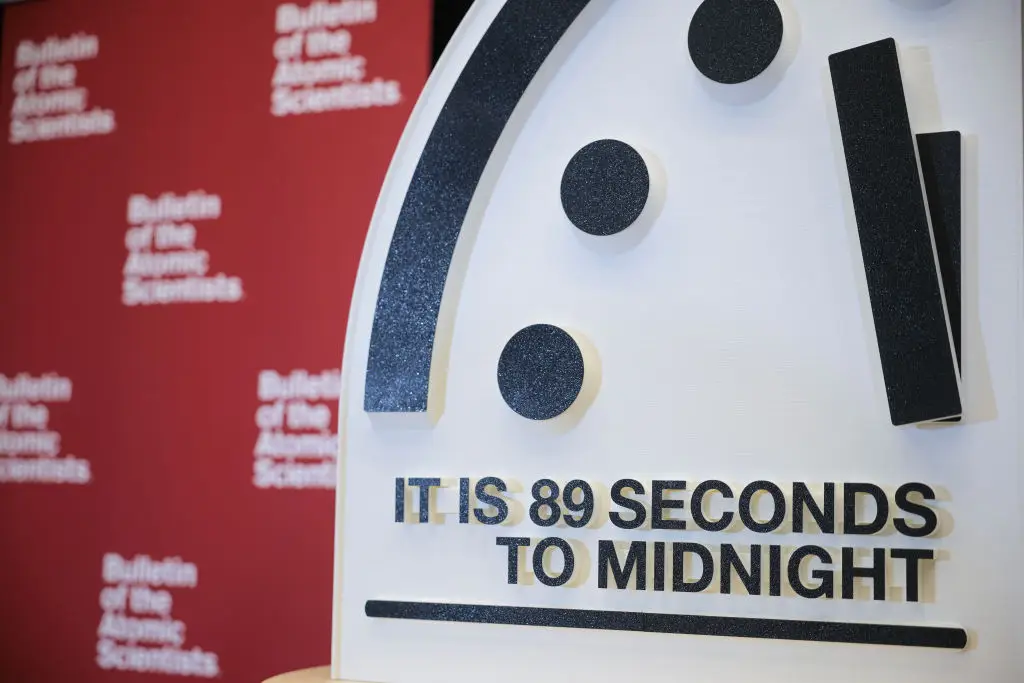
Last year, the Doomsday Clock was set to 89 seconds to midnight, the closest it has ever been to hitting that catastrophic marker, as they felt that shifting it forward a second from the previous setting of 90 seconds to midnight would send a message that we had never been closer to disaster and were still heading in that direction.
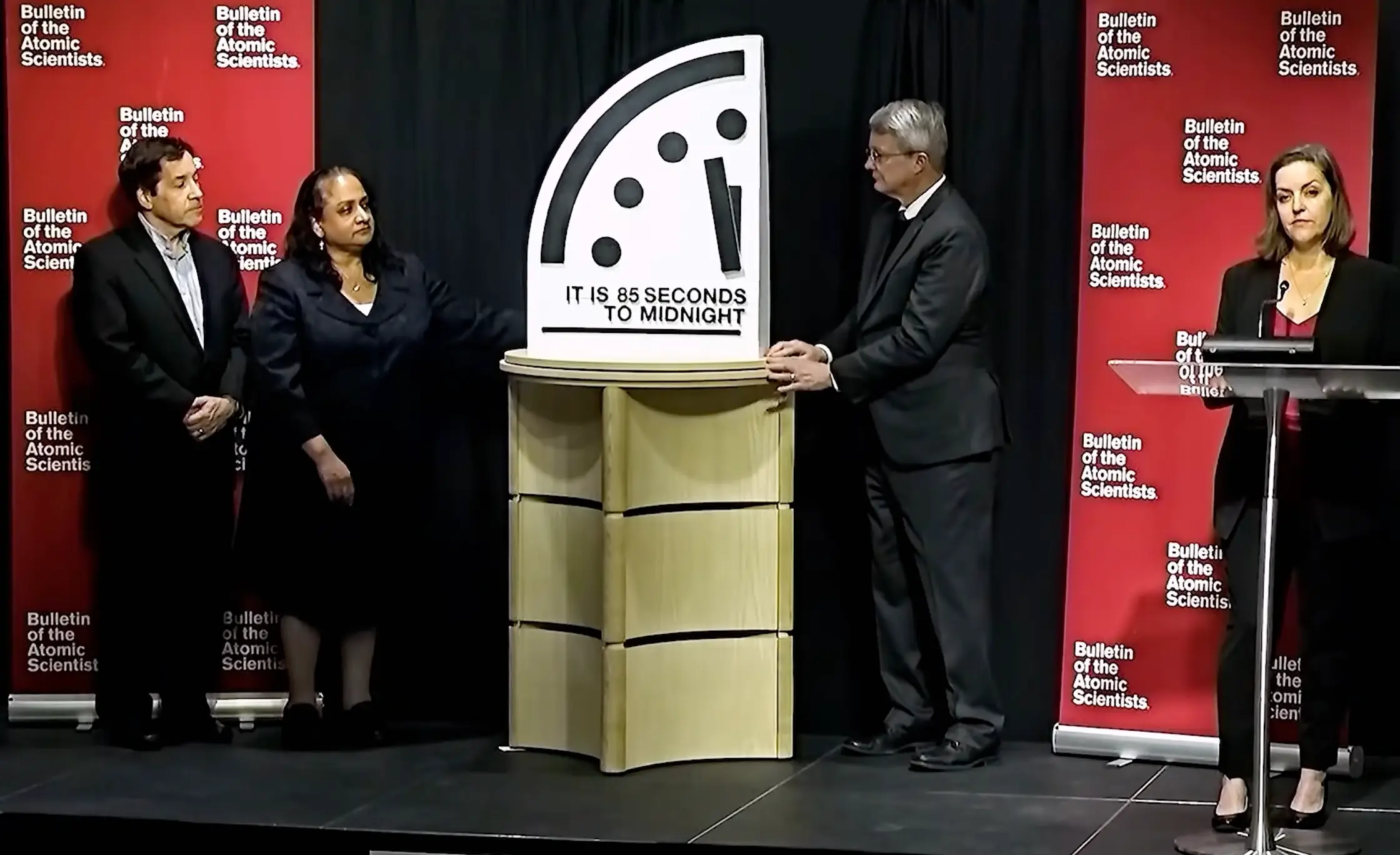
Now they've announced their new decision on where the hands of the Doomsday Clock ought to be for this year, and their decision is 85 seconds to midnight.
Advert
As the hands of the Doomsday Clock move forward and tick steadily to midnight, it's worth remembering that the clock is a symbol of our species getting closer to catastrophe without doing enough to take us off that path.
Experts from the Bulletin of the Atomic Scientists described 2025 as a 'bleak' year for the Doomsday clock, as factors such as climate change and the threat of war looms large over the human race.
What is the Doomsday Clock?
Back in 1947, The Bulletin of the Atomic Scientists became a magazine, and the first front cover it had was that of a clock designed by artist Martyl Langsdorf.
This image became the Doomsday Clock, and it has been set ever since then to measure how close humanity has come to wiping itself out in a nuclear apocalypse.
In more recent years, the people setting the Doomsday Clock have factored in other things, such as climate change, as well as the fear of nuclear annihilation.
By 1953, it was set at two minutes to midnight following the development of hydrogen bombs, and it reached three minutes in 1984 during a particularly chilly part of the Cold War.
Following the end of the Cold War in 1991 and the START treaty between the US and Russia, the clock moved back to 17 minutes to midnight, its furthest point away from that point of catastrophe.
Sadly, in the 35 years since then, the experts who keep updating it have lowered the time since then to represent the growing danger the world was in since that point.
In 2020, the clock was set at 100 seconds to midnight, and it has only ticked down since then.
What happens when the Doomsday Clock reaches midnight?
We're at the closest point the Doomsday Clock has ever been to midnight, and the nearer we draw to it, the nearer the end of the world is.
Should it ever hit midnight, it'd mean humanity was beset by a world-ending catastrophe which we had collectively failed to prevent.
Whether that be nuclear war, catastrophic climate change, or something else which we could have done something about but failed to, the Doomsday Clock ticking down to midnight would be a sign from the scientists that we had failed to avoid whatever terrible thing was happening.
Worse than succumbing to the inevitable is falling to the preventable, to know that everything is f**ked and all it would have taken to avoid that was a different course of action.
Topics: Doomsday Clock, World News, Science
 Joe Harker