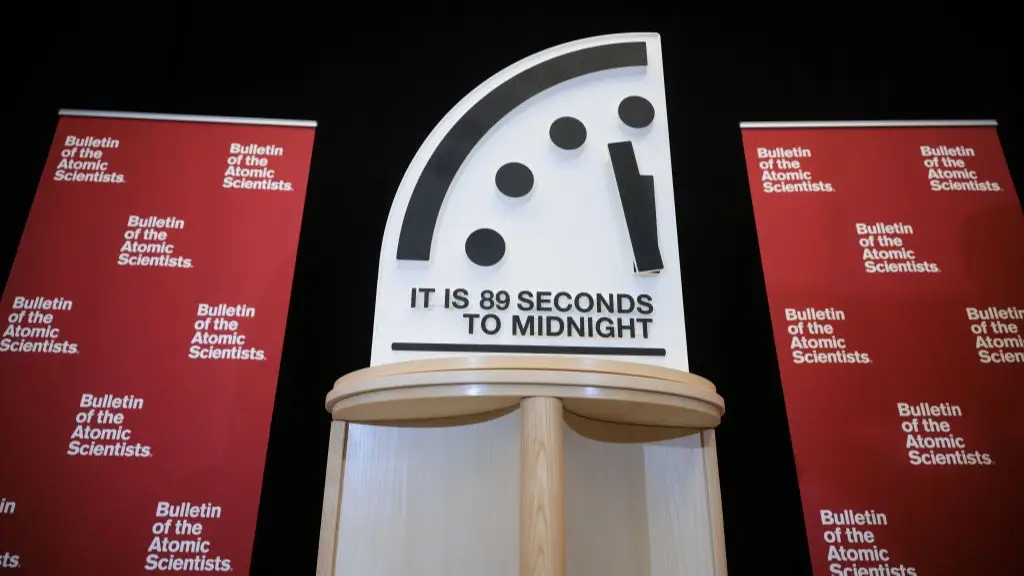
What will happen when Doomsday Clock hits midnight as scientists to convene today

A group of scientists responsible for setting the Doomsday Clock are due to meet today (27 January) and decide how many minutes away from midnight we are, and whether we're so close that time needs to be counted in seconds now.
As a visual representation of how close to doom we're getting it's a particularly worrying sign that's liable to cause some concern if the scientists who set it decide to move it forwards at all.
It'd indicate that they're seeing global trends which make the end of the world more likely, not less, which is a destination we should all be hoping to avoid.
Sadly, among our species, there are some examples who don't seem to want much in the way of peace, triggering conflicts and catastrophe around the globe while sitting atop an arsenal of planet-destroying weapons, which would be their final resort against those who would try to stop them.
Advert
Above all the goal is for humanity not to screw up so badly that we reach midnight.
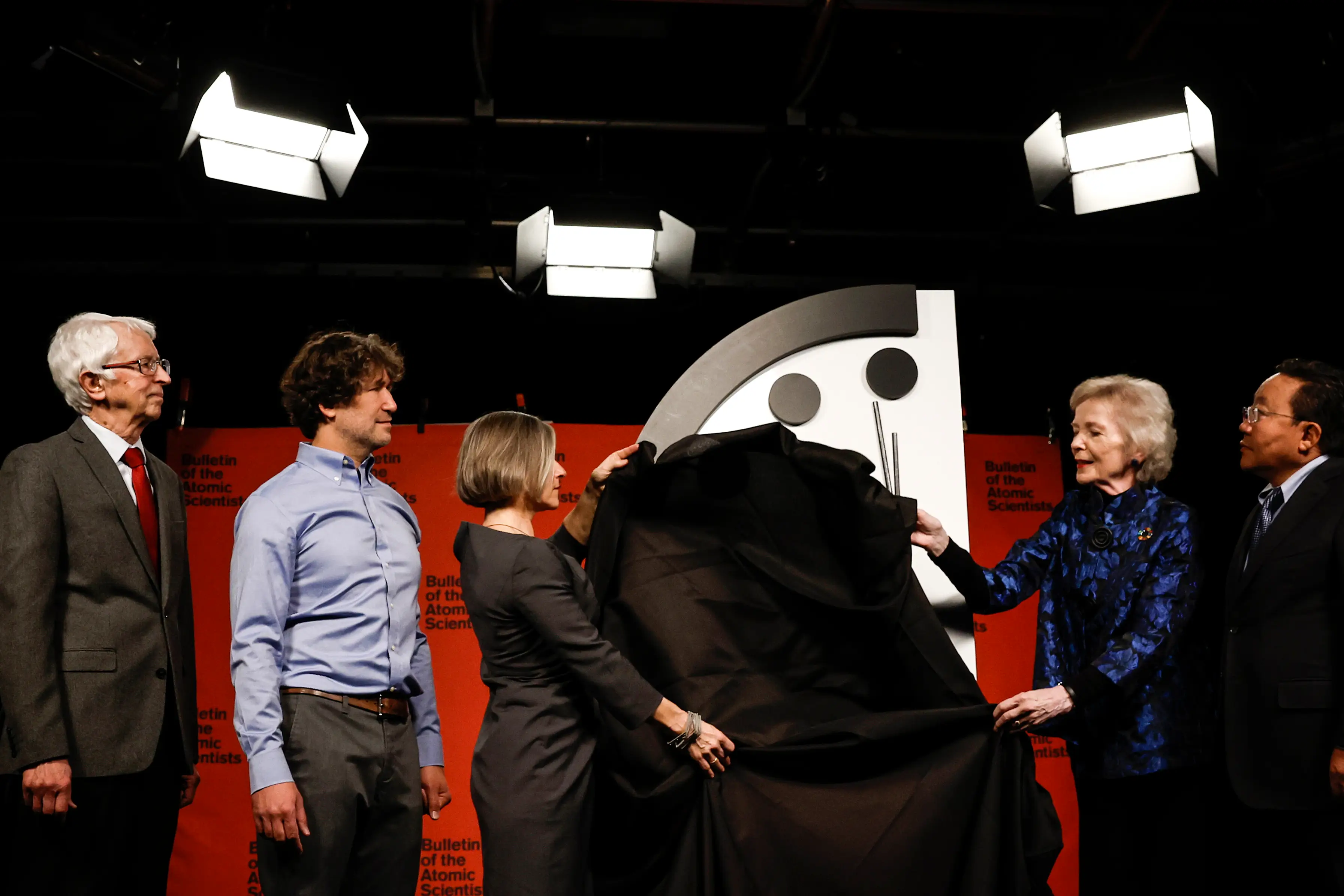
What is the Doomsday Clock?
Back in 1947, The Bulletin of the Atomic Scientists became a magazine and the first front cover it had was that of a clock designed by artist Martyl Langsdorf.
This image became the Doomsday Clock and it has been set ever since then to measure how close humanity has come to wiping itself out in a nuclear apocalypse.
In more recent years the people setting the Doomsday Clock have factored in other things such as climate change as well as the fear over nuclear annihilation.
By 1953 it was set at two minutes to midnight following the development of hydrogen bombs and it reached three minutes in 1984 during a particularly chilly part of the Cold War.
Following the end of the Cold War in 1991 and the START treaty between the US and Russia, the clock moved back to 17 minutes to midnight, its furthest point away from that point of catastrophe.
Sadly in the 35 years since then, the experts who keep updating it have lowered the time since then to represent the growing danger the world was in since that point.
In 2020 the clock was set at 100 seconds to midnight, and it has only ticked down since then.
What time is the Doomsday Clock currently set to?
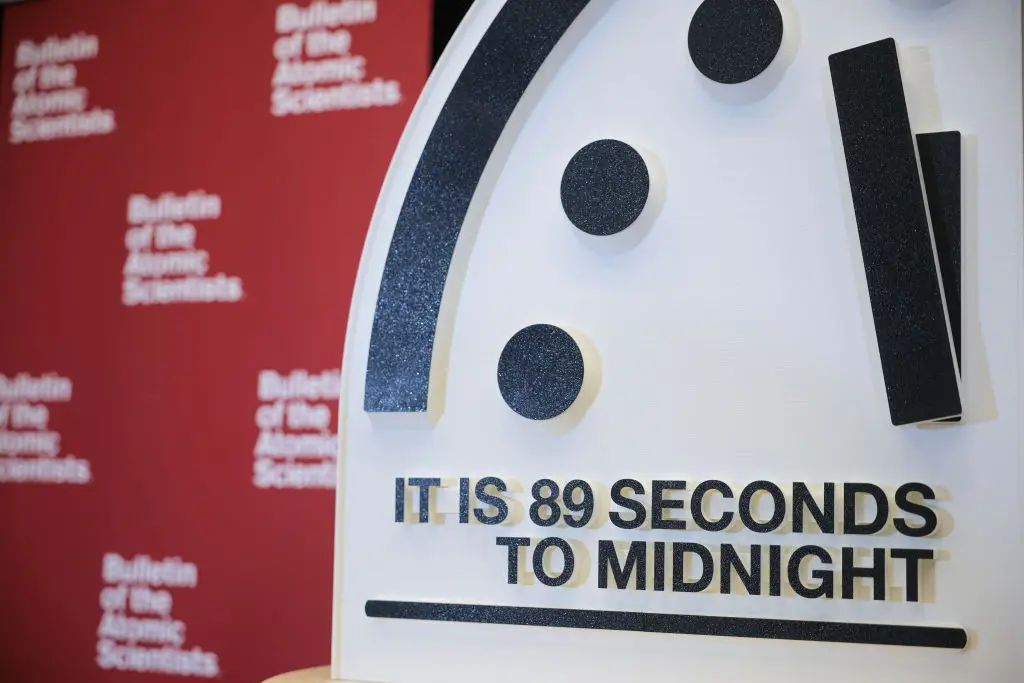
At present, it's 89 seconds to midnight, the closest it has ever been to reaching its chilling goal.
Last year those responsible for setting the time on the Doomsday Clock decided to advance it by one second due to 'unmistakable signs of danger' and what they saw as a failure 'to do what is needed to change course'.
In a statement they said: "Our fervent hope is that leaders will recognize the world’s existential predicament and take bold action to reduce the threats posed by nuclear weapons, climate change, and the potential misuse of biological science and a variety of emerging technologies.
"In setting the Clock one second closer to midnight, we send a stark signal: Because the world is already perilously close to the precipice, a move of even a single second should be taken as an indication of extreme danger and an unmistakable warning that every second of delay in reversing course increases the probability of global disaster."
However, it now remains to be seen whether the scientists responsible for the Doomsday Clock will send another message by allowing it to tick closer to midnight.
What happens when the Doomsday Clock reaches midnight?
We're at the closest point the Doomsday Clock has ever been to midnight, and the nearer we draw to it the nearer the end of the world is.
Should it ever hit midnight, it'd mean humanity was beset by a world-ending catastrophe which we had collectively failed to prevent.
Whether that be nuclear war, catastrophic climate change or something else which we could have done something about but failed to, the Doomsday Clock ticking down to midnight would be a sign from the scientists that we had failed to avoid whatever terrible thing was happening.
Worse than succumbing to the inevitable is falling to the preventable, to know that everything is f**ked and all it would have taken to avoid that was a different course of action.
Topics: Doomsday Clock, Science, World News
 Joe Harker