$80 billion mission could stop Doomsday Glacier that would destroy entire countries

A collapsing glacier that could boost rising sea levels and spell disaster for several countries might be stopped by the construction of a 50 mile wall.
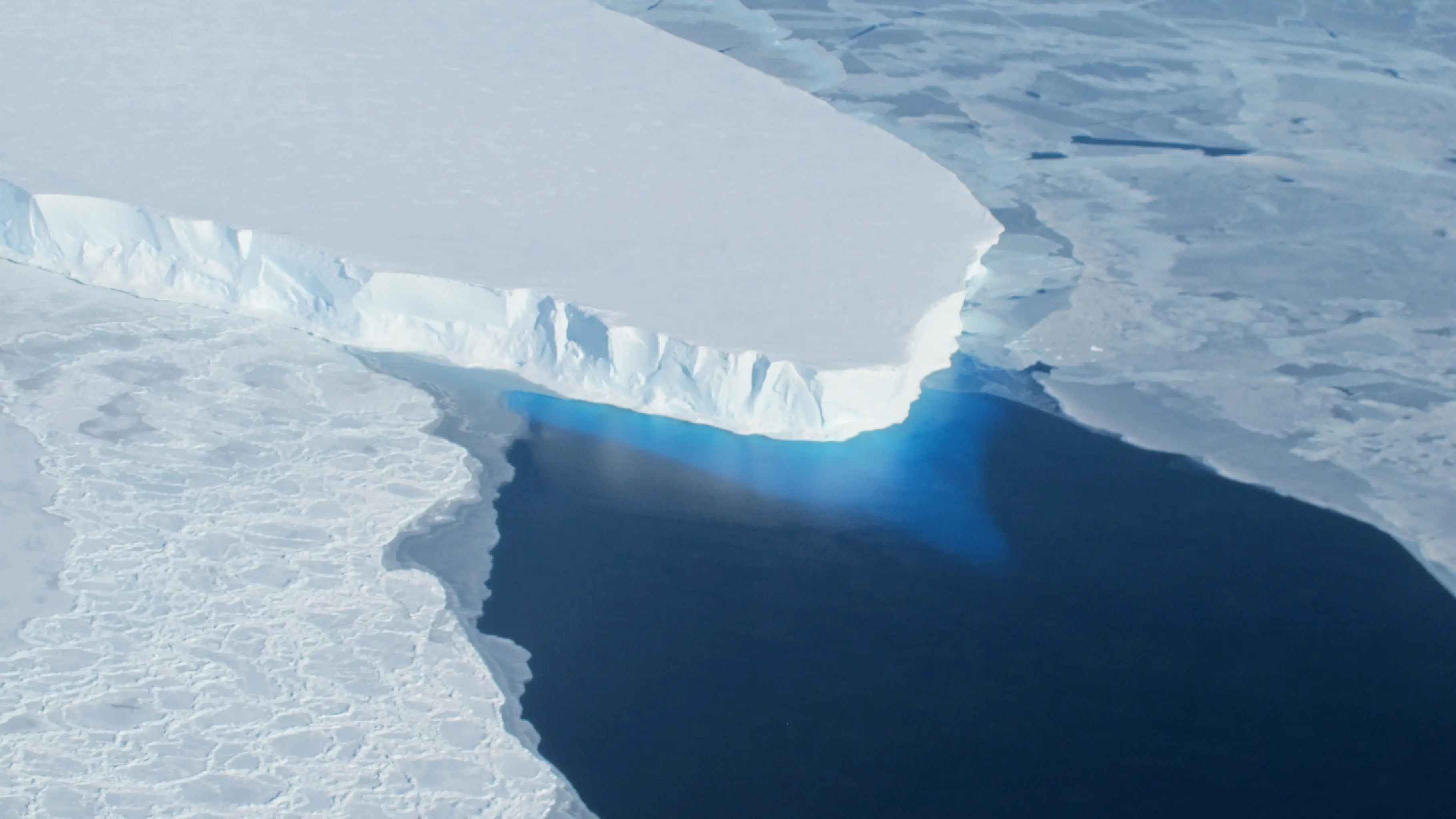
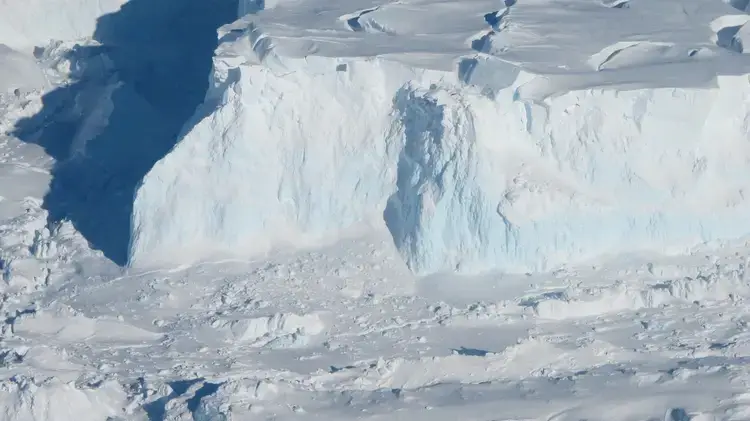
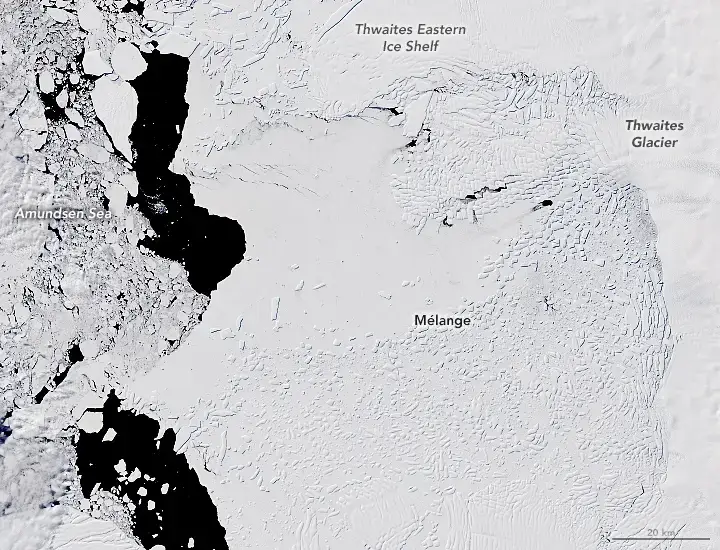
The Thwaites Glacier floats at the northern edge of the West Antarctic Ice Sheet and is about 80 miles wide, meaning it's an absolutely gargantuan chunk of ice.
Unfortunately it's melting and Forbes has reported that scientists studying the glacier have warned that it accounts for around 10 percent of rising sea levels.
If the whole glacier collapsed then it could raise sea levels by as much as two feet, and in the worst case scenario there are fears that if the Thwaites Glacier collapses then it may pull other ones down with it that could raise sea levels by as much as three metres.
Advert
That's genuinely catastrophic for the planet and would threaten several countries with significant land loss, so it's no surprise it's been given the nickname the 'Doomsday Glacier'.
It's also why a mission to stop this from happening is being looked into.
Marianne Hagen, co-lead of the Seabed Curtain Project, is investigating the possibility of building a seabed barrier 50 miles wide and 150 metres tall to stop this from happening.
She told IFLScience: "Just because it's extremely difficult is not an excuse not to try.
"For me, it's kind of a no-brainer. If it's possible to take 65 centimetres of global sea level rise off the table for everybody, with one single targeted intervention in one location, I'm willing to explore it. I think we have an obligation to do so."
While The Atlantic estimates such a project could cost as much as $80 billion to construct, Hagen has warned that the cost of not doing it would be far greater.
“If you compare with the coastal repair and damage cost, it's a fraction. The cost of this project will run in billions. The cost of the damages will run into trillions," she said.
Basically, the 'Doomsday Glacier' is being melted from below by a stream of warm water, this 50 mile underwater wall would block that while allowing colder water from around the glacier to flow over it and keep the seas around it cool.
The Seabed Curtain Project is currently considering building a test model in a Norwegian fjord, as Hagen said it would be 'absolutely insane' to go right to the Antarctic glacier and start building a 50 mile wall in the water near it.
It may be decades before the Thwaites Glacier collapses and the catastrophic impact it might have on sea levels is felt, but if and when it happens we definitely don't want to be stuck thinking we really ought to have done something sooner.
Topics: Global Warming, Environment, World News, Science
 Joe Harker