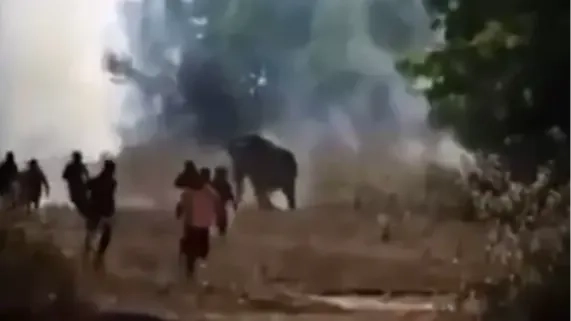
Killer elephant still on rampage kills more than 10 people in a week

There is currently a killer elephant on the loose in India, which has killed more than 20 people since it first struck on New Year's Day.
The large wild bull elephant went on a ten-day rampage throughout eastern India, as residents in affected areas ran for their lives, with many climbing trees and reportedly sleeping on rooftops.
It's been reported that the animal has killed almost two dozen people while leaving 15 injured in its tracks.
Back on 1 January, the single-tusked male killed a 35-year-old man in Bandijhari, a village located in Jharkhand’s West Singhbhum district.
Advert
The Indian Express reported that the animal then killed five members of the same family in the town of Sowan on 5 January, before killing five more people in Babaria the following day.
This tragically included a married couple and their two children.
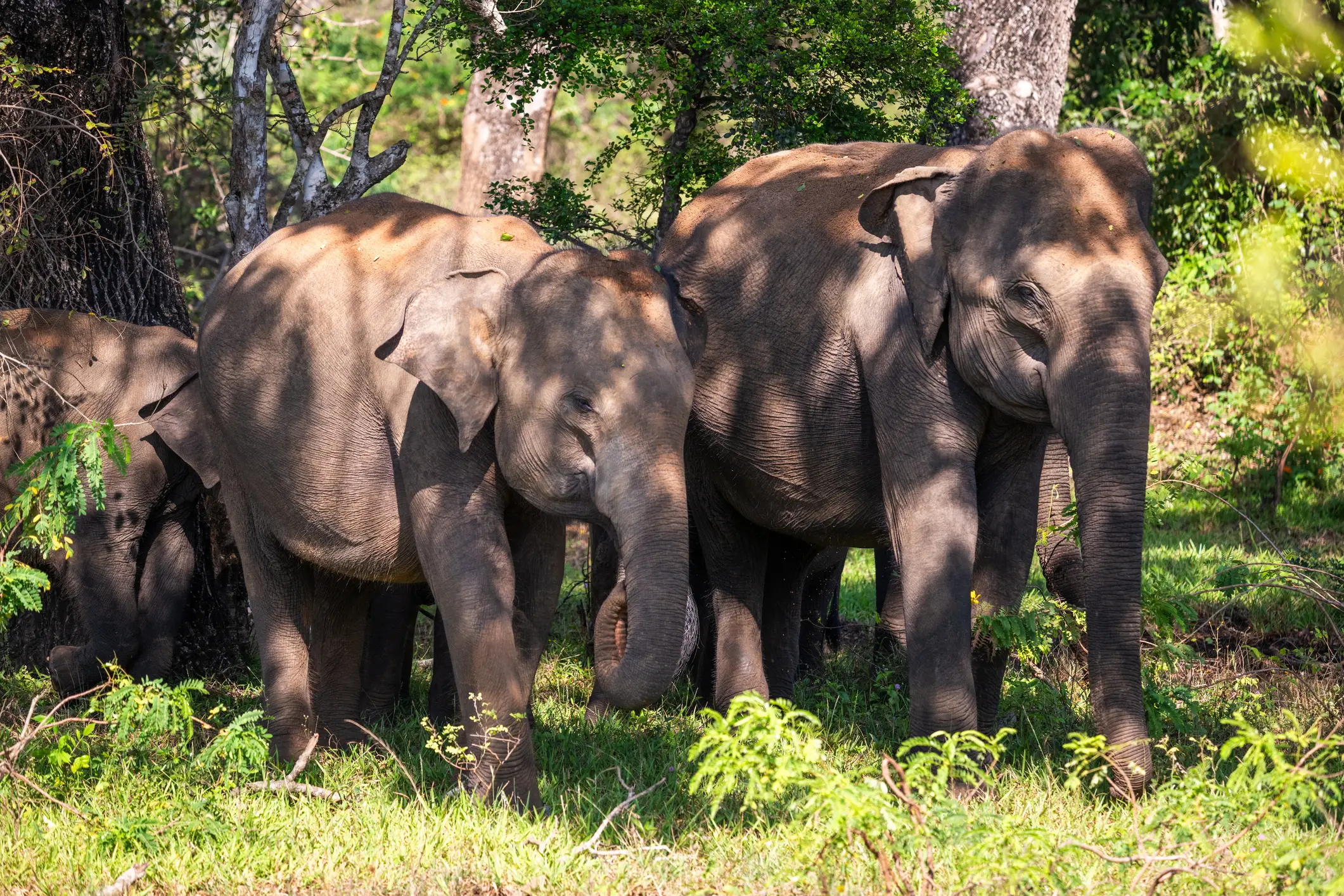
The Guardian reported last week that the elephant was covering around 18 miles a day and three attempts to tranquilise it had failed.
Experts believe that the herbivore is in a state of musth, which is when male elephants experience a surge in testosterone which puts it in a dangerous hormonal condition.
This can last weeks or months at a time, with the bull often showing aggressive behaviour while also appearing restless and unpredictable.
Unlike regular elephant behaviour, they can be seen covering long distances during this time, even attacking without warning.
Villages in the vicinity of the elephant took extra measures to remain safe, such as refusing to sleep indoors while also keeping tabs on the sound of breaking walls or footsteps as the elephant made its way through the forest.
It's believed that over 300 forest and wildlife personnel have been deployed in a search operation which has been aided by the use of technology.
Tracking teams, tranquiliser units and drones have been used, but the elephant is yet to be stopped.
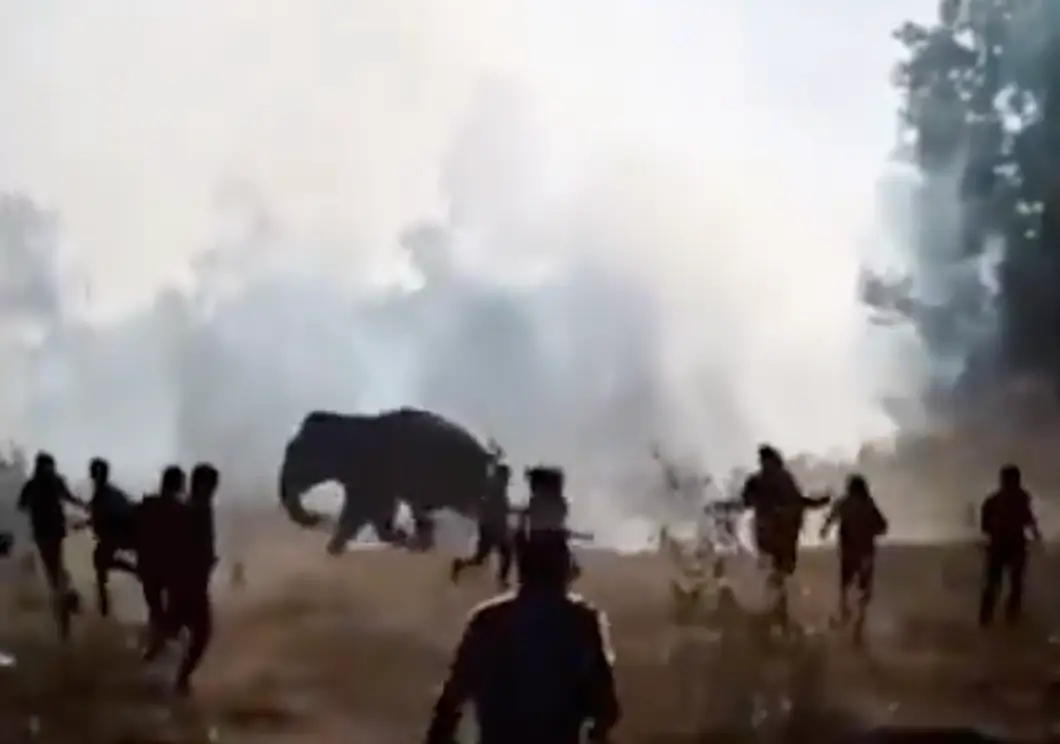
Efforts to tranquilize the elephant with dart guns proved unsuccessful, with the bull instead getting more irritated.
Teams were then forced to abort operations as they feared it would retaliate by charging at crowds which would gather near villages.
It is thought that the shrinking of elephants' natural habitats such as the forest, have contributed to more being forced into predominantly-human areas.
This has seen the number of human-elephant related deaths spike across India, with 629 people killed by elephants in India between 2023 and 2024.
Over the past five years, more than 2,800 people have died due to encounters with elephants.
Topics: World News, Animals
 Joshua Nair