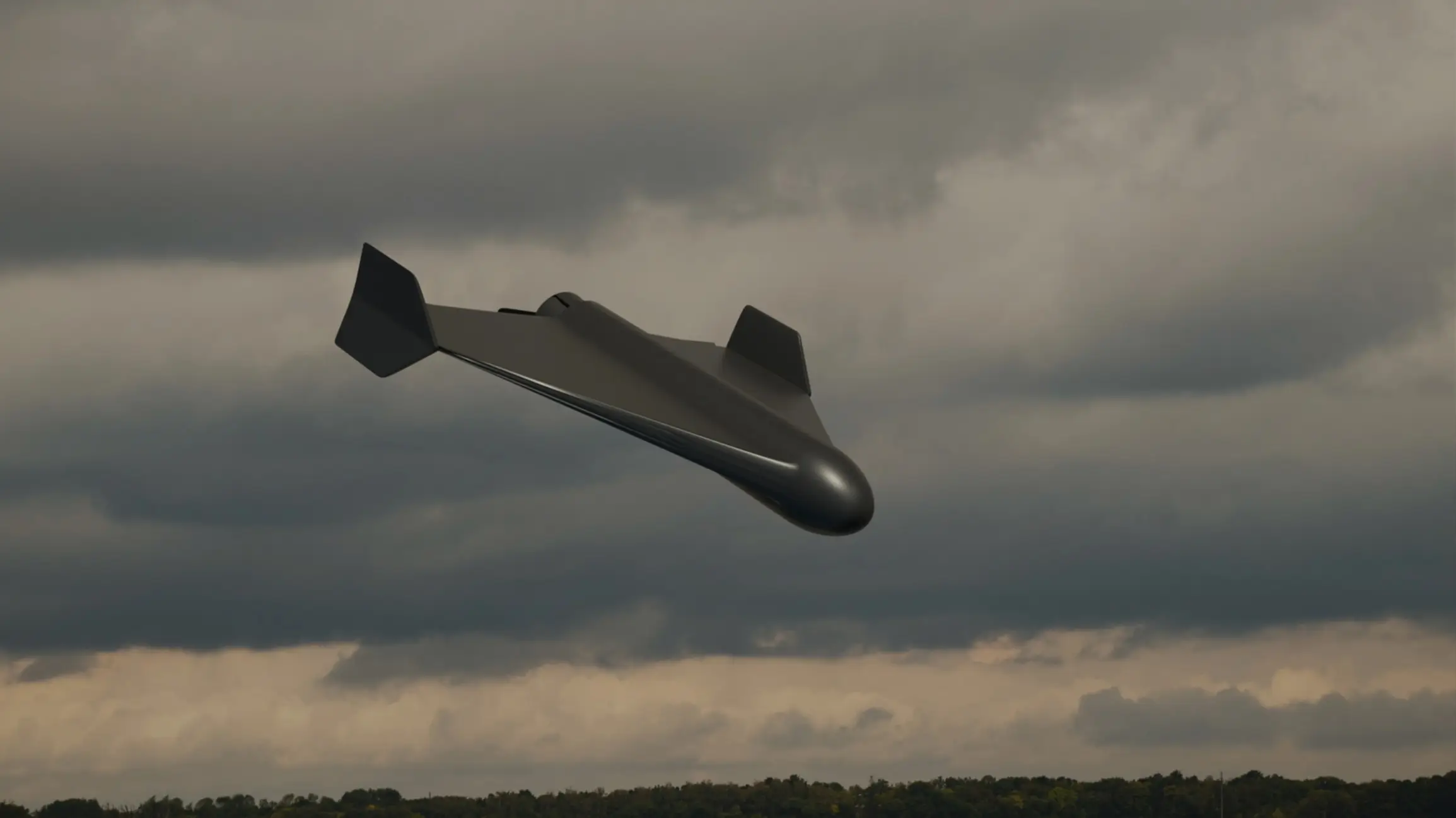
Terrifying reality of drone strike as CIA warn Russia is targeting British holiday hotspots

The terrifying reality of a drone strike has been unveiled as the CIA issue a warning to certain European countries about potential upcoming attacks.
According to reports, US intelligence services have shared details with several places - such as Spain, France and Italy - about a plot hatched by Russia to use drones against targets.
The alert has been linked to CIA director John Ratcliffe's reported visit to Moscow in August, the newspaper El Mundo claims.
Drones could be launched from merchant ships disguised as ordinary commercial traffic in a string of attacks, an unnamed source with close ties to the Lithuanian ministry of defence alleges.
Advert
Now a central part of modern warfare, drones are commonly used in attacks to track movements, direct artillery fire and find enemy troops.
First-person view (FPV) drones are often used to carry explosives and crash directly into targets such as vehicles, tanks and bunkers.
Fit with front-facing cameras, these small drones can be flown remotely and are able to chase armoured vehicles and stalk individual soldiers.
A drone operator from Ukraine previously explained how it is impossible to successfully avoid a drone - and shared the stark reality of experiencing a drone strike.
You cannot hide from the FPV, and to run is useless," Pavlo told BBC News. "You try to be as calm as possible, and you pray."
During a drone strike, a continuous buzzing, whining or humming noise can be heard, which has been compared to the sound of a swarm of bees or a lawnmower.
Even if a drone is high up or hidden away, the high-pitched buzz can still be heard clearly.
Visually, a drone strike may appear to be a low-flying aircraft or bright flashes and smoke in the air.
Drone operators, even after leaving the military, can be left with constant reminders of strikes in everyday life.
Pavlo, who spent more than a year on the front line in Ukraine, revealed that he struggled to forget the sound of the drones once he returned home, with mechanical tools such as motorcycles and air conditioners bringing back memories of being hunted.
The sound of bees and flies would also prompt him to panic, as he admitted last year: "I don't like to go into nature anymore and hear this sound, because it reminds me so hard of the drones."
This is often referred to as 'droneophobia' by medical professionals.
An explosive-laden Gerbera drone, launched from the sea, could be used by Putin in the potential attacks, authorities believe.
The Gerbera drone can travel up to 600km (372 miles) and flies at a speed of around 16km per hour.
A disguised merchant ship is said to be able to 'transport several of these drones' which can be launched easily.
Speaking about the impact drones have had on war, military intelligence expert Philip Ingram MBE told the The Sun: “The threat of attack is high and growing on a daily basis – it has been ever since drones became the centre of attention in Ukraine.
“There could be the dropping off of flammable petrol bombs from a drone into a crowded space – a concert or sports ground – a white powder which people don’t know what it is, which would cause panic, to dropping explosives or even a suicide drone to a crowded place or political space,” he continued.
“Suicide drones with explosives could even be flown in with FPV goggles, in the same way Ukraine or Russia are currently using – that’s very easy.”
Topics: Russia, News, World News
 Danni King