'I spent a day in the pub to test out the anti-boozing ankle tags'

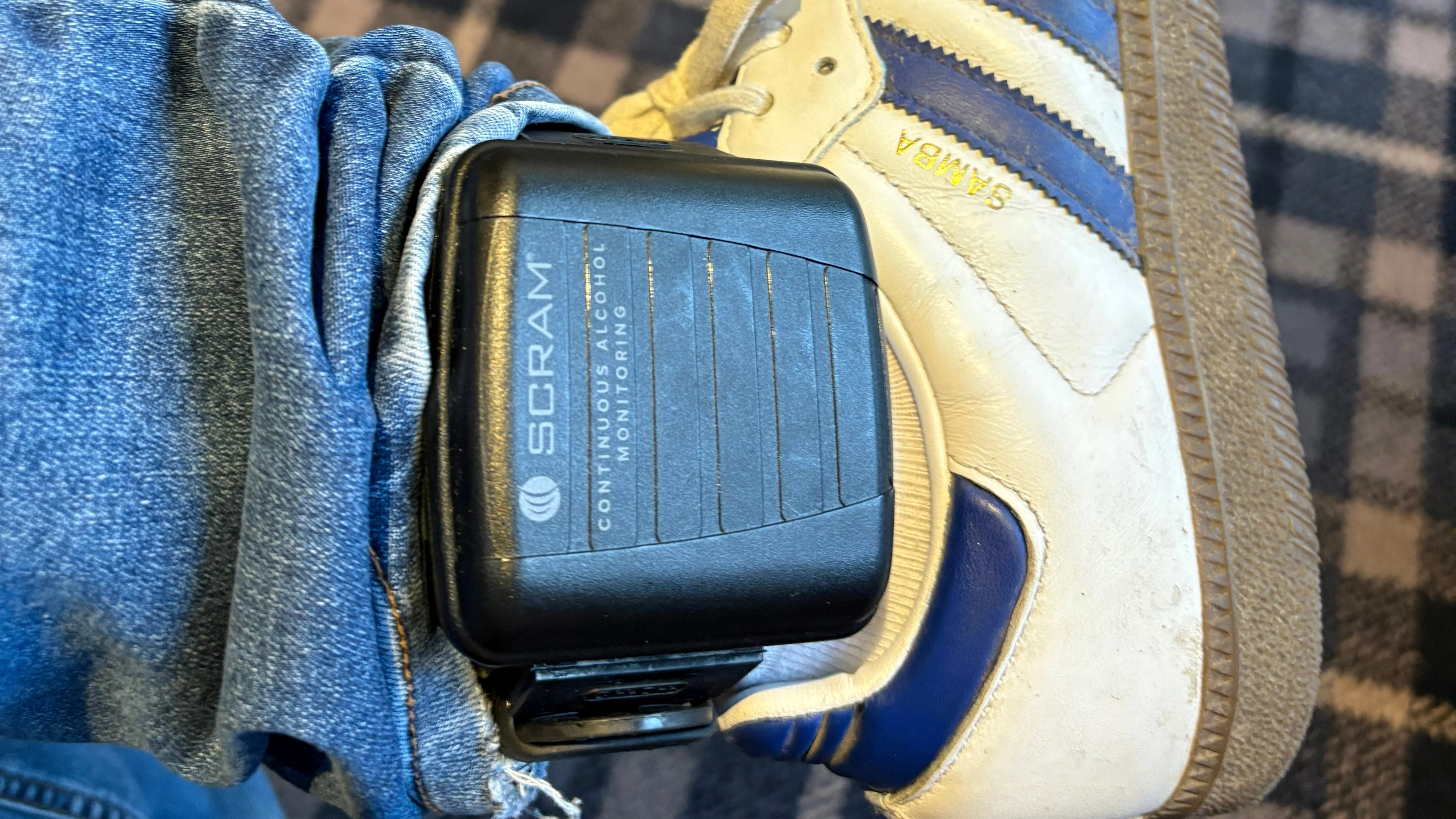
The tag lock clicks into place as the device is fastened around my right ankle and tightened to fit so it won’t jostle around.
It doesn’t quite clamp against my skin, by design there’s a bit of space between the device and me, but it’s noticeably there. A chunky block sticking to my ankle.
I don't think it was ever in my job description that I was going to get electronically tagged but I've ended up spending my Thursday morning in the Ministry of Justice getting fitted for an ankle bracelet.
This is the start of my day wearing the SCRAM continuous alcohol monitoring bracelet, or SCRAM CAM for short, and since this is meant to detect if you've been drinking alcohol my next stop is the pub to generate results for it.
Advert
Rolled out across England and Wales, courts use these to monitor people’s alcohol intake as the device is able to tell if someone’s been drinking and has ways to suss out whether they’re trying to cheat it.
One of the problems with other forms of alcohol monitoring such as a breathalyser is they can only test for alcohol at the time someone is being tested, if someone's been drinking and sobered up they could evade detection.
The SCRAM CAM transmits data every 30 minutes and collects its evidence from bodily functions you can't stop happening, so if you've been drinking it's going to find out and tell on you.

A trip to the pub
Respectable citizen that I am, dear reader, you'll not be shocked to learn that I have never before been electronically tagged.
First thing the SCRAM CAM does is send readings every two minutes to establish my ‘baseline’ so the bracelet knows what sober Joe’s readings look like and what to compare it against, every time it sends a reading it buzzes, it's like I've got a phone on vibrate stuck to my ankle.
It’s about 12:10pm by the time I’m in a pub and over the next couple of hours or so I get through a couple of vodkas and three pints to give the SCRAM CAM something to detect.
The SCRAM staff measuring my alcohol intake reckoned I’d quaffed about eight units in the span of a couple of hours.
I'm not exactly a heavyweight drinker so I'm definitely feeling the effects by the time I'm doneI definitely shouldn't try to drive or operate heavy machinery.
How the SCRAM CAM works
Having spent a couple of hours gathering data in the pub it's up to my body and the SCRAM CAM to do the rest.
Here's the science-y bit, of the alcohol I’ve quaffed about 95 percent of it will be dealt with by my liver, and another four percent comes out through the lungs and kidneys.
That final one percent is what the SCRAM CAM monitors, my body deals with that last bit of alcohol by releasing it through the skin so transdermal testing will pick it up, and that's what the device is.
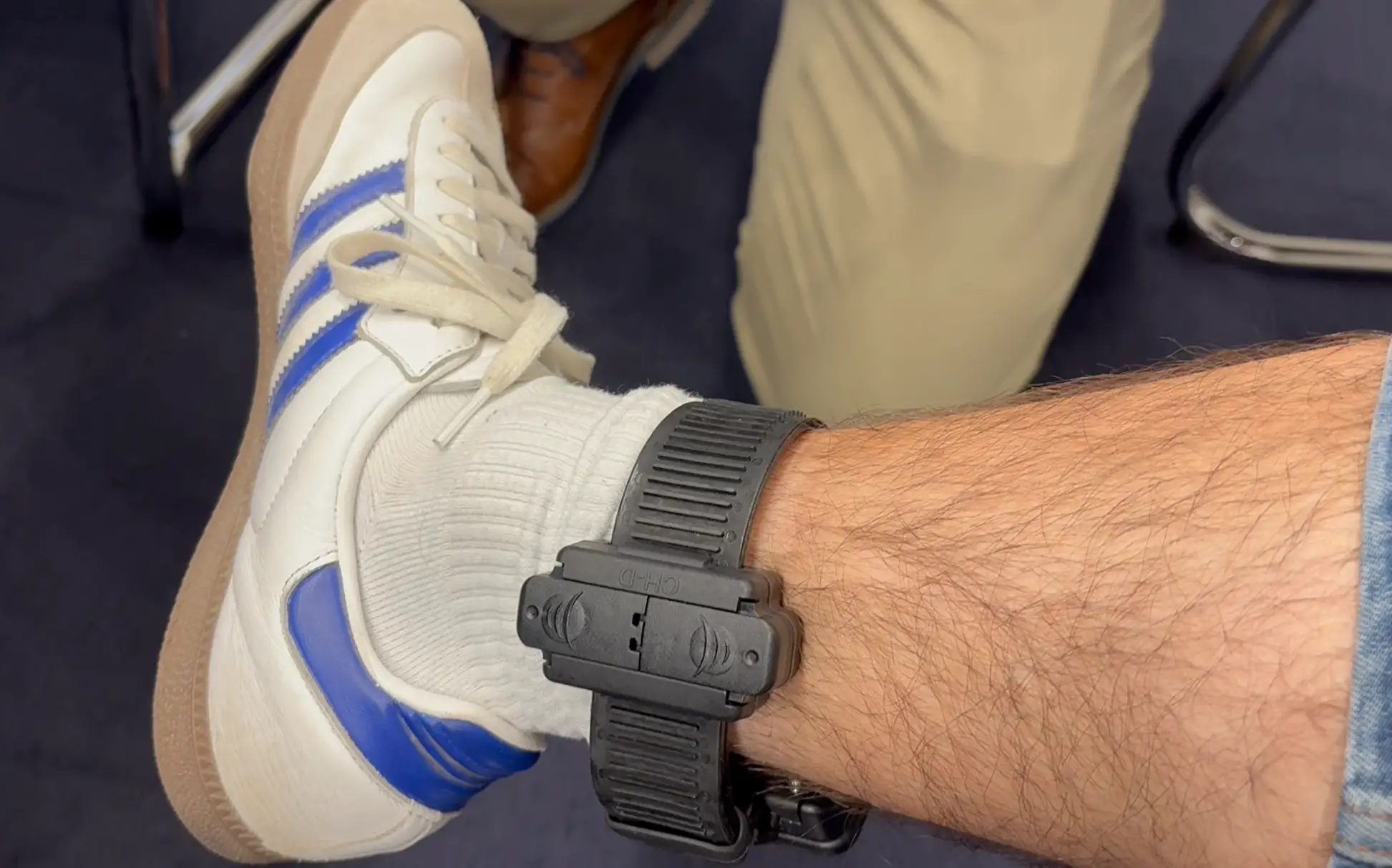
Whenever the SCRAM CAM takes a reading it transmits that to a base station device, which then sends that information onto SCRAM for their team to monitor.
That means there's a human on the other end who can see if I've been drinking alcohol or tried to tamper with the device in some way.
Rolled out in London in 2014 and across England and Wales from 2020 onwards, SCRAM tells me their device data gets used in court cases and when it's gone to trial they haven't lost yet.
The ankle monitor experience
It's a bulky thing to wear, every step is a reminder it's there, and I'm very glad we're not in heatwave weather where I'd be wanting to wear shorts because on this day I can hide it beneath the hem of my jeans.
It's not entirely invisible but it'd take someone with a particular intention to stare at my ankles to spot it, so either nobody in London was that day or if they were they didn't decide to tell me.
SCRAM say there's a future model in the works they’re hoping will be one third the size of the blocky object I've had on.
All in all I'm pretty glad nobody seems to have spotted it, especially since the actual explanation sounds far less plausible than the reasonable assumption someone would make seeing a person with an ankle tag.
Luckily for me the version I’ve been fitted with comes ‘pre-broken’, meaning I can look forward to taking it off at the end of the day.
That’s not the case for those who are ordered to wear it. The tag stays on for the duration of their sentence and it’s not coming off until you’re finished.
That’s not to say people haven’t tried to trick the device.
SCRAM staff told me about a trio of the more novel ways people have tried to trick the device’s sensor, include sliding raw chicken skin between their ankle and the monitor, attempting to block the device by putting a condom down there or slipping in a slice of bologna.
Another bloke thought he'd fooled it it by sitting in his garden and drinking while he kept his ankle submerged in a paddling pool to stay cool in the hopes he wouldn't generate sweat.
It didn’t work.
A durable device
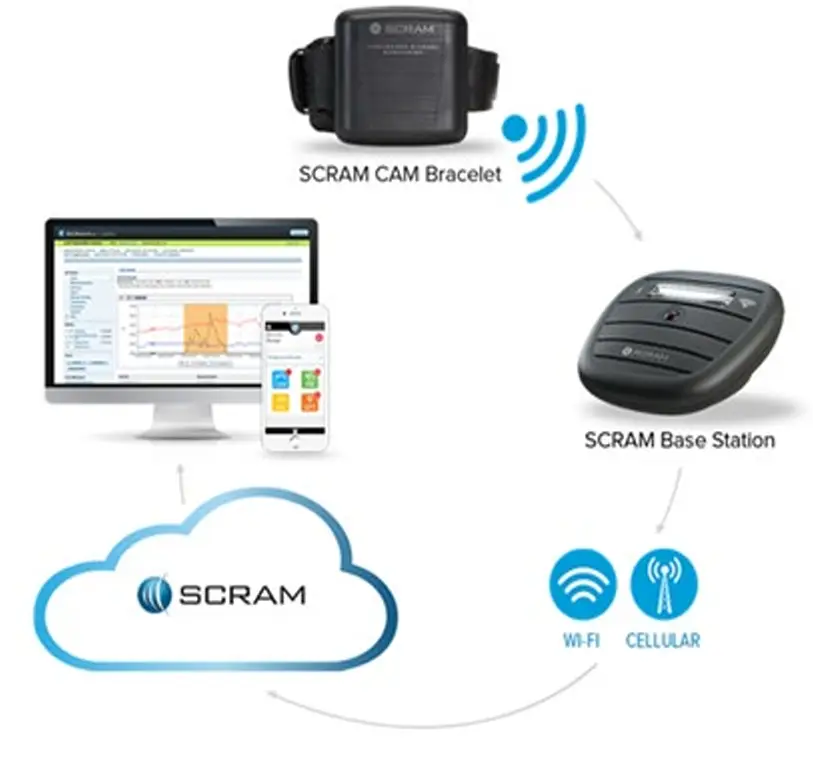
I’m told people do try and break these things off from time to time, but the tag knows when it has been removed and the level of force you’d need to try and break it is not something you’d want to be applying to an object attached to you.
Around 5,100 people in England and Wales are wearing these things and I’m assured that the vast majority of them are very well behaved.
In fact, 97 percent of people fitted with one of these ankle monitors stop drinking and stay off the alcohol. Once they’ve reached the end of their allotted time some of them even ask if they can keep wearing it as they reckon it'll help stop them from going back to the bottle.
One person even got a tattoo of the SCRAM CAM on their ankle to keep a reminder of where it used to be.
Across the pond the around 20,000 Americans who wear one are also largely well behaved, though SCRAM tells me one American returned their ankle monitor with a bullet in it.
An evening out with an ankle tag
Since I’m tasked with wearing this thing all day it stays on for the remainder of my shift and it’s coming out with me for an evening out in London.
At about 7pm I’m in the queue to get into Les Miserables - because I'm a cultured soul - with the tag around my ankle, thinking ‘please don’t notice this’ as I go through security.
'It's for an article about technology the Ministry of Justice is using' sounds like an atrocious lie.
When I'm sat down and not moving my leg around I'd almost forget it was there if not for the buzzing every 30 minutes to signify it’s taking a reading.
Since I'm out of range of the base station the SCRAM CAM stores up its readings for when I get back in range, since for obvious reasons I've not brought it out with me.
At the end of the day
Once I'm back at the hotel I decide to let the ankle tag buzz once more before removing it.
People ordered to wear these can't remove them but I've been provided with the tools to take mine off, and the device knows when I've taken it off and sends that as a signal back to SCRAM too.
Again, this is something I'd get in trouble for if I'd been ordered by a court to wear the ankle tag, but since this is for journalistic purposes I get to take it off.
I've got to say being electronically tagged was a novel experience, though if I'm going to be walking around I'd rather not have a bulky ankle bracelet on if I can help it.
Certainly, the experience of walking around with it and the dissonance between stepping with a leg that wasn't tagged compared to one that was meant I could never completely get used to wearing it.
Not uncomfortable, but not ignorable.
The results are in
Next morning, I head back into the Ministry of Justice to be shown just what data my day of being tagged has produced.
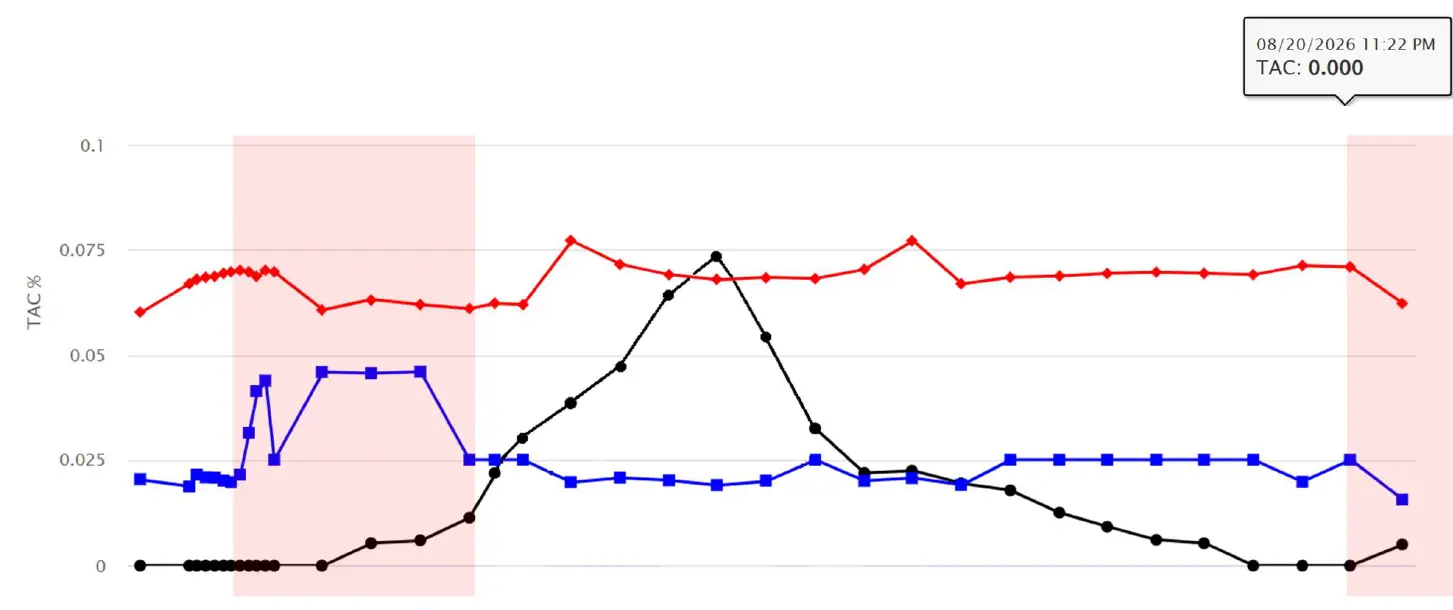
My first transdermal alcohol concentration (TAC) reading came in at 1:10pm, and peaked at 4:47pm before dropping down as my body worked the alcohol out of its system.
It wasn't until 10:22pm that the tag started delivering zero readings again, indicating that it had been about 10 hours since I started drinking to return to that point.
Interestingly, the final reading of the day showed the figure ticking back up slightly.
Hand on heart, dear reader, this was not me having a nightcap.
Instead it’s because the SCRAM CAM is able to pick up ambient alcohol in the air. The readings are much lower than if I’d been drinking, so SCRAM’s staff are able to tell the difference.
It's suggested to me that some of the cleaning products used to make my hotel room spick ’n span could have contained elements of alcohol and assure me they can tell the difference between someone drinking alcohol and simply being in an environment where it's in the air.
Topics: Alcohol, UK News, Originals, Technology
 Joe Harker