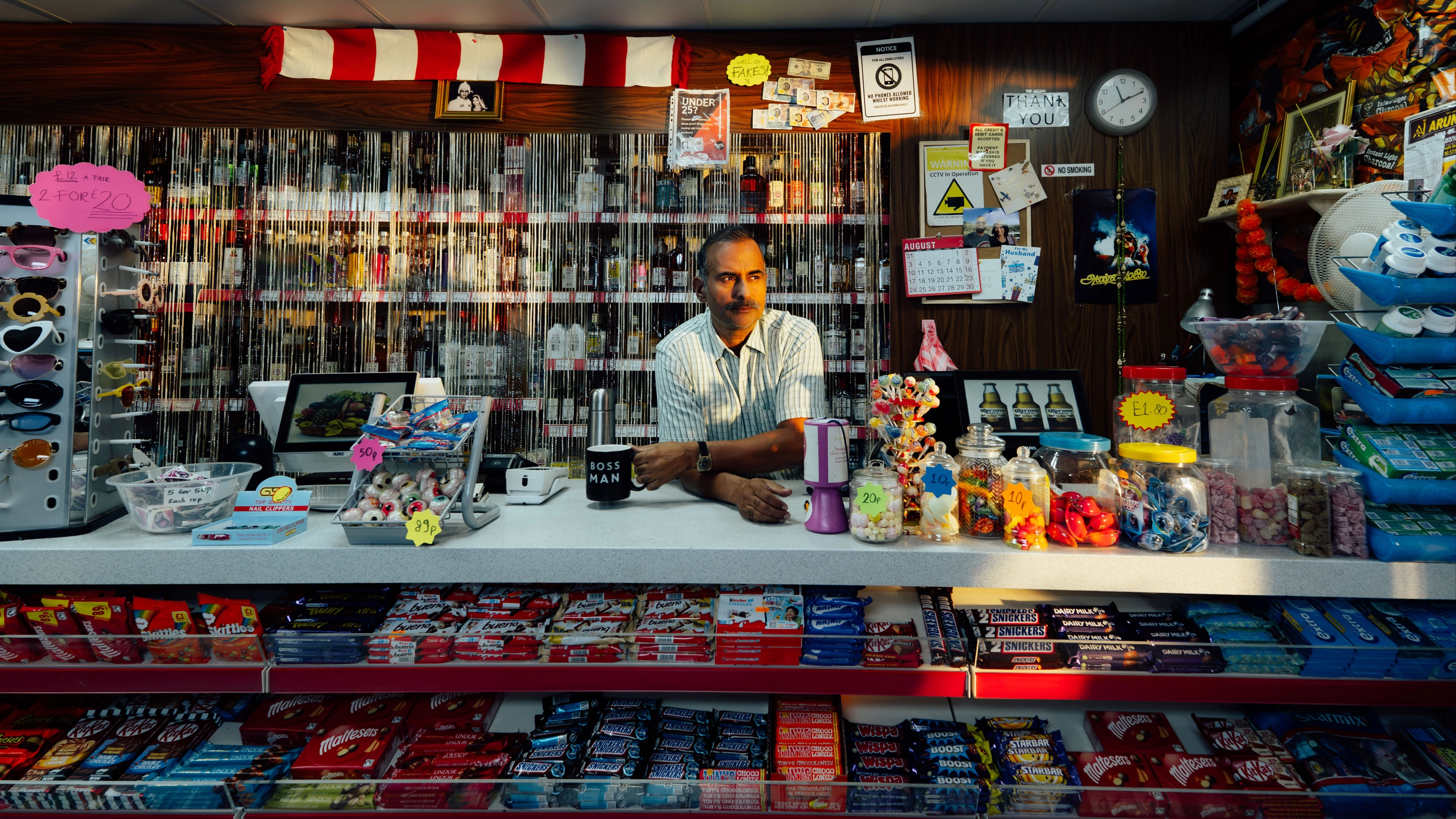
Young filmmaker celebrates the convenience store 'bossman' in British culture

What does it mean to call the UK home in 2026?
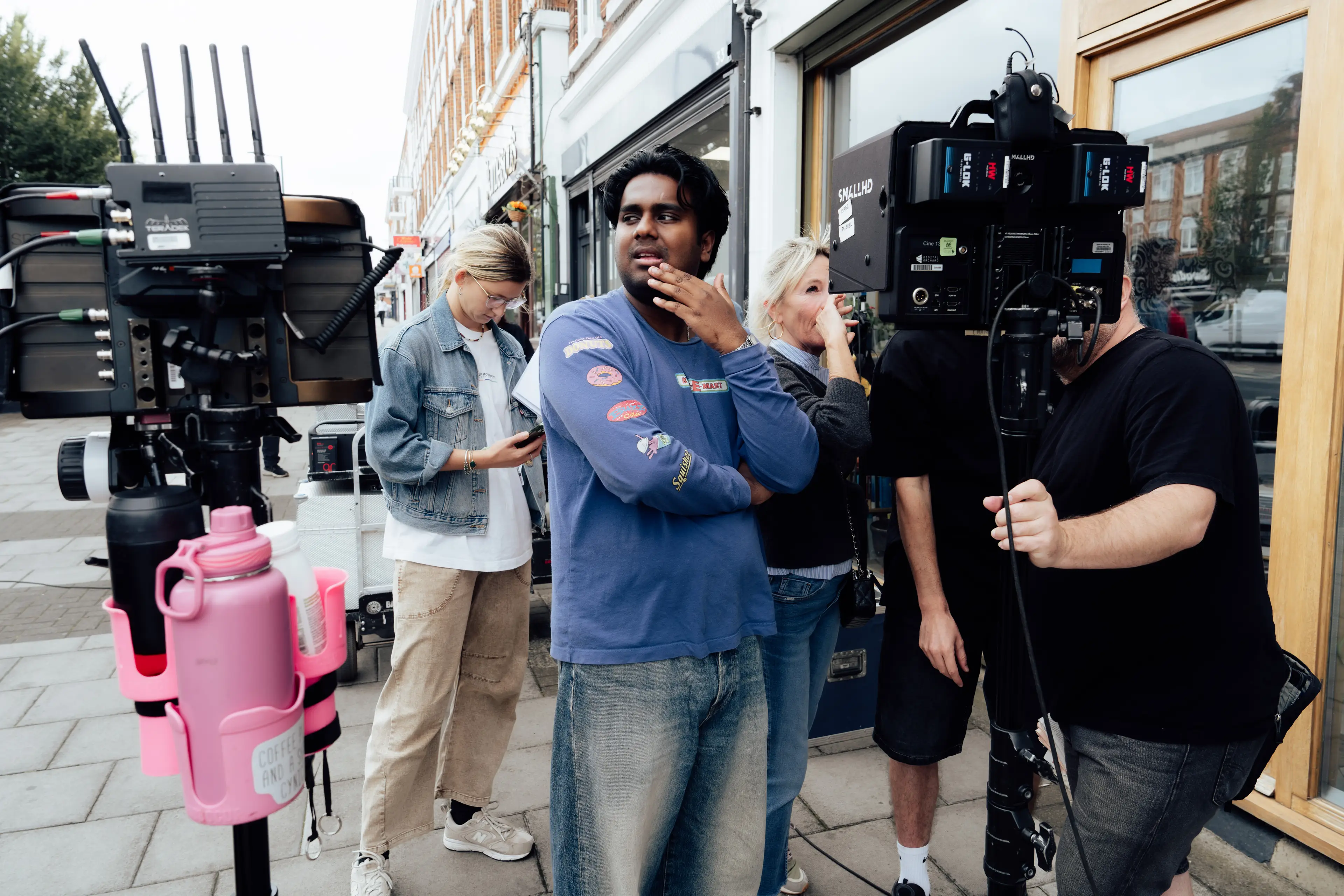
For Rikaz Niyas, home is his local community in Harrow, Northwest London.
This is also the location of his short film Through Bossman’s Eyes, which recently won LADbible’s ‘Pitch Your Story’ partnership with Young Arrows, Merman and the Race Equality Foundation.
After recruiting the 'Bossman' at his local corner shop, Rikaz crafted a short film which explores both his experience of being both British and South Asian, as well as how community spaces are often a melting pot for people from all walks of life.
Advert
"I always had that story in my life," Rikaz told LADbible of his story idea. "It was something that I immediately kind of connected to when I was growing up.
"My dad used to supply a lot of the corner shops across the UK. In the summer, I used to spend time there just waiting in the van or in the shop; those kinds of memories stayed with me.
"And it was my first ever experience at that time seeing all different people, all walks of life."
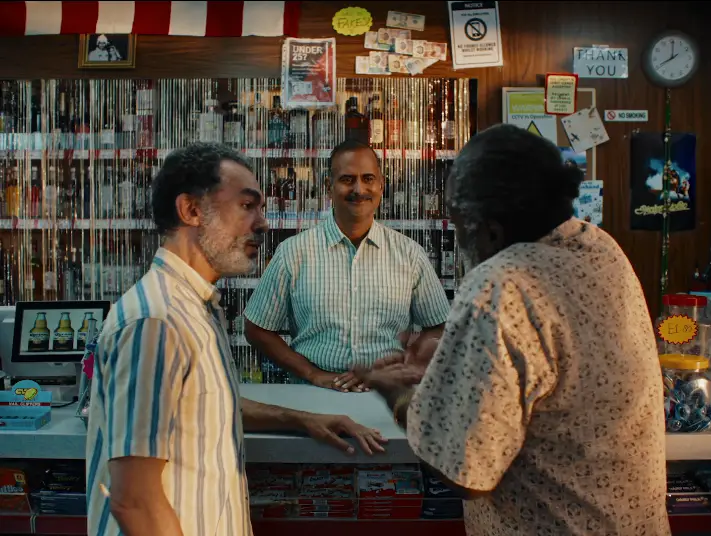
Clocking in at just over two minutes in length, Rikaz's film showcases how South Asian immigrant communities have established themselves in Britain.
"Growing up between cultures, I often struggled to understand where I belonged."
Alongside the nostalgia and community spirit, the underlying message of Through Bossman’s Eyes tackles discrimination faced by immigrant communities.
According to recent statistics published by the Home Office, reports of hate crime in the UK have increased by seven percent in the past year, with racial and religious discrimination seeing the biggest increase, per Sky News.
In Rikaz's film, we see our Bossman confronted by rising intolerance after thugs spray-paint 'You don't belong here' across his shop shutters, while a TV showing recent far-right protests in the capital plays in the background of the shop.
"For me, I think growing up, I really found it very difficult to understand who I am as a person," Rikaz explained, noting his experience growing up in the UK as a person of Sri Lankan heritage.
"One thing I never understood was growing up [was] people would shout slurs about my skin tone," he added. "It was such a difficult thing to understand, and one thing I always felt was that if I'm in a position to make it easier for the next generation, I have to take that."
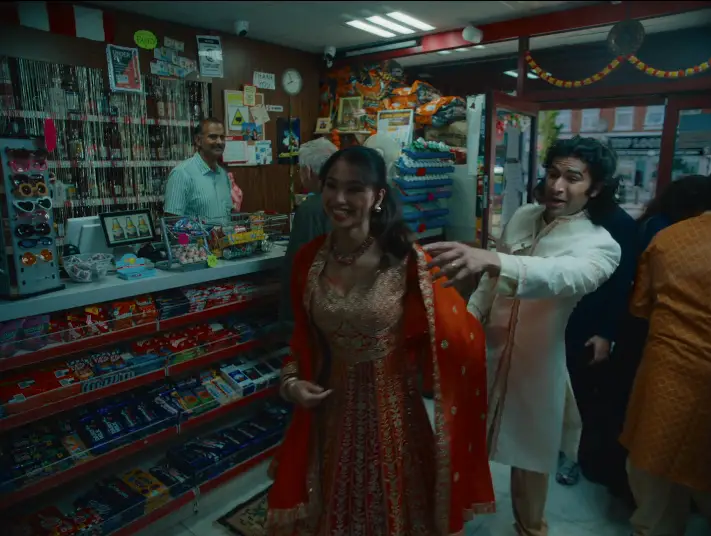
Like Rikaz, the bossman also grapples with his identity after migrating to the UK, ultimately concluding this is his England too.
Working with the Race Equality Foundation allowed Rikaz to develop his bossman positively, breaking away from stereotypes of South Asian communities being characterised as one-dimensional 'side characters' or a 'happy-go-lucky' model minority.
"We had this conversation about how we can portray bossman without him being a character who's so nice to everyone, who's so giving," he said.
"This was the best aspect of it, because I was developing a script, and immediately I realised that I fell into that trap."
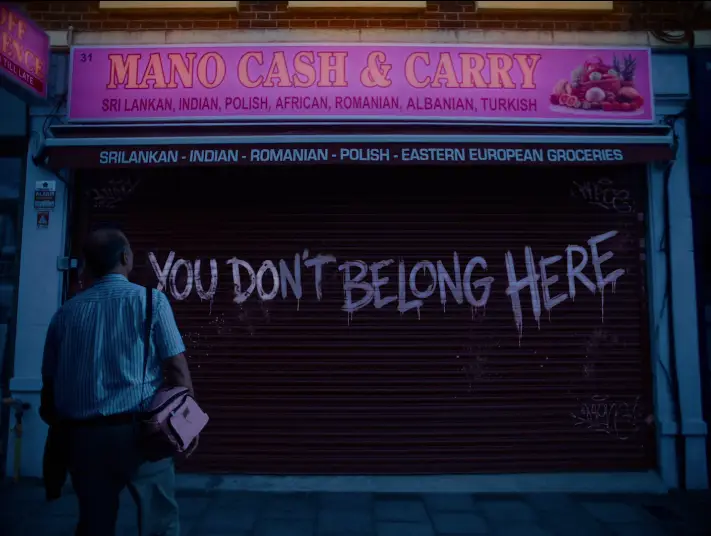
The imagery of the final shot was also something which Rikaz created intentionally, wanting to juxtapose the graffiti alongside a sign which reflected the diverse communities which make up the fabric of our modern nation.
I remember going to the shot and the pink sign and seeing the multiculturalism clearly being shown [and] I wanted to really showcase that. Rikaz explained.
"A first interaction with anyone's culture is food," he continued.
"I think that's such a valuable thing to really connect and understand someone's culture, and I knew that those titles and those cultures were really important to showcase."
Watch Rikaz's full feature below:
"You can come from multiple different places, but you're still human."
When it comes to the film's overarching message, Rikaz hopes to inspire South Asian creatives to believe in their dreams. He also wants to remind people that community and shared experiences can transcend race, religion and ethnic background.
"Moments like this really emphasise how important it is to accept the fact that you can come from multiple different places, but you're still human," he said.
"You still have feelings and emotions. And that's one thing I really wanted to show. And that's one thing that we're all the same with, regardless of culture and heritage."
 Brenna Cooper