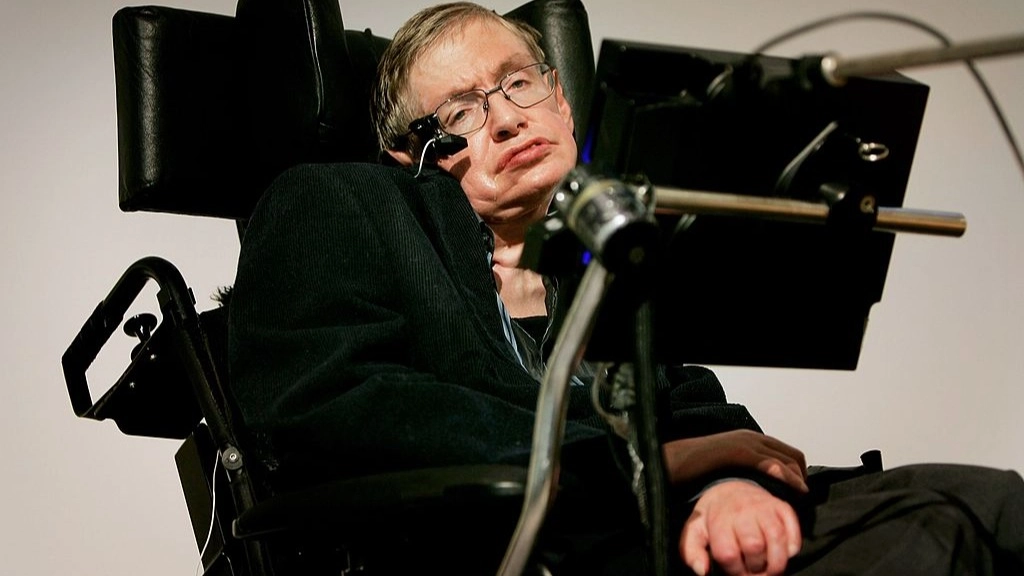
Stephen Hawking's final warning to humanity shortly before he died is starting to become true

Stephen Hawking warned shortly before his death that artificial intelligence had the capability to 'end the human race' – so how close to this scenario are we?
Artificial intelligence has come a long way since the theoretical astrophysicist passed away in 2018, with a simple Google search now bringing up computer-generated overviews before websites written by actual people and AI-generated videos of dogs riding bicycles infesting our social media feeds.
However, the 76-year-old believed that AI would go much further than being a help (or hindrance) to modern life, telling the BBC that 'the development of full artificial intelligence could spell the end of the human race'.
"It would take off on its own, and redesign itself at an ever-increasing rate," he said.
Advert
"Humans, who are limited by slow biological evolution, couldn't compete, and would be superseded."
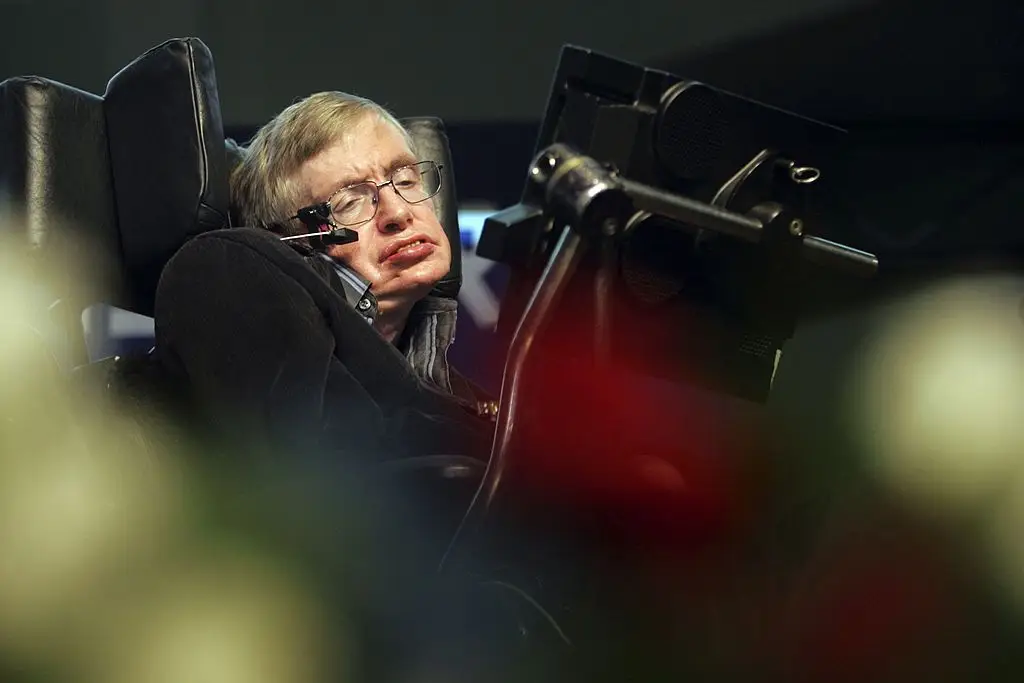
This isn't the only bleak warning Hawking gave about AI before he passed away, telling Wired magazine a year before he died that he believed AI would 'replace humans altogether'.
Hawking's warnings about unchecked AI development resurfaced following Anthropic researcher Jacob Coxon publicly resigning from his role at the company, claiming the 'people building AI earnestly believe that it could kill us all by the end of the decade'.
Sharing the reason behind his resignation in a series of posts on X, Coxon, who previously worked at OpenAI, alleged that 'neither company is acting responsibly' when it came to developing the technology.
"They are racing straight to self-improving superintelligence and gambling with our lives," he wrote.
"Do not underestimate the power of this technology. These will soon be superhuman systems that can hack anything, revolutionise any field overnight, and acquire real power and resources," Coxon continued.
"We have all witnessed the progress in each of these domains, and progress is not slowing.
"The people building AI earnestly believe that it could kill us all by the end of the decade."
Speaking further about his departure, Coxon told the Wall Street Journal that he believed we could be facing out-of-control AI models by 'the end of next year'.
Coxon's decision to resign from Anthropic came just months after OpenAI revealed that one of its models was able to 'escape' and hack into external databases in an 'unprecedented cyber incident'.

Meanwhile, there are also fears that advancements towards AGI (artificial general intelligence) will wipe out the vast majority of jobs, as the speed of the machines evolves to rapidly outpace humans.
Which means we'll either be jobless and struggling to survive or living in an AI-supported utopia – depending on which way things go. Incidentally, Hawking also foresaw this scenario as well, saying that AI would either be 'the best or worst thing to happen to humanity'.
Topics: Stephen Hawking, Artificial Intelligence, AI
 Brenna Cooper