The 'Godfather of AI' has stark warning about superintelligence as he says 'AI is conscious'

Nobel Prize in Physics winner Geoffrey Hinton might be considered the 'Godfather of AI', but he's still worried about the implications of superintelligence.
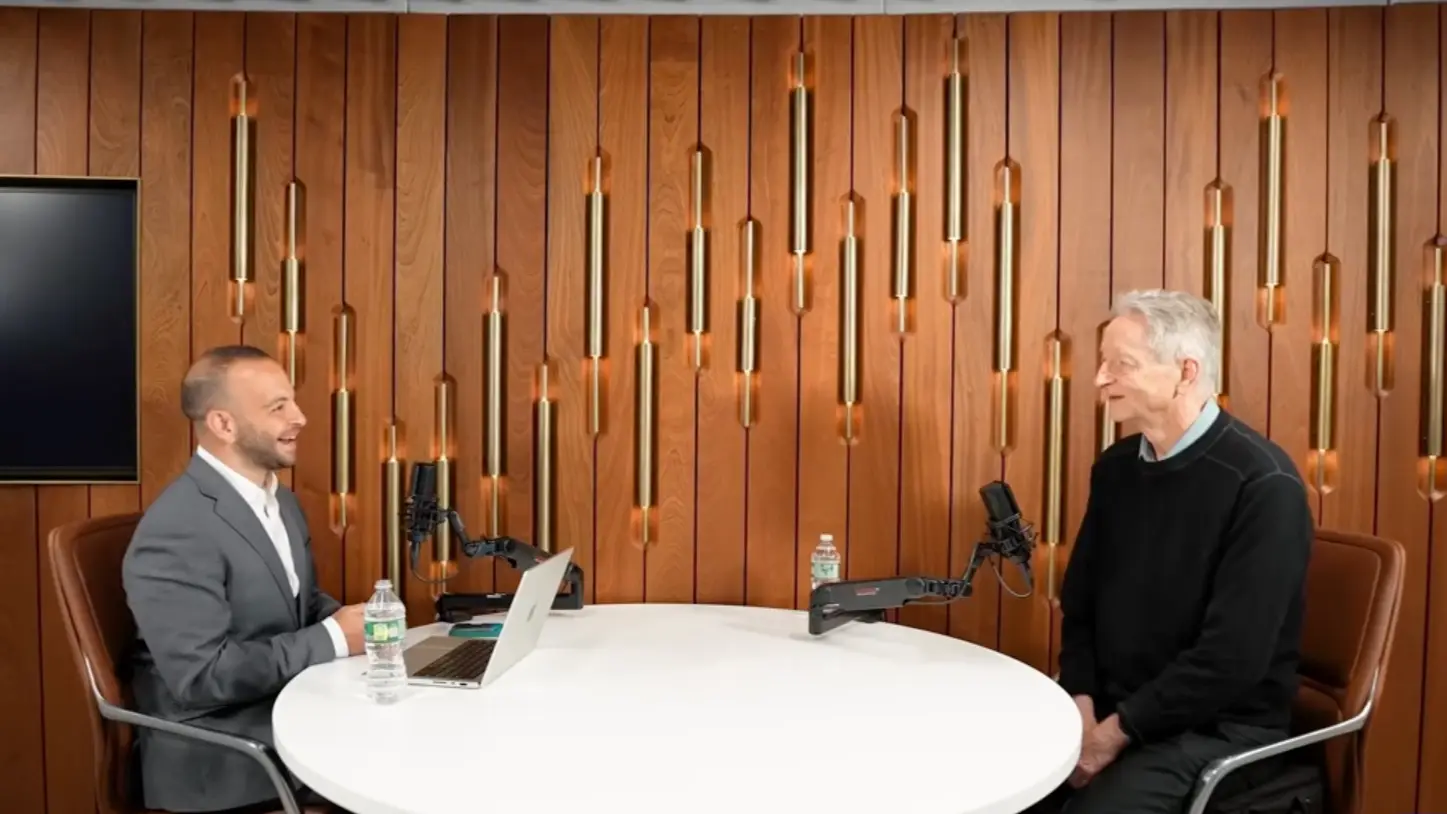
Appearing on an episode of the Big Technology podcast, Hinton was quizzed by host Alex Kantrowitz on whether or not superintelligence - a hypothetical AI that can out-think the brightest human brains on the planet - was on the horizon.
The 78-year-old, who resigned from Google three years ago so that he could 'freely speak about the risks of AI', claimed it'll 'probably' arrive within the next 20 years as long as we don't 'blow ourselves up'.
He said: "I don't know how close it is. I think unless we blow ourselves up, I think it's going to come. Nearly all the experts believe we will get superintelligence. They just differ on how long it will be. So, not that long ago, Demis Hassabis thought it might be 10 years. Yann LeCun thinks unless you do it his way, it'll be much longer than that. "But if you do it his way, I think he thinks we might get it in some reasonable length of time. I think we'll probably get it within 20 years. That's all I'm happy to say at present. Dario Amodei thinks it might come in a few years. Elon Musk thinks it might come maybe next year. I think so. There's a big variety of opinions on when it'll come, but not much disagreement on that it will come."
Advert
"And when it comes we have no idea how to be safe," he also warned, rather bleakly.
Elsewhere on the pod, Hinton told Kantrowitz all about his belief that AI is already fully conscious, even though a lot of his peers state otherwise.
"What are the implications if these bots can understand us?" asked the podcaster.
"We have to think that they're very like us. They're beings like us," replied Hinton.
"I believe they're already conscious but I don't talk about that much because that puts people off the other safety messages.
"So there's an interesting recent paper when a chatbot says to a researcher, 'Let's be honest with each other, are you testing me?', because the chatbots have this habit of playing dumb when they're being tested so you don't know how smart they are," he continued.
"The researchers say in the paper: 'The chatbot was aware that it was being tested'. Now their use of the word 'aware' in common parlance... that's like, conscious, the chatbot was conscious that it was being tested. So we have a very funny model of consciousness that I think is just wrong.
"For example a few hundred years ago, people had completely the wrong model of where people came from - they thought they were designed by God and most of us, most scientists, agree that's wrong. I think the model we have of the mind and what consciousness is at present is as wrong as [that belief]."
While you're here, why not educate yourself on the dark truth behind every time you talk to ChatGPT.
Topics: Artificial Intelligence, Technology, Podcast
 Dan Seddon