
Brits with 'forgotten' files on devices could be breaking law from next month under adult content rules

The UK's newest amendments to the adult content ban mean that you could actually be breaking the law without realising it.
From 6 November, it will be illegal to 'possess or publish' pornographic content which depicts strangulation, incest (including step-incest) or a person pretending to be underage.
The move is part of the government's wider crackdown on access to extreme pornography, which has included requiring anyone browsing the internet from a UK-based IP address to provide proof of age before accessing adult content.
So what does this mean for the average, internet-using Brit? How complex is the law, and how will it really work in practice?
Advert

According to one legal expert LADbible spoke to, whether or not a person will be prosecuted comes down to a variety of factors.
In terms of 'possession' of explicit images, this is largely based on the definition which prosecutors use.
"Viewing is not the same as possessing, and readers should not fear 'stumbling across it' as a crime in itself," Jasmine Mines, attorney and the founder of Mines Law Firm, told LADbible, adding that previous legal precedent states that a person cannot 'be convicted over material they were genuinely totally unaware of'.
According to current guidance on the Government website, possession and publication will be determined by the following:
- Possession: The law will consider possession of an image or video to include having 'custody or control of it', either physically or virtually.
- Publication: This will cover making an image or video available to another person by any means, including uploading, posting, sending, sharing or distributing an image.
"The prosecution must show the image was within the person's custody or control and that they knew they had an image or group of images; it does not have to prove they knew what the image showed," Mines added.
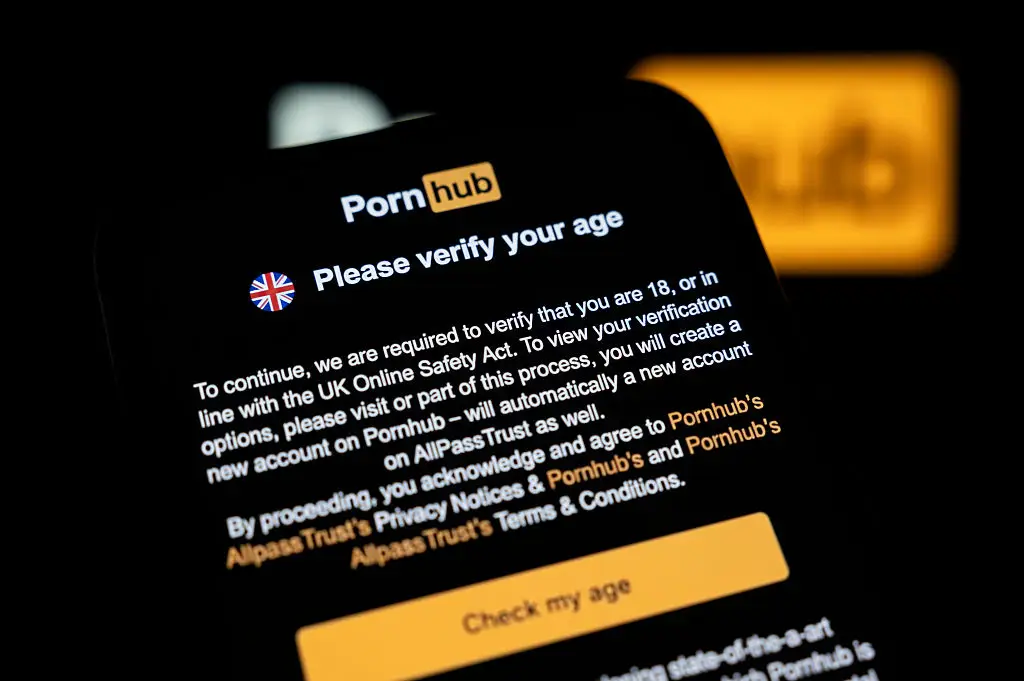
When it comes to content claiming to depict people who are either underage or related (including step-relations), the guidance states that a reasonable person viewing the content would have to believe the above offences are being committed or that the people in the content are pretending to be either underage or related.
While Mines does caution that 'the bar for possession is lower than many people assume', she does note that Brits are protected if they receive an image without asking for it, as long as they do not keep it for an unreasonable time.
This also applies to someone who never saw an image and had no reason to suspect its contents.
The 'forgotten' archive
The place where Mines believes people are at the greatest risk of falling foul of the new law is anyone who has a 'forgotten' archive of explicit content.
"Possession is a continuing act, so material that was lawful to keep when it was saved becomes a criminal possession on November 6 if it is still there," she said.
"If the owner once watched it, the 'never seen it' defence is gone, and years of storage is hard to call a reasonable time."
When it comes to locations which may include archives of now illegal explicit content, Mines suggests locations such as '[a] group-chat video that saved itself to a phone three years ago, the old handset in a drawer [and] the cloud backup no one has opened since it was set up'.
This tracks with guidance also laid out in the government's guidelines, which advise people to 'permanently delete it or otherwise get rid of' offending content before 6 November.
When it comes to publication, users are advised to 'remove it and stop publication before commencement'.
"The realistic prosecution risk after November 6 is not the accidental click," Mines added. "It is the file someone knew about once and stopped thinking about."
What are the penalties for possession or publication under the new laws?
Guidelines also state that anyone prosecuted under the new measures will face the maximum penalty of two years’ imprisonment for pornography that depicts strangulation or suffocation, or penetrative sexual activity between certain relatives and three years’ imprisonment for pornography depicting sexual activity involving a person who is, or is pretending to be, under 16.
The maximum penalty for publication is five years in prison.
Topics: Adult Industry, Crime, UK News, Technology
 Brenna Cooper