EU Entry / Exit System September changes explained as Brits given airport queue warning

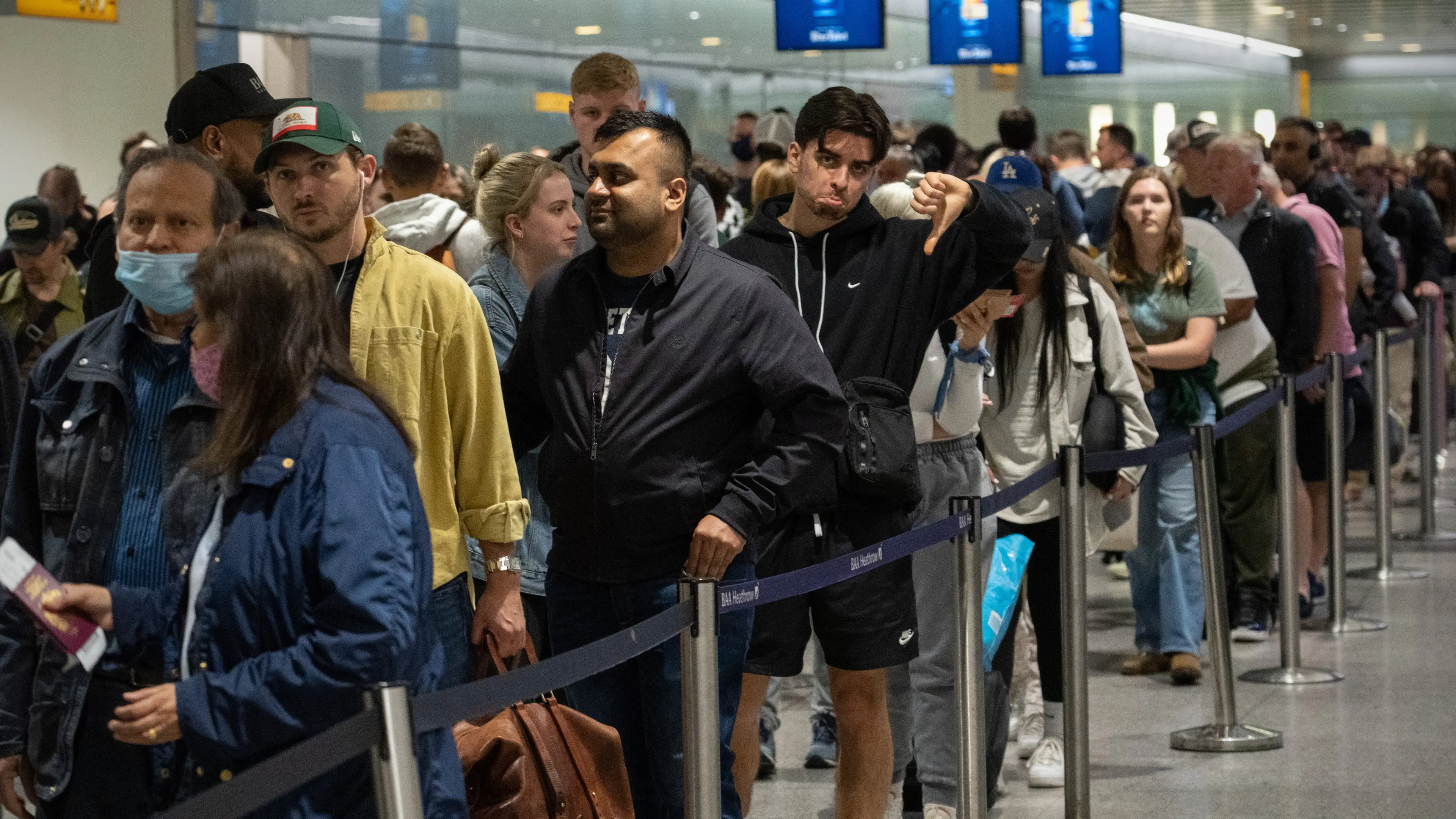
Carnage is part and parcel of the airport experience in the summer months, but across many European locations this year, even autumn is set to be a right headache for non-EU visitors.
From next Monday (7 September), travellers using the new-ish Entry / Exit System, or EES, will probably face longer queue times when border control loses one of its rights.
That right - the ability to suspend biometric data collection when queues become too ridiculous - was a temporary flex, but one that could pacify hundreds of passengers desperate to be on the beach, cocktail in hand.
EES was fully rolled out across 29 European countries in April of this year after a soft launch 11 months ago - they are Austria, Belgium, Bulgaria, Croatia, Czechia, Denmark, Estonia, Finland, France, Germany, Greece, Hungary, Iceland, Italy, Latvia, Liechtenstein, Lithuania, Luxembourg, Malta, Netherlands, Norway, Poland, Portugal, Romania, Slovakia, Slovenia, Spain, Sweden, and Switzerland.
Advert
The basic rule behind this scheme is to digitise a traveller's whereabouts when in the Schengen Area, so that non-EU residents don't violate the '90/180 Rule' - this is where you stay more than 90 days in every 180 days without a visa.
Since the United Kingdom left the EU and surrendered all freedom of movement that comes with that, UK residents are at the mercy of such a rule.
Why this could create bigger queues
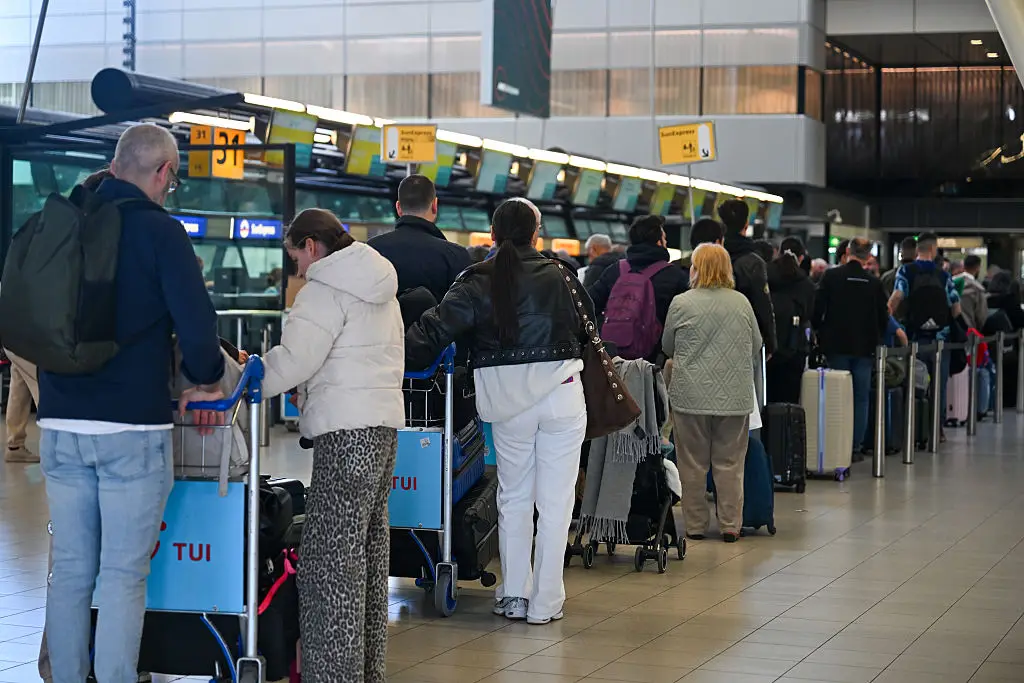
Without the border authorities' capacity to pause the EES when spaces get overstuffed, this will theoretically elongate the bedlam.
Of course, airport queues are unlike other queues, in that the people standing in them can't simply walk away and try again another day, like the local Post Office.
The best thing for travellers to do is get to the airport as early as possible, so that you're giving yourself the best chance of being at the front of the EES queue.
Could the EES still be suspended for Brits?
The short answer is no, even though the European Commission previously allowed 'flexibility' in the scheme during the summer period.
"The suspension of the collection of biometric data is possible at specific border crossing points and for a limited amount of time in cases of exceptional circumstances that lead to excessive waiting times," it said back in May, although from next week that doesn't seem to be the case anymore.
EasyJet warning
In a previous update to passengers, easyJet told passengers that the biometrics side of onboarding your details into the EES would see delays upon arrival in the EU. When you arrive at an airpot, you will need to have your fingerprints taken and face scanned.
"Airports across Europe may experience longer waiting times at passport control due to the new European Entry/Exit System (EES)," easyJet told customers.
"This could mean you need to have your biometrics taken at border checks, including the scanning of facial images and fingerprints."
EasyJet also went as far as warning passengers it may not be able to wait for passengers delayed by this process, adding: "We strongly recommend arriving at the airport with plenty of time to spare."
In April, the airline left 122 passengers in Milan after they were delayed by the EES process trying to board a flight back to Manchester.
At the time, the airline told LADbible that it held the flight for 'nearly an hour' but departed due to safety regulations for its staff, with customers who missed the flight offered a free flight transfer.
Delays in Portugal and Italy for Brits
Despite rumours that Brits may be given an EES exemption for those travelling in to Portugal and Italy, this was never the case.
Officials from the European Commission told The Connexion that 'the Portuguese and Italian authorities confirmed that they do not intend to exempt any nationality'.
That means that right now, only Greece is offering EES exemption to Brits flying in for their summer holidays in summer 2026.
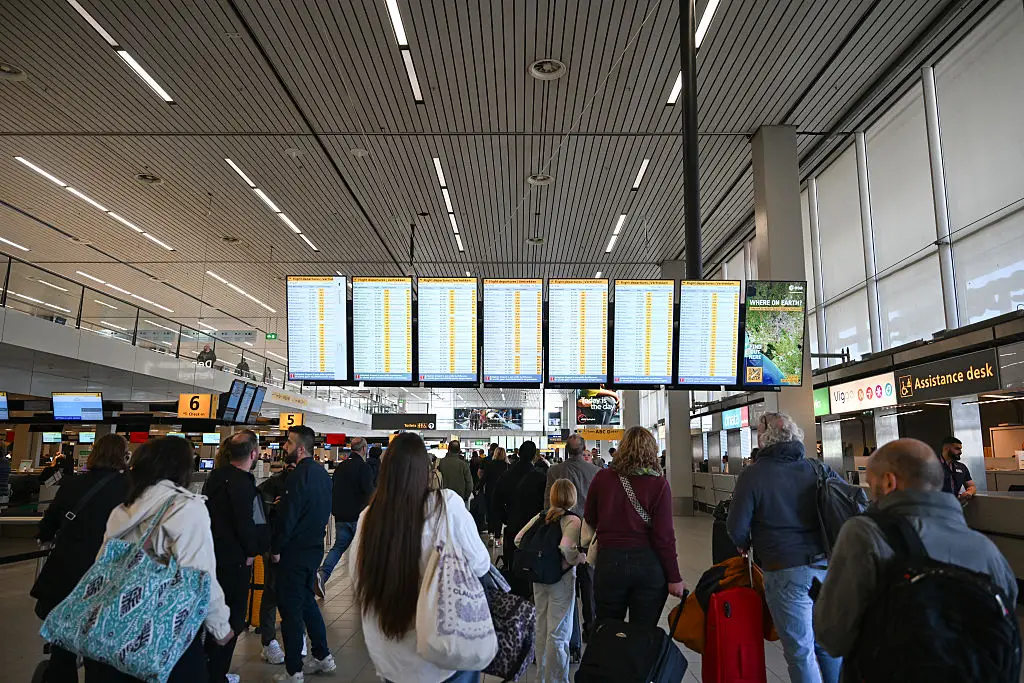
Some airports have seen EES queues of upto three hours during the rollout of the EES during this year's spring and summer travel season.
Ryanair said that queues of an hour were seen in France due to the EES, with the Irish airline asking for the system to be delayed for the summer travel window.
"The French authorities have known for over three years that EES would become fully operational from April 10, 2026, yet they have failed to ensure adequate staffing, system readiness or kiosks are in place and working.
“These excessive passport control queues cannot continue into the peak summer season. Ryanair has already written to governments across the 29 EES countries – including to French Interior Minister Laurent Nunez – urging them to suspend EES until September."
Distinction between EES and the delayed ETIAS authorisation
EES is a free border-crossing biometric tracker, while European Travel Information and Authorisation System (ETIAS) is an online pre-travel authorisation you must complete before flying.
The latter costs €20 (£17.18), although applications are currently closed.
Topics: Travel, Easyjet, UK News, World News
 Dan Seddon