World's most dangerous substance can 'kill you in 2 days' even if you only look at it for five minutes

Even if you were to only look at it for five minutes, the world’s most dangerous substance could ‘kill you in two days’.
While its name may sound like some kind of innuendo nickname or really, just a bit silly, the ‘Elephant’s Foot’ is certainly not something to be messing about with.
According to science magazine Nautilus, just 30 seconds of exposure to the substance will hit you with dizziness and fatigue.
Two minutes and your cells will soon start to haemorrhage, four minutes and you’ll have vomiting, diarrhoea and fever and if you did five minutes, you’ll apparently have just two days to live.
Advert
Many refer to it as the world’s most dangerous object as the substance remains from the world’s worst nuclear disaster to date back in April 1986.
Of course, I’m referring to the infamous incident when reactor Number Four exploded at the nuclear power plant in Chernobyl.
Thirty people died within months of the disaster and thousands more are thought to have died as an indirect result over the years that followed.
The ‘Elephant’s Foot’
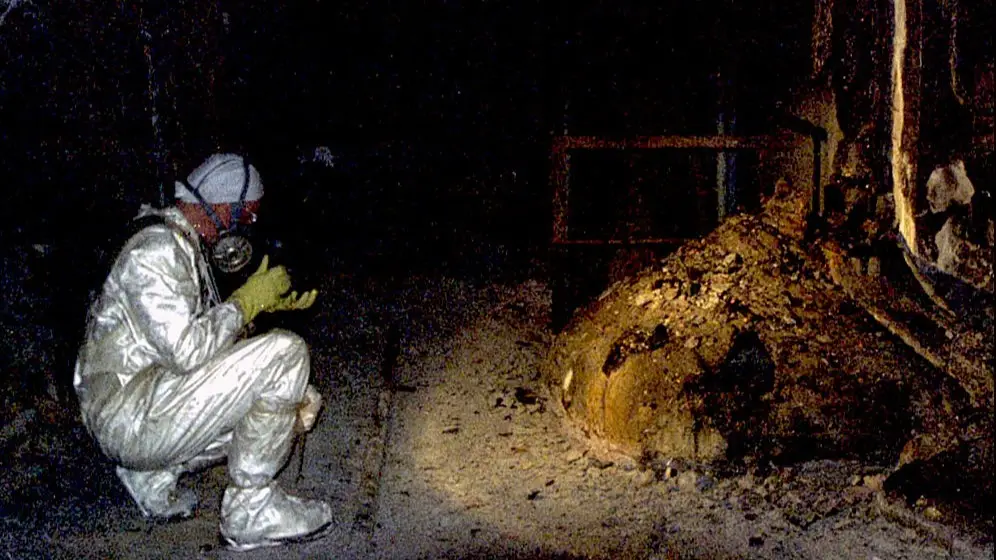
Basically, the thing is a big black mass of dangerous waste named due to its appearance given off the façade of the wrinkled foot of the mega animals.
It was caused by the Chernobyl disaster as a large hunk formed at the bottom of the failed reactor which was caused by uranium fuel becoming molten when it overheated.
With the reactor blown apart, heat, steam and molten nuclear fuel combined to make a 100-ton flow of dangerous chemicals pouring through the basement of the plant and solidifying into this ‘Elephant’s Foot’.
It’s reported to be about one metre in size and consist of concrete, sand and melted nuclear fuel amassing to around two tonnes.
The danger of the ‘Elephant’s Foot’
When emergency crews eventually made it to the steam corridor beneath reactor Number Four, they found the black lava and knew not to approach due to the radiation. Instead, cameras were pushed around the corner to capture the dangerous substance.
As the radiation emitted has decreased, it has become slightly safer to approach - which is why more recent pictures show people standing near the molten mass.
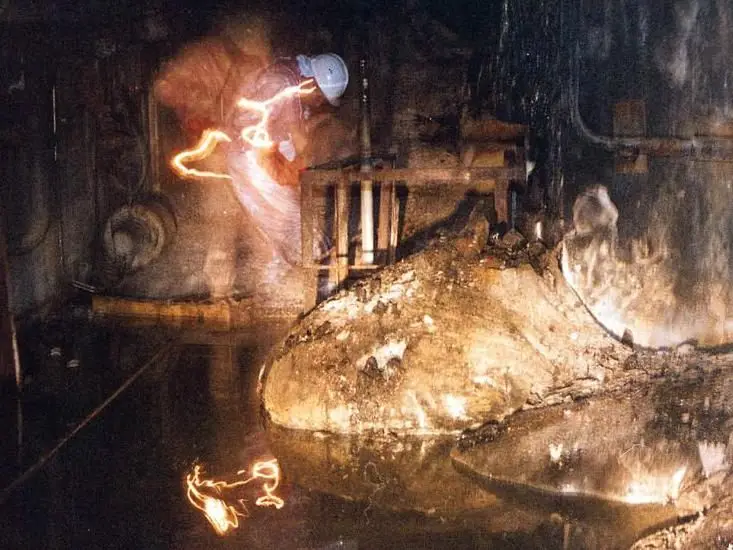
When it was measured, the big mass gave off almost 10,000 roentgens per hour – described as the equivalent to the exposure given by four and a half million chest X-rays and enough to give a human a lethal dose in just 300 seconds.
In 2001, it still measured 800 roentgens an hour and it’s thought that it will remain dangerously radioactive for tens of thousands of years.
Topics: Chernobyl, World News, History, Science
 Jess Battison