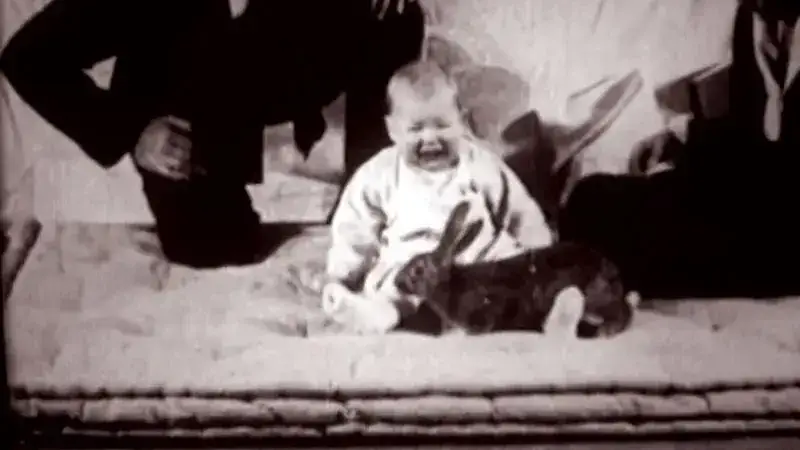
‘Most unethical human experiment of all time’ was followed-up one month later to see true impact

In the rankings of the most unethical experiments of all time, there are sadly a large number of candidates, and among them is the 'Little Albert experiment'.
Results of the study were published in 1920 and were inspired by Pavlov's dog, that famous behavioural conditioning experiment where a man taught his dogs to associate the sound of a ringing bell with food, and eventually they'd salivate at just the sound of the bell even if there was nothing to eat.
US psychologist John B. Watson and graduate student Rosalie Rayner decided to take things a step further by experimenting with conditioning techniques on a nine-month old baby named Little Albert.
They wanted to see if they could condition the infant to become scared of certain animals, with them showing the baby various things including a rabbit, monkey, a white rat, and burning newspapers.
Advert
When the white rat was shown, they played a loud noise to scare Little Albert and see if they could get him to associate the sight of it with fear.
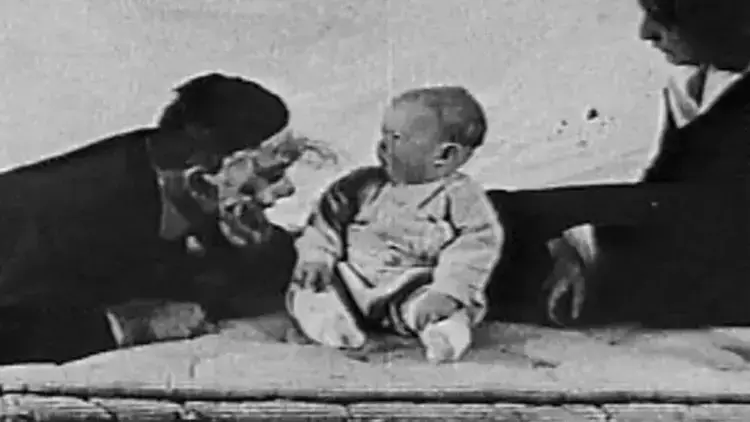
The Little Albert experiment
According to Simply Psychology, during the first session with the nine-month old, they managed to make the baby cry due to the scarily loud noise, and in subsequent sessions, they conditioned Albert to associate the scary noise with the white rat.
They recorded during the second session that the noise and sight of the rat produced a 'startle/whimper', and a week later they had a third session where just the rat alone 'elicited mild fear'.
Albert was then subjected to five instances of the scary noise and the rat, and then when they showed the little boy the rat by itself again, his reaction was one of 'strong fear'.
A few days later, they started showing him other things, most of which scared him, while on the fifth session, they scared the child with a barking dog.
All of this was deeply unethical and amounted to one very scared child.
Returning a month later
Unfortunately for Little Albert, they weren't quite done with him, as the researchers visited him again a month later for one final session where he was once again scared of the things they showed him.
He was scared whenever he saw the rat, though he didn't cry when he saw it now, and the scientists recorded that the boy was 'shuddering' and 'thumb-sucking' to comfort himself.
Albert's mother took him out of the hospital so there were no 'deconditioning' tests.
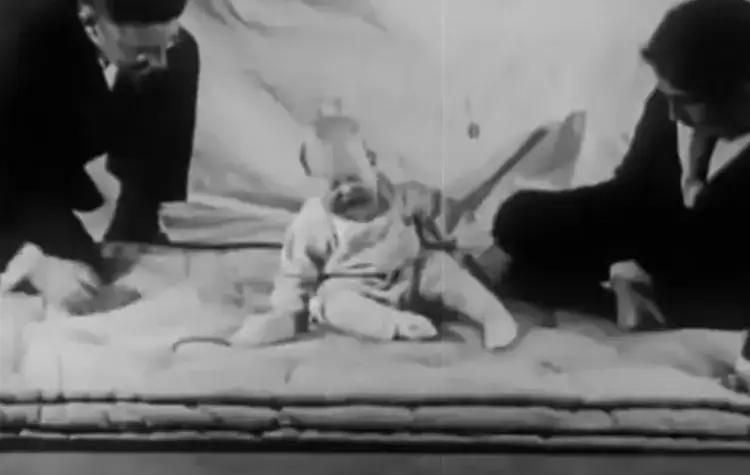
Why it wouldn't be done today
The most obvious answer is that it's deeply unethical to torment children in the name of science.
The results of the study have also been questioned over time, as Little Albert was just nine months old when the sessions started and thus couldn't give consent to the experiments.
As for what happened to Little Albert, that's unclear, as subsequent researchers trying to identify him found two possible candidates.
Hall Beck of Appalachian State University identified the boy as Douglas Merritte, the son of a wet nurse who worked at Johns Hopkins University Hospital where the experiments were done.
Sadly the boy suffered from water on the brain, which led to periods of blindness in his short life before he died at the age of six.
Russ Powell of MacEwan University in Alberta thought Little Albert was actually someone else, William Albert Barger, who lived a long and happy life until he died in 2007.
His niece didn't know if he was the child from the experiment, but she did say her uncle had an aversion to animals.
 Joe Harker