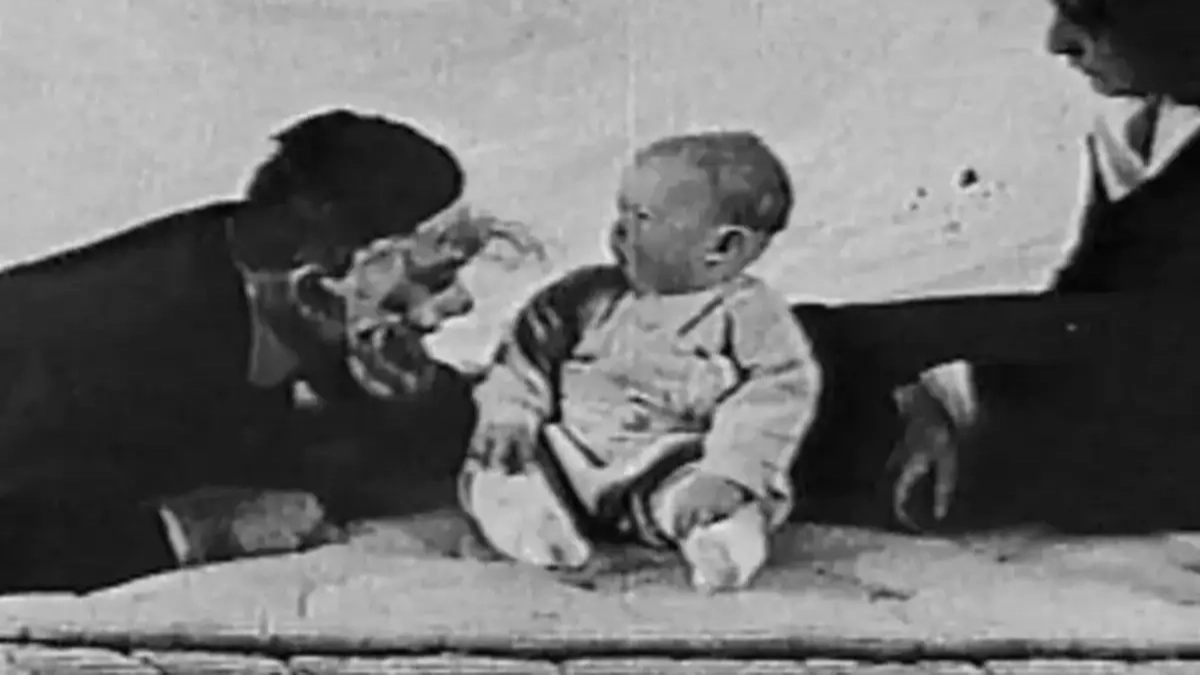
What happened during ‘most unethical psychological experiment ever’ that couldn’t happen today

Here is why a century-old experiment involving a young baby continues to cause so much controversy.
The ethics around scientific experiments have certainly come a long way in the past few centuries. However, there was once a time when researchers could get away with doing some pretty cruel things in the name of science.
From torturous research conducted on prisoners of war to the CIA attempting to weaponise mind control, history is littered with experiments which will leave you wondering, 'what were they thinking?'
And this brings us to the story of Little Albert, a young baby who was used by a psychologist to test the theory of classical conditioning on infants.
Advert
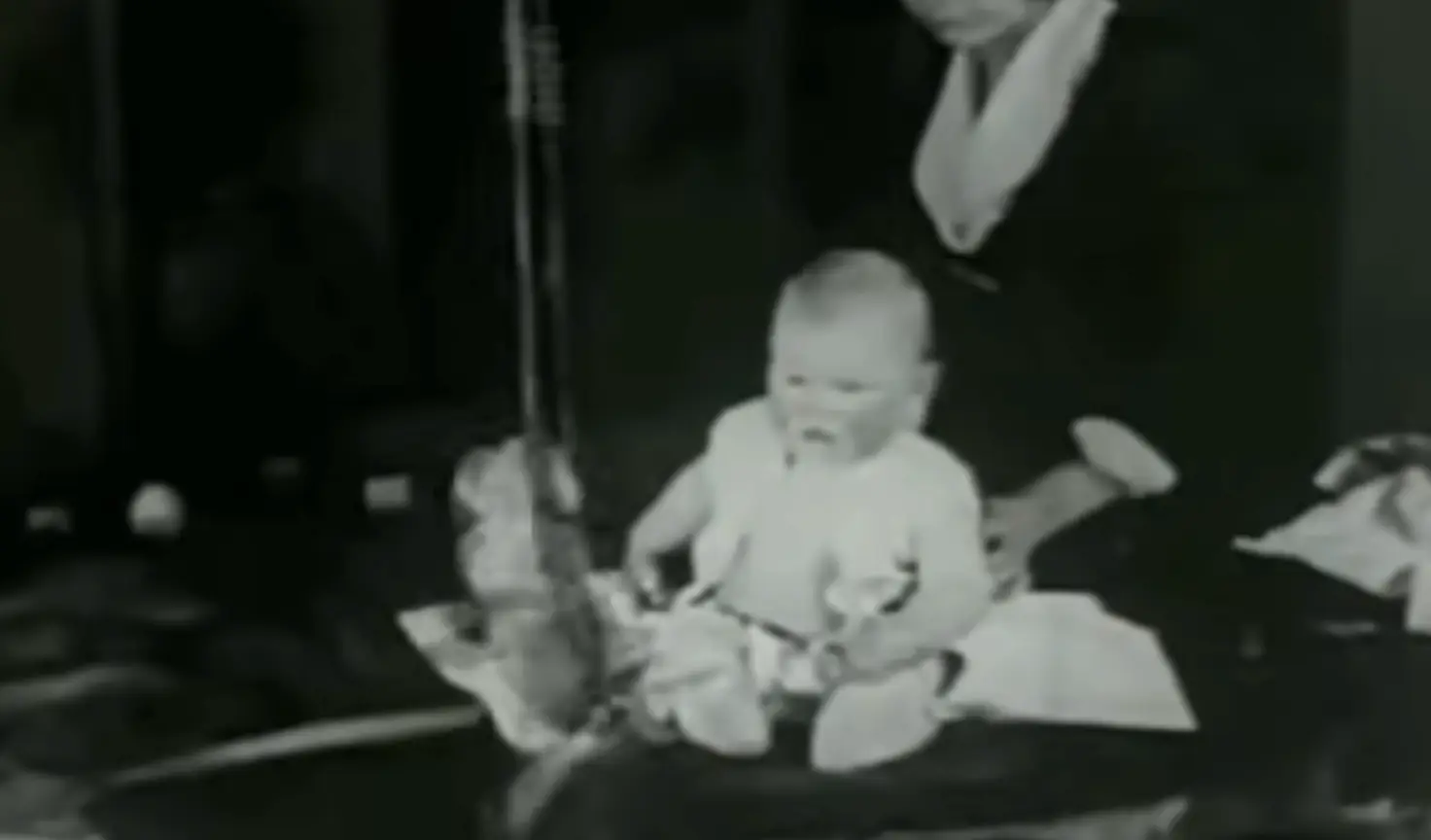
What was the 'Little Albert experiment'?
In 1920, US psychologist John B. Watson had been inspired by the work of Russian physiologist Ivan Pavlov, the man who famously performed experiments on dogs to develop his theory of classical conditioning.
Classical conditioning is a process where a neutral stimulus is paired with a conditioned response, eventually linking the pair.
For Pavlov, this was training dogs to salivate at the sound of a bell, but for Watson and his assistant Rosalie Rayner, this was to condition a phobia in a small child.
In order to conduct the experiment, the pair used a child nicknamed 'Little Albert' - a nine-month-old baby believed to be the child of a woman working in their building - and set about training the youngster to have negative reactions at the sight of an animal.
So how did they do it?
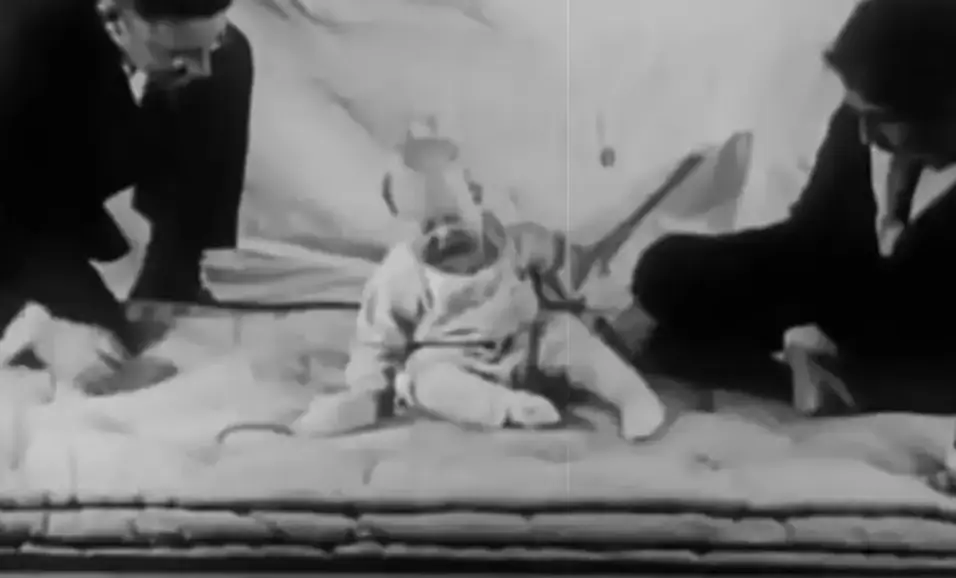
Watson and Rayner presented Albert with stimuli such as a rabbit, monkey, a white rat, and burning newspapers to gauge his reaction.
The pair then began to make a loud noise whenever the white rat was presented to the child, leading to him associating the rodent with fear and bursting into tears at the sight of it.
Watson would ultimately deem the experiment a success after Albert eventually began to cry every time the rat was produced, regardless of whether or not a noise was made, proving that he'd been conditioned to associate the animal with fear.
However, the experiment would also raise several ethical concerns, as it turns out that traumatising a child in the name of science didn't go down well with everyone.
What happened to 'Little Albert'?
Little is known about Albert outside of the controversial experiment, including the child's identity.
It's widely accepted that Albert was the child of someone who worked in his building, who, upon finding out the experiment her child was being used in, was so horrified that she put a stop to his involvement.
As for Little Albert's true identity, he is believed to be either Douglas Merritte or William Albert Barger.
Barger would go on to live a long life, dying in 2007, and reportedly had an aversion to animals. Meanwhile, Merritte would pass away at a young age, dying of hydrocephalus at the age of six.
 Brenna Cooper