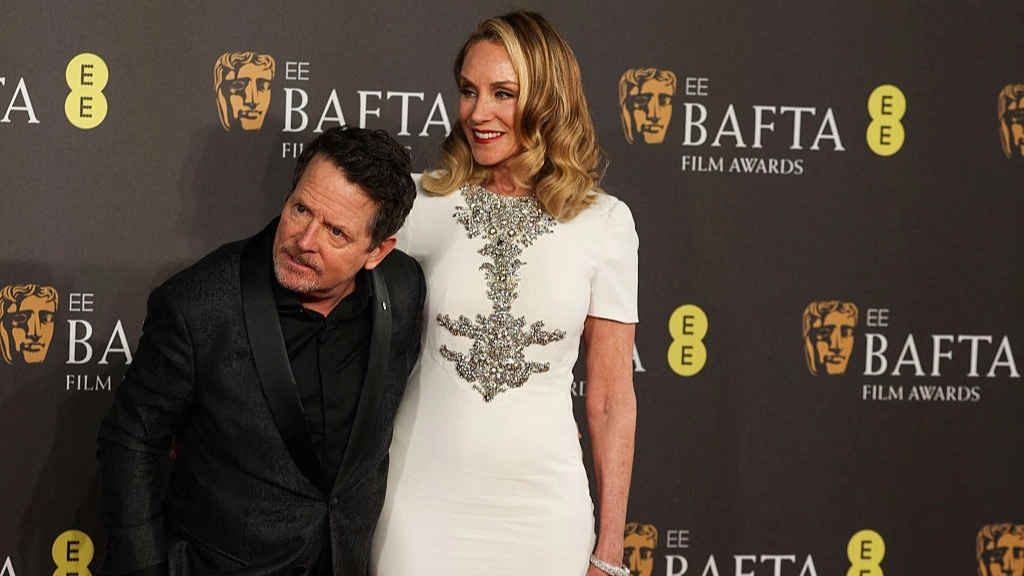
Michael J. Fox opens up on impact his Parkinson’s diagnosis had on wife Tracy Pollan

Michael J. Fox has reflected on the impact Parkinson’s has had both on himself and his wife.
Parkinson's disease ‘is a condition in which parts of the brain become progressively damaged over many years’, according to the NHS.
It causes involuntary shaking of particular parts of the body, slow movement and inflexible muscles.
Diagnosed in 1991, aged 29, the Back to the Future star was told he would likely only have another decade as an actor.
Advert
While looking back on 35 years of living with the disease, Fox admitted that it took an emotional toll on his wife, Tracy Pollan.
After meeting on the set of the TV show Family Ties in 1985, the pair went on to get married three years later.
They share four children together; Sam, twin daughters Aquinnah and Schuyler, and Esmé.
“It was hell on Tracy, it was really hard on her — and it still is because it’s always changing,” Fox told The Hollywood Reporter.
“But I said to her, ‘I have to go all the way here. No half measures’.

“I started to understand what it was like for these people who didn’t have the options or the choices I had, didn’t have the connections and the reason to be optimistic.
“I needed to normalize it and just be that all the time. I said, ‘I have to not hide this. F**k vanity’.”
Since founding The Michael J. Fox Foundation in 2000 with CEO Deborah W. Brooks, the organisation has invested more than $3 billion in Parkinson’s research, helping fund hundreds of drug programmes and advancing scientific breakthroughs, including biomarker testing that can identify the disease before symptoms appear.
Continuing to defy the odds, Fox recently returned to acting for season three of Shrinking, playing a Parkinson’s disease patient opposite Harrison Ford, whose character, Paul, also has Parkinson’s.
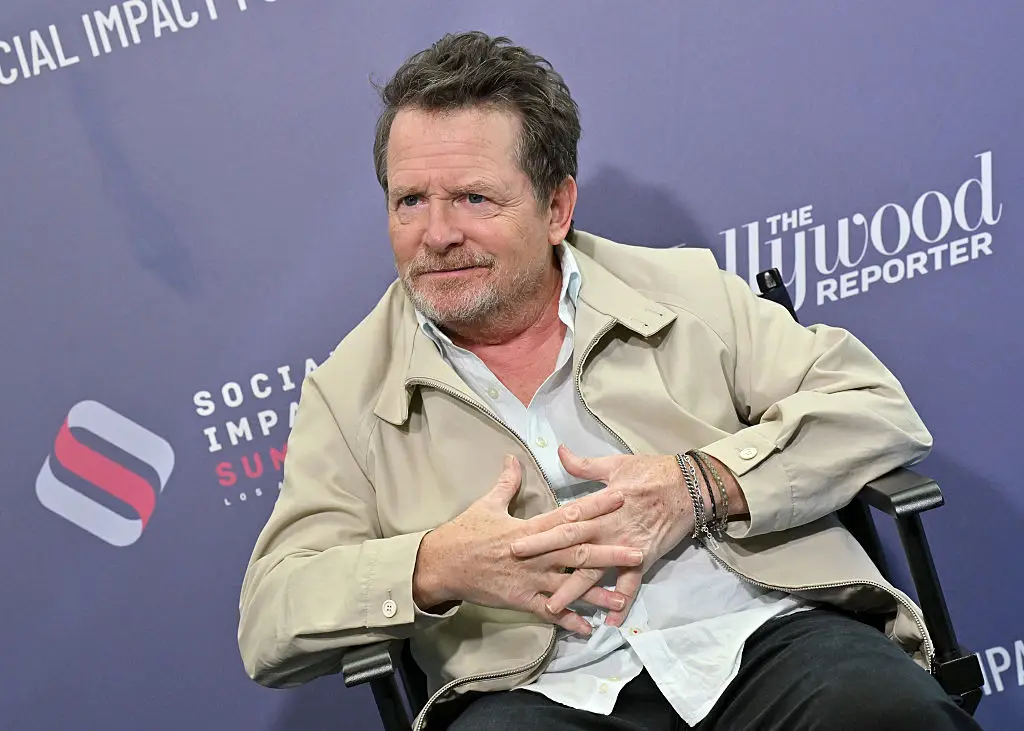
“[Ford] was happy that I was sharing my experience with him as a character and helping him do what he needed to do,” Fox revealed. “He was so loving. I didn’t know what to expect with Harrison because he’s famously a stoic, curmudgeonly guy - and he’s really a sweetheart.”
Continuing to act, he said, has ‘really prolonged my life and made my life interesting in a way that I didn’t think it would be to this point’.
Reflecting on the mission that has defined much of his life, Fox said: “We have to find a way to get through every day, and if we can find a way to get through every day and at the same time be fueling for our actions and our deeds and our philanthropy, then that’s a great thing. It’s individually elevating lives. So it’s not just the money, it’s not just the science — it’s the humanity.”
“It’s a hard disease — the care is hard to get, it’s not easy at all. The scientific landscape globally is also transformed, and that’s a direct byproduct of all the research we have funded in the last 20-plus years,” Brooks added.
“When we started, almost nothing had made it all the way into human testing of any kind. Today, there are 180-ish active Parkinson’s drug programs in human testing.”
 Anish Vij