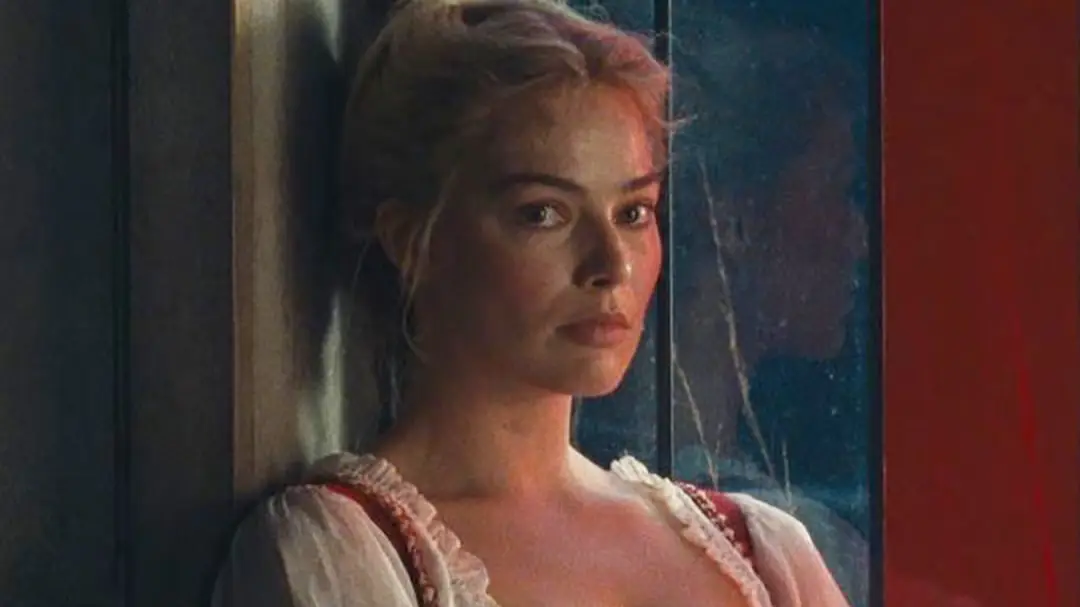
Wuthering Heights wild ending explained as viewers hit out at 'disrespectful' adaptation

Here is how Wuthering Heights originally ended as Emerald Fennell's steamy take on the book divides opinions.
Regardless of whether or not you've seen the film or not, you're likely aware of the Saltburn director's highly talked about adaptation of the Emily Brontë novel, which includes numerous sex scenes, horse inspired BDSM at one point and even masturbation on the moors – none of which happen in the original book.
Fennell's sexed up version of 1847 book has unsurprisingly been controversial, from backlash to casting decisions to the changes in one character's story being widely discussed online; however there appears to be another complaint from gaining traction online: the ending.
In Fennell's film the story ends with Robbie's Catherine having a breakdown after Heathcliff marries Isabella and stops eating.
Advert
She then suffers a miscarriage which goes untreated and leads to her dying from sepsis.
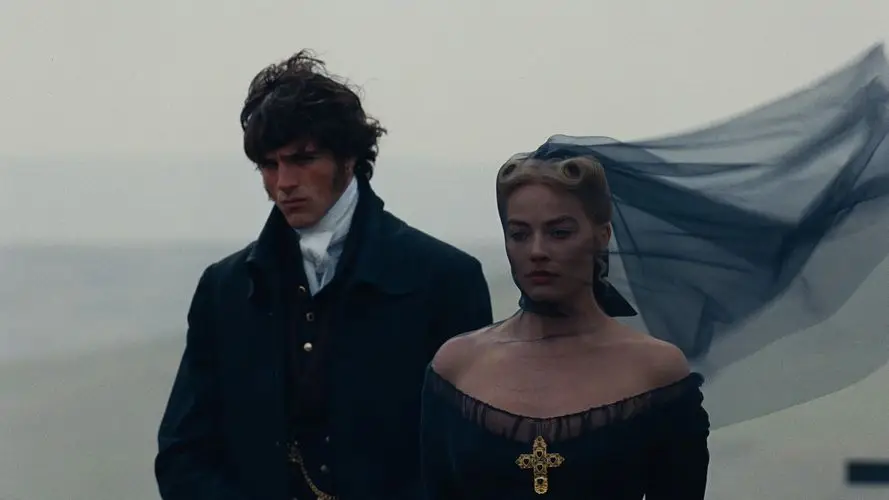
Elordi's Heathcliff arrives after her death and utters the famous line 'Be with me always, take any form, drive me mad' before the credits roll – a major departure from the book.
How does the book Wuthering Heights end?
While Fennell's adaptation, readers of Brontë's novel will recall Catherine dying in the middle of the story, with the remaining chapters picking up with the offspring of the main protagonists.
In the book Catherine doesn't miscarry but instead gives birth to her and Edgar's daughter, also named Cathy Linton.
Young Cathy later elopes with Linton Heathcliff - the son of Heathcliff and Isabella - with Isabella and Edgar's deaths leaving the children at the mercy of vengeful Heathcliff, who has of course been driven to madness by Catherine's death.
Linton dies soon after the marriage and leaves Cathy alone and trapped at the mercy of Heathcliff, who spends his spare time hallucinating Catherine's ghost and digging up her grave.
The book ends with Heathcliff, after decades of self-imposed torture, dying in Catherine's bedroom and reuniting with her ghost while Cathy Jr marries her cousin Hareton (who is absent from the film) and gets somewhat of a 'happy ever after'.
In short, a lot more happens which Fennell cut from her adaptation.
What have the criticisms of Emerald Fennell's adaption been?
Fennell's creative decisions with Wuthering Heights have been divisive, with some viewers even going as far to brand it the 'worst book adaptation in history'.
"Protecting my peace and no longer interacting with any wuthering heights movie news. it does not exist. im [sic] no longer falling for ragebait. whatever," wrote one viewer on X, while others complained about the film's copious sex scenes.
Meanwhile a third person complained that Fennell axing the second half of the book meant the whole point of the novel was missed.
"Just found out that emerald fennell’s wuthering heights completely removes the book’s second half…which is essential to understanding the harm heathcliffe & cathy’s relationship caused, allowing the next generation to learn from their mistakes…which is the entire point," they wrote.
"Wuthering Heights is SO good when you don’t have an English major in your ear telling you it’s nothing like the book," added a fourth person.
What has Emerald Fennell said about the axed Wuthering Heights storylines?
Although controversial, Fennell's decision to axe the second half of the book makes sense from a filmmaking standpoint.
The film was already had a 2h 16m runtime without including the events after Catherine's death, meaning it would've been nearly impossible to adapt the entire book and also give the characters any amount of depth.
This is something which Fennell outlined in an interview with Entertainment Weekly, explaining that 'hard decisions' need to be made when making a film.
"I think, really, I would do a mini series and encompass the whole thing over 10 hours, and it would be beautiful," she explained.
"But if you're making a movie, and you've got to be fairly tight, you've got to make those kinds of hard decisions."
Topics: Film, Entertainment, TV and Film, Margot Robbie, Jacob Elordi
 Brenna Cooper