Identical twins shared huge impact after one used Botox for 20 years and other didn’t

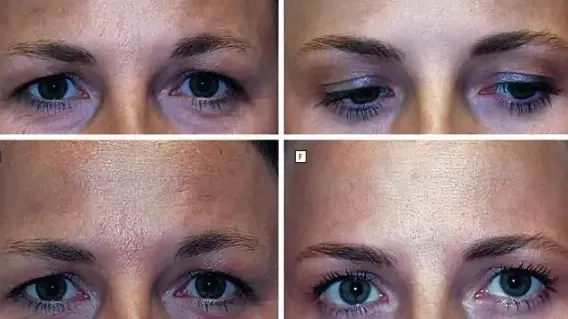
Identical twins who participated in a 20-year study to demonstrate the impact of Botox during that time and the other didn't, as one got the injections while the other stayed well clear of it.
Botox, also known as botulinum toxin, is a prescription drug that's used for cosmetic procedures as well, as it's meant to reduce wrinkles and lines in the face which in theory should make you look younger.
The drug is typically used to treat stiff or spasming muscles, migraines or excessive sweating, but many people will only know it from the cosmetic side of things.
Advert
The best way to measure a major difference in appearance is using identical twins since you've essentially got the same face to experiment on.
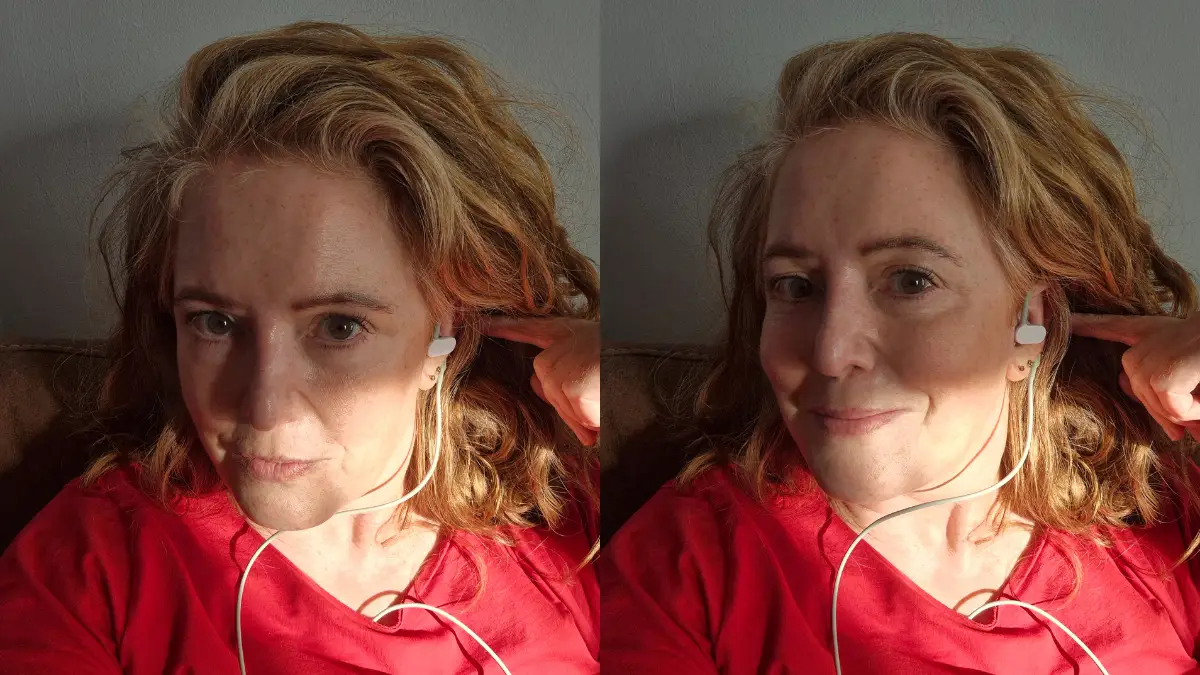
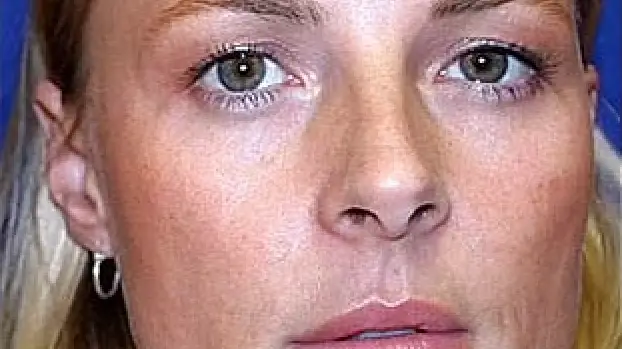
The results were chronicled with a series of images which you can see below.
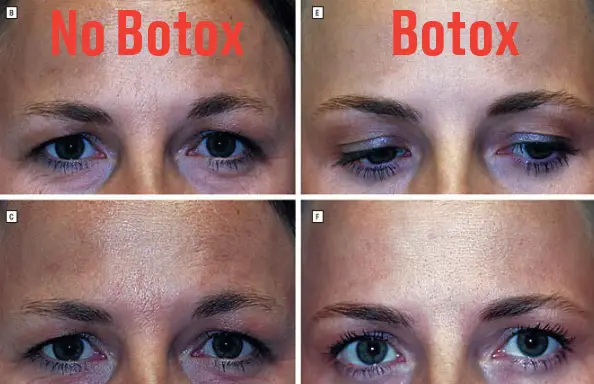
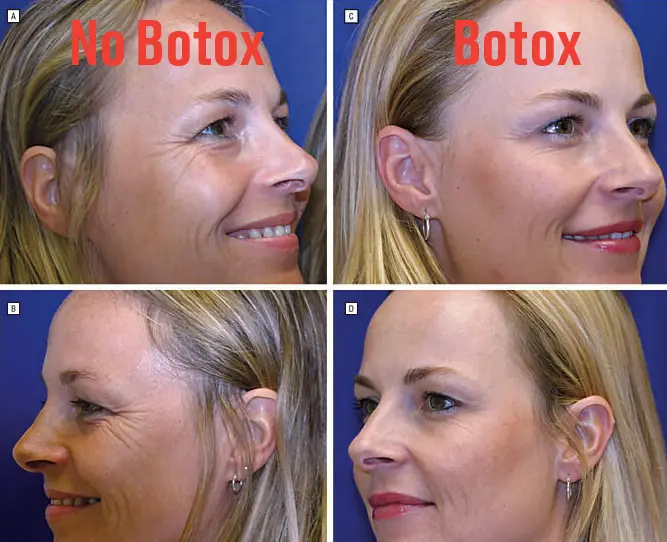
The set of twins were followed for nearly two decades, with the ‘Botox twin’ undergoing injections in her forehead and between her eyebrows two to three times a year since the age of 25.
She also had some injections in her crow’s feet (those little lines that form on the outer corners of the eyes).
With Dr William Binder being behind the injections, the first resulting photos were taken in 2006, when the women were 38. And they showed that the Botox twin had more smoothness on her skin with less wrinkles compared to her sister’s more prominent crow’s feet when she smiled as well as lines on her forehead.
But a much bigger visible difference came six years later in a follow-up.
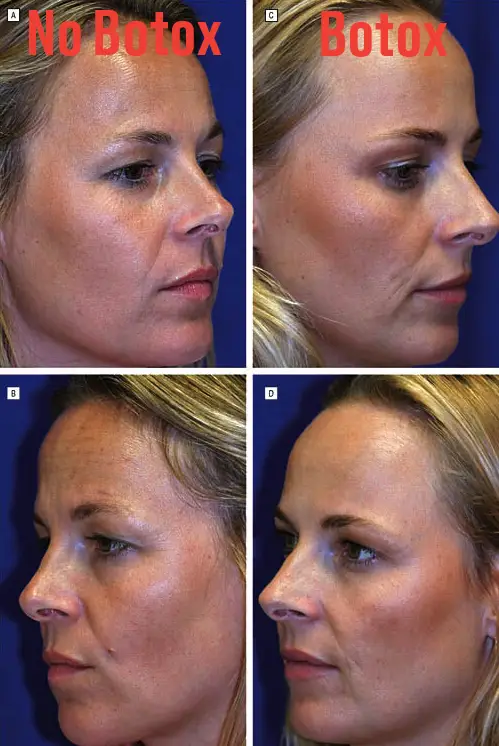
The non-Botox twin had a noticeably wider jaw, as well as a puffier visage, though it was unknown if this was related to the prescription drug.
Both women stated that they used sunscreen, which helps to eliminate the possibility of wrinkles being caused by exposure to the sun's UV rays over long periods of time.
It’s also noted that they both had healthy lifestyles and hadn’t been using retinols for their wrinkles, but they did live in different countries.
The non-Botox woman lived in Munich while her twin lived in Los Angeles with a higher UV index.
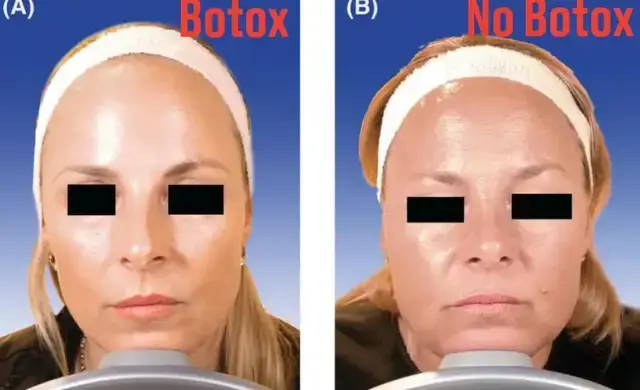
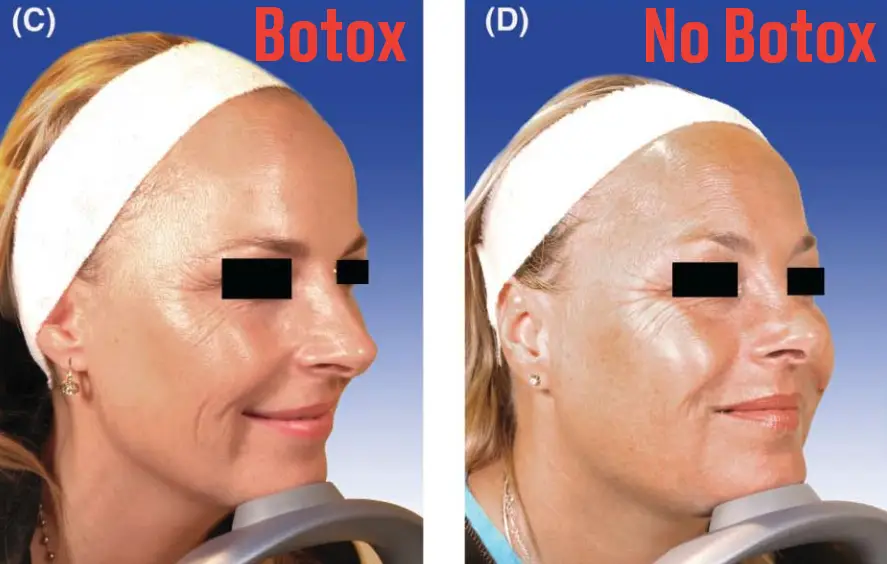
Dr Binder wrote in the study that long-term Botox treatment can help to prevent the development of wrinkles, 'not only by inhibiting the patient's ability to contract the target muscle but also perhaps through behavioural modification'.
The study concluded: "Long-term treatment with Botox can prevent the development of imprinted facial lines that are visible at rest. Botox treatment can also reduce crow's feet.
"Treatment is well tolerated, with no adverse events reported during 13 years of regular treatment in this study."
Botox can have some longer-term impacts, such as the face 'forgetting how to frown', but most side effects tend to fade after four months.
The doctor who injected one half of her face
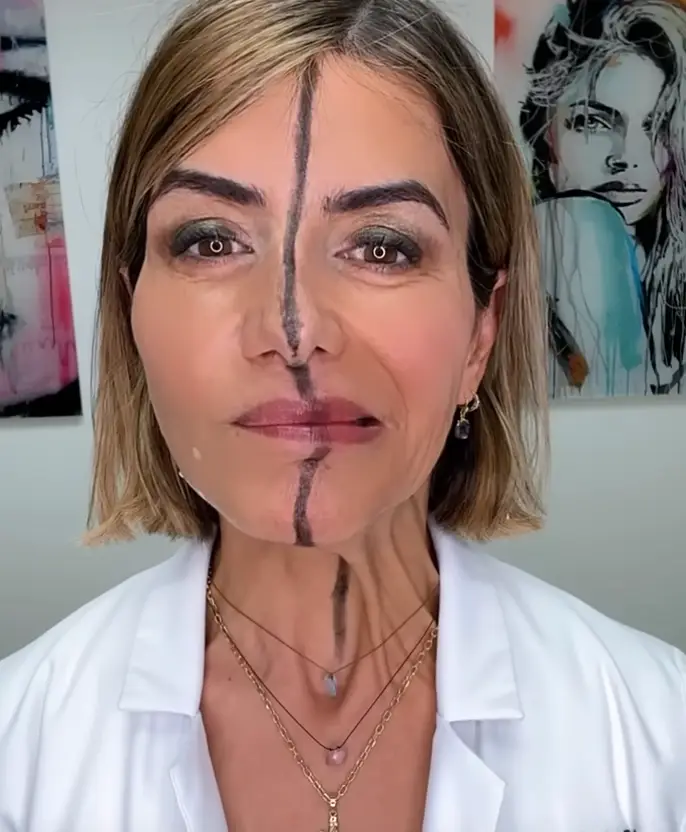
Dr Bita Farrell decided to be a bit of a 'lab rat' to show just how much difference Botox can make.
With over 20 years of injecting experience, the board-certified physician injected the lower muscles on the right side of her face.
Dr Farrell explained she had targeted the DAO muscle, which pulls down the corners of the mouth, and the platysma muscle, which contributes to facial expressions and mouth movements.
"Now for you, two weeks later, I present my results as I try and contract my lower face muscles," the California-based content creator told social media users.
She could clearly be seen struggling to get any movement out of the right side of her face, while the left side was far more expressive.
"You can see that the platysma muscle on this [left] side is really contracting and pulling my jawline down, and so is my DAO, pulling the corner of my mouth down," Dr Farrell said.
Referring to her right side, which she injected with Botox a fortnight earlier, she added: "I'm really trying to pull this side!"
Speaking of the difference between each side, she said of the injected area: "See that this cheek rides a bit higher, this nasal labial fold seems softer and so does my shadow at the marionette on this side."
She explained just how this has an impact: "Muscles of the face either pull up or pull down. When the muscles that pull the lower face down (platysma and DAO) are injected and relaxed with a Neuromodulator such as Botox, the muscle that pulls the mid face up (zygomaticus or cheek muscle) dominates and pulls the face up!
"This can help reduce the appearance of marionette lines, jowls, frown (rbf, or sad face), and the nasolabial folds. It also lifts the neck and can sharpen the jawline and make the cheeks appear a bit fuller and more lifted."
 Jess Battison