
Key symptoms in bowel cancer with disease now most fatal cancer among under 50s

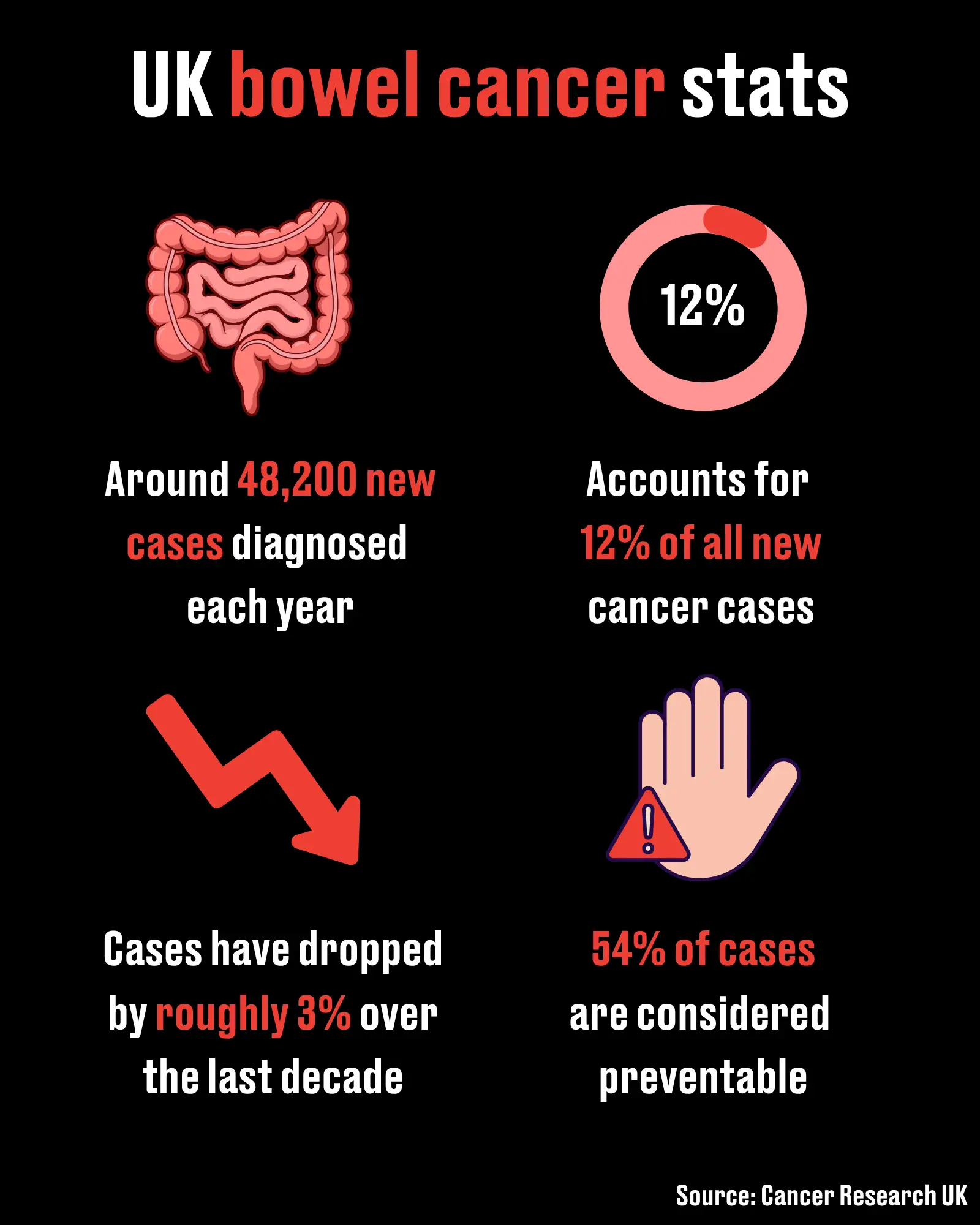
The fourth most common cancer, there are said to be around 48,200 new bowel cancer cases in the UK every year.
And campaigners are regularly urging people to get checked and look out for symptoms as rates rise globally among younger adults globally.
So, surgeons have put together a new checklist for people to use before the age of 45 (while in England, Scotland and Wales screenings begin at 50).
The American College of Surgeons (ACS) warn that while the same symptoms can often ‘have harmless causes’ they ‘should not be dismissed’.
Advert
Catching bowel cancer early can dramatically improve survival rates, so spotting the signs early can greatly improve a person’s treatment outcomes.
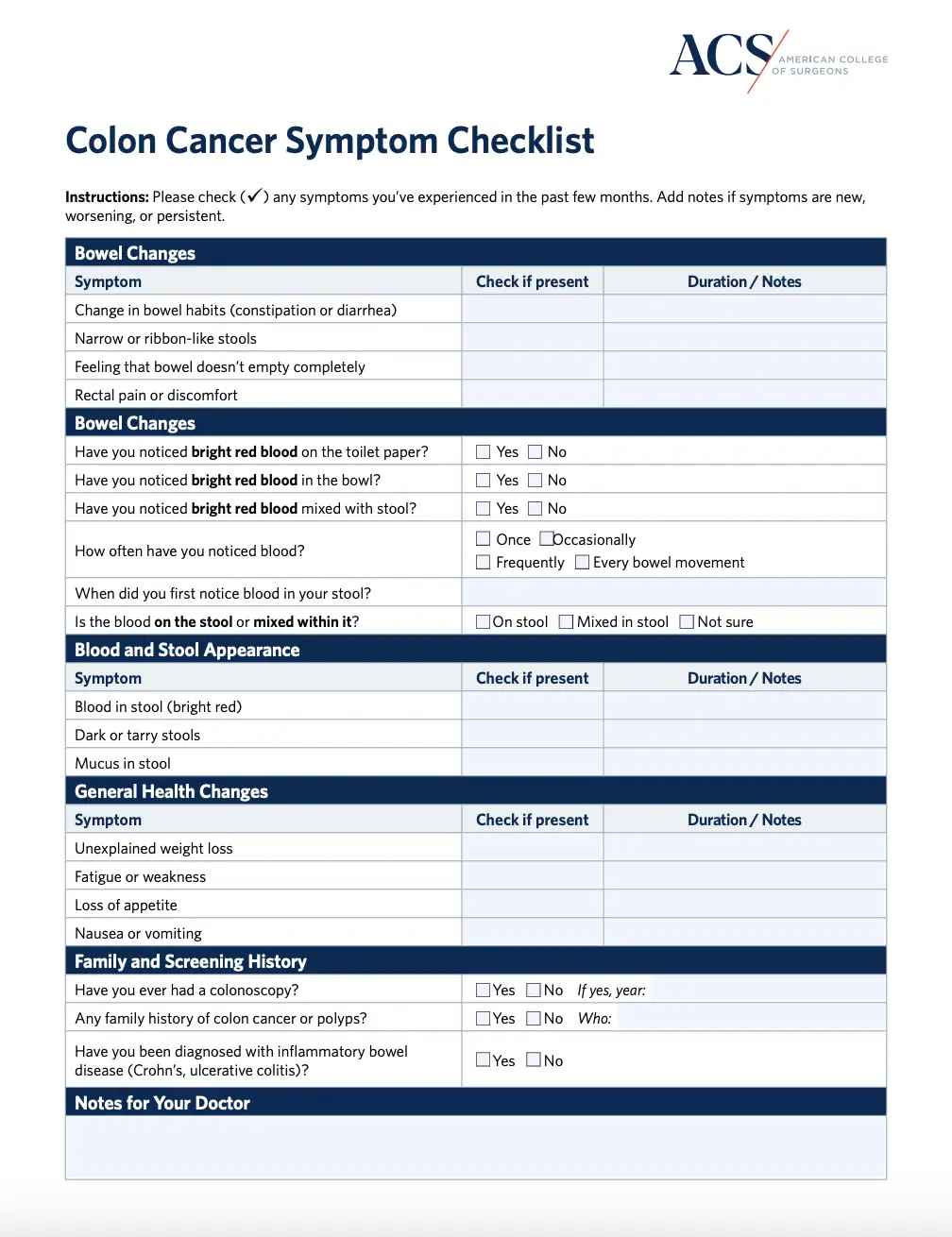
Specifically listed as a Colon Cancer Symptom Checklist, the document separates the symptoms into several categories such as bowel changes and stool appearance.

The Checklist
The ACS describes ‘early onset colorectal cancer’ as that diagnosed before the age of 50, as it says that ‘symptoms in younger adults are sometimes missed’.
So, it is pushing for people to be aware of the early signs and symptoms to make an appointment with their GP if they apply. The checklist serves as a way of preparing for this.
Bowel Changes
First up, the list advises people to check off if the following symptoms are present and then make notes on the duration.
· Change in bowel habits (constipation or diarrhoea)
· Narrow or ribbon-like stools
· Feeling that bowel doesn’t empty completely
· Rectal pain or discomfort
It then asks the following questions around symptoms:
· Have you noticed bright red blood on the toilet paper?
· Have you noticed bright red blood in the bowl?
· Have you noticed bright red blood mixed with stool?
· How often have you noticed blood?
· When did you first notice blood in your stool?
· Is the blood on the stool or mixed within it?
Blood and Stool Appearance
The checklist then goes on to list three symptoms, prompting people to check if they are present and leave notes on the duration.
· Blood in stool (bright red)
· Dark or tarry stools
· Mucus in stool
General Health Changes
More symptoms are then listed with the same prompts that are not directly relevant to the bowel.
· Unexplained weight loss
· Fatigue or weakness
· Loss of appetite
· Nausea or vomiting
Family and Screening History
And finally, the Checklist asks questions that may show you have a hereditary link or previous link to bowel cancer.
· Have you ever had a colonoscopy?
· Any family history of colon cancer or polyps?
· Have you been diagnosed with inflammatory bowel disease (Crohn’s, ulcerative colitis)?
You can find the full Checklist here.
NHS bowel cancer symptoms
The NHS also shares a list of bowel cancer symptoms, as it advises to visit a GP if you have any symptoms for three weeks or more.
It is also important to get an urgent appointment or get help from NHS 111 if your poo is black or dark red or you have bloody diarrhoea.
Symptoms can include:
- changes in your poo, such as having softer poo, diarrhoea or constipation that is not usual for you
- needing to poo more or less often than usual for you
- blood in your poo, which may look red or black
- bleeding from your bottom
- often feeling like you need to poo, even if you've just been to the toilet
- tummy pain
- a lump in your tummy
- bloating
- losing weight without trying
- feeling very tired or short of breath – these are signs of anaemia, which can be caused by bowel cancer
If you’ve been affected by any of these issues and want to speak to someone in confidence, contact Macmillan’s Cancer Support Line on 0808 808 00 00, 8am-8pm seven days a week.
Topics: Bowel cancer, Cancer, Health
 Jess Battison