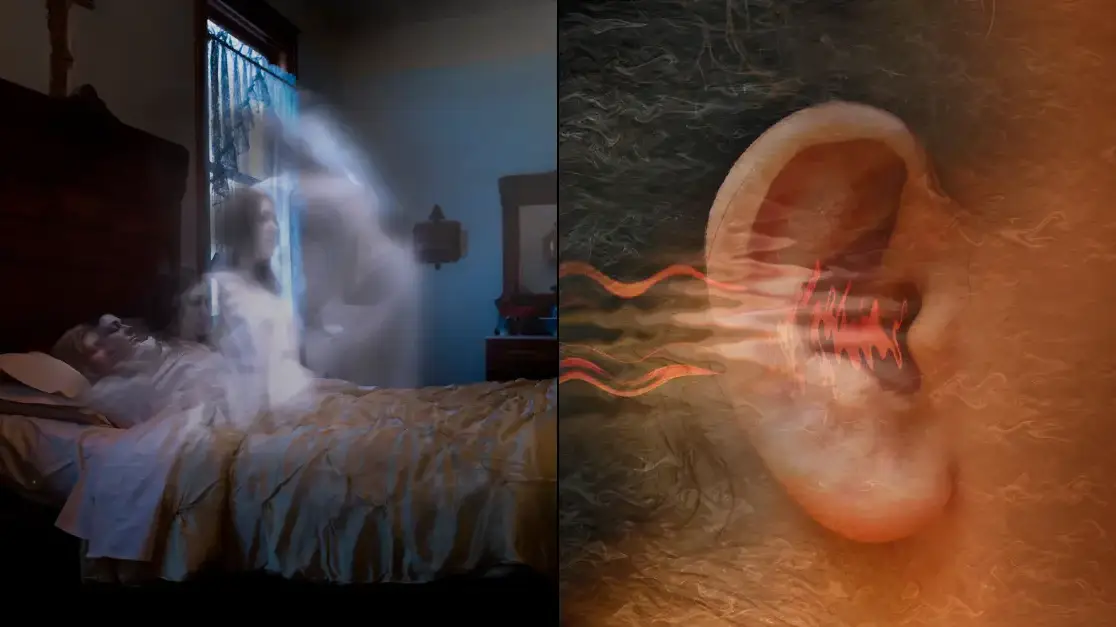
Symptoms of 'death rattle' sound that means people have less than one day to live

It's a medical phenomenon which is said to indicate that a person is just 24 hours away from death, but what is the 'death rattle', and how do you spot it?
While our last days on this mortal plane are something which most of us prefer not to think about, it should come as no surprise that our bodies follow a series of processes when they begin to shut down for good.
This includes an eerie phenomenon called the 'death rattle'.
For those who've never heard of the death rattle before, it's described as a 'crackling, wet noise' or 'gurgling sound' which happens when a dying person breathes.
Advert
The noise is created by a saliva buildup in the person's mouth, referred to as terminal secretions, meaning that each breath is travelling over the buildup, thus creating the crackling sound.

A normal, healthy person would instinctively clear the saliva out of their mouth, but for a person who is in the final stages of life, the brain no longer signals for the body to clear it.
If you're curious about what the death rattle sounds like, you can also listen here.
What are the symptoms of the death rattle?
Alongside the crackling or rattling sound made when breathing, Medical News Today explains that the following symptoms occur during the final stages of life:
- confusion
- lung congestion
- a difference in odour coming from the person
- dark bruising of the skin
- drifting in and out of consciousness
- agitation
- a change in breathing patterns
The death rattle can sometimes sound as though a person is choking, which is understandably distressing for a loved one's family members, however MNT notes that there is currently no evidence to suggest that a person making this noise is aware or in any pain.
"It's all very normal and part of the death and dying process if you are dying naturally at home," Hospice Nurse Julie, a palliative care worker who creates content around death and dying, previously explained in one of her videos.

What can you do for a person making the 'death rattle' noise?
As the death rattle is associated with a person being in the final stages of their life, the best thing to do for a person making this sound is to make them as comfortable as possible.
This can include turning a person on their side, using suction to drain excess secretions from the mouth and limiting a person's fluid intake.
If you have experienced a bereavement and would like to speak with someone in confidence, contact Cruse Bereavement Care via their national helpline on 0808 808 1677.
Topics: Health
 Brenna Cooper