People horrified after figuring out what airport security scanners actually see

The reality of airport scanners and the images they have produced over the years, has left people in shock.
Making your way through security at the airport might be one of the most aggravating aspects of travelling, with a long wait to put your items through a scanner occasionally followed up by being manhandled by airport staff.
Those who have gone through that inconvenience know the pain and exhale that comes with being asked to 'step aside' for a further search, despite nothing of note being found.
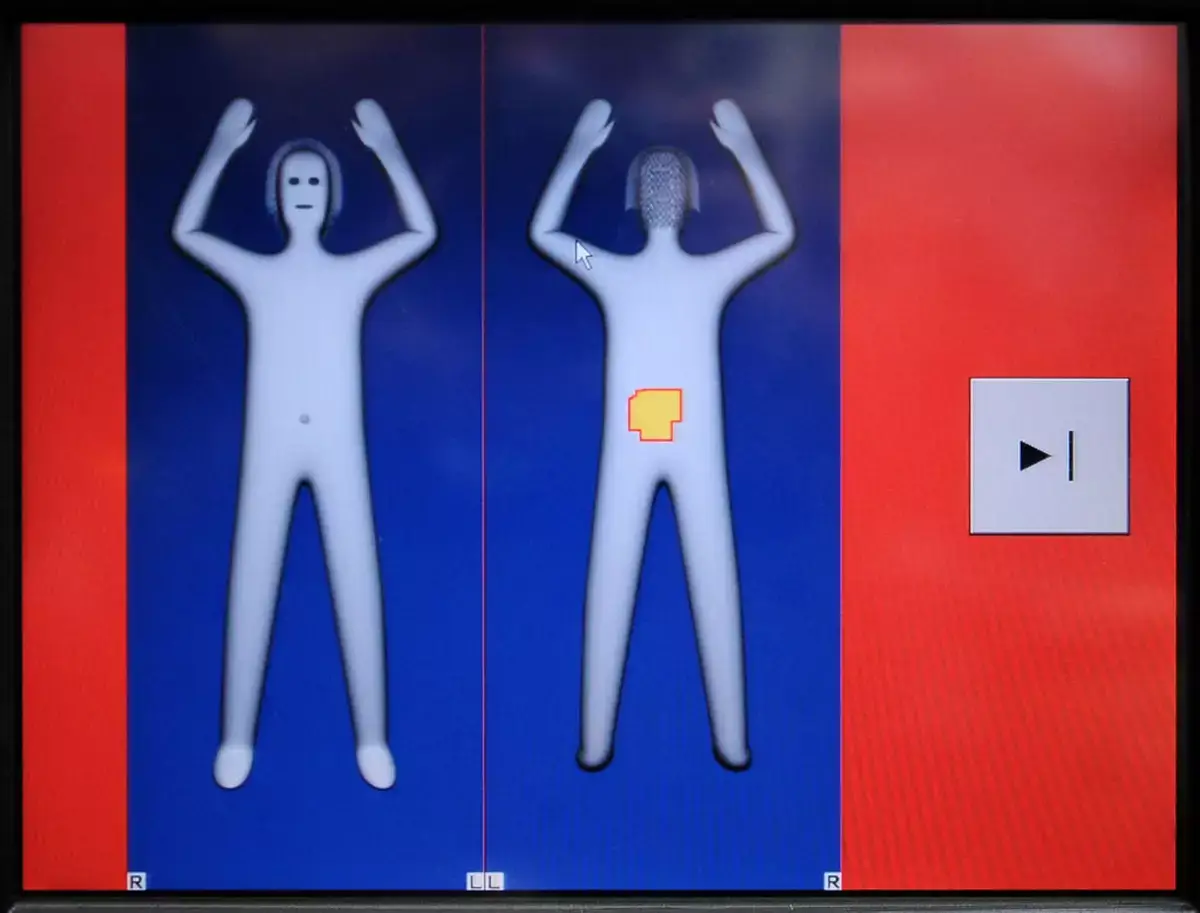
Nowadays, the awkward shuffle through security results in an avatar image of your body, highlighting any possible items or note which you may have on you.
Advert
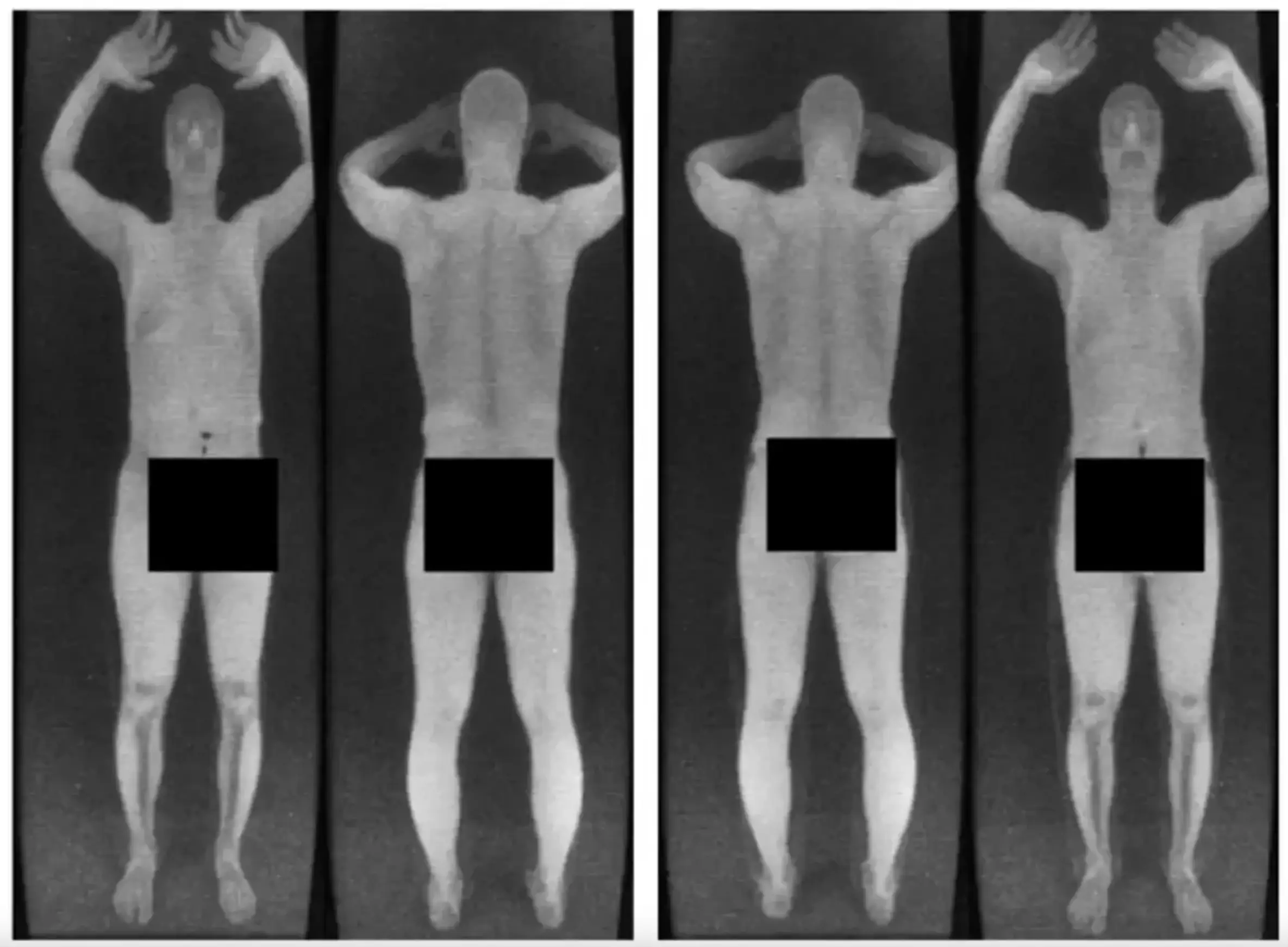
But, if we rewind the clock 10-or-so years ago, images brought up by the popular and now-infamous Rapiscan X-ray scanners at airports were far more disturbing.
These scanners were introduced by Transportation Security Administration (TSA) in the US following the 2009 Christmas Day bombing attempt, and they offered security an uncomfortable level of detail when it came to scans of the body.
It turned out that these scanners were showing staff members full, uncensored body scans which left nothing to the imagination, as these $180,000 machines turned out to be huge invasions of our privacy.
As for the UK, similar scanners were implemented at major airports in 2013, as critics pointed out that the intrusive images, which showed body shape and, err, personal anatomy, was a step too far.
Social media users vented their frustrations at the machines, as one noted that: "This is airport security, not OnlyFans."
The TSA would eventually be forced to remove the machines as they couldn't meet privacy standards, with the scanners unable to integrate Automated Target Recognition (ATR) software, which would have made less intrusive outlines of scans.
Nowadays, millimetre wave scanners are used, with these relying on non-intrusive, generic outlines to flag potential threats.
According to Shawna Malvini Redden, a researcher and author of 101 Pat-Down's, scanners have come a long way.
Speaking to Reader's Digest, she noted: "Early versions of the scanners came out without any privacy protections. Now, machines generate generic images instead of the passenger's unique image."
According to Eri Jenkins, an advisor who once worked at a TSA checkpoint, images now show 'a nondescript avatar image of the human anatomy'.
"Images reveal items that might be on skin or inside clothing," the expert said, as these outlines often look like a gingerbread man in order to 'ensure passenger privacy while maintaining security effectiveness'.
At the end of the day, they are looking for threats and not the shape of your body.
"Passengers are able to see the viewing monitor throughout the process," Jenkins noted.
On Reddit, some unsatisfied travellers pointed out that despite the changes in scanners over the past couple of decades, airport security can be frustrating.
One posted: "The last several times I’ve flown over the last year or two, the body scanner always triggers a ping right in my crotch area....
"I get a full TSA pat down every time. It was annoying at first, but now I really just laugh about it because I know it’s coming."
Asking why this may be the case, another replied: "This happens to me. TSA told me to pull my pants up. I didn't think they were all that low. But I had my belt off."
A third added: "I've experienced the same. Also set it off when my socks had fallen some and were a little bit bunched. Meanwhile, on my last trip I was in a hurry, forgot to remove my PA piercing, and was green lit," with a shrug emoji.
I guess there's no winning with airport scanners, regardless of the type.
Topics: Travel, Technology
 Joshua Nair