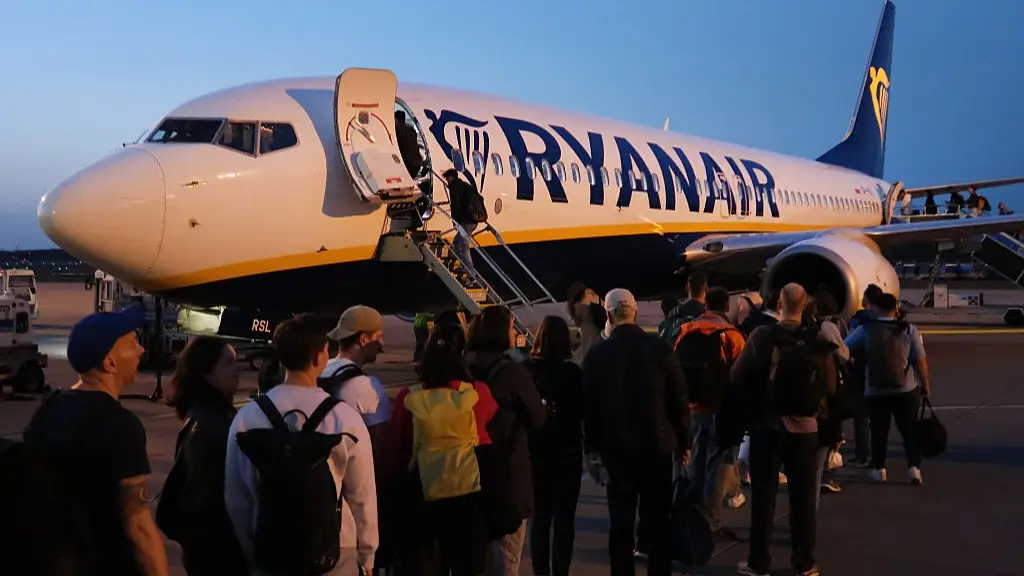
Ryanair cancels millions of seats on flights to holiday hotspots

Popular tourist destinations across Europe might be trickier or more expensive to reach as Ryanair is changing how many planes it has on routes which means millions fewer seats will be available.
According to Wales Online, the airline has had some disagreements with airports over various fees and charges and the withdrawal of flights on some routes will affect travel to Spain, Portugal, France and Germany.
With the higher fees Ryanair says some of these routes are too expensive to keep running, and according to the Birmingham Mail one of the routes cancelled due to this reason is between Portugal and the Azores.
Routes to Berlin, Hamburg and Cologne in Germany are also affected with the airline complaining about 'sky-high access costs' in the country.
Advert
They also warn that 20 routes and a million seats to Belgium have been dispensed with for the upcoming winter due to new taxes on flight passengers, while they have also pulled out of some airports in Spain and reduced services to the Canary Islands.
Fewer services means fewer planes with seats available, so holidaymakers will need to find alternative airlines to make their journeys and hope there's enough capacity to go around.
Meanwhile, the entire aviation industry is having to contend with uncertainty over jet fuel availability due to the war in the Middle East and the Strait of Hormuz.
Speaking before a possible ceasefire was announced, Ryanair boss Michael O'Leary told ITV that if the US and Israeli war with Iran is not over 'by the end of April' there'd be flight cancellations beyond the planned reductions.
He said: "The Strait of Hormuz has been closed for 30 days. If it remains closed for 60 or 90 days, then we're all facing an unknown scenario.
"We are certainly looking at maybe having to cancel five percent to 10 percent of flights through May, June and July."
Cancellations and route closures wouldn't be chosen by the airlines in such circumstances but the airports, as it'd all depend on which of them had supplies of jet fuel to keep the planes moving to their next destination.
The IMF warned that even if the fragile ceasefire holds there will still be 'ripple effects' as global reductions in the supply of oil and gas were felt around the world.
Prices have changed, costs have risen and with supply chains in doubt uncertainty does no good for making things less expensive.
Major airlines still have weeks of supplies remaining before this becomes a problem so there's no need to panic.
 Joe Harker