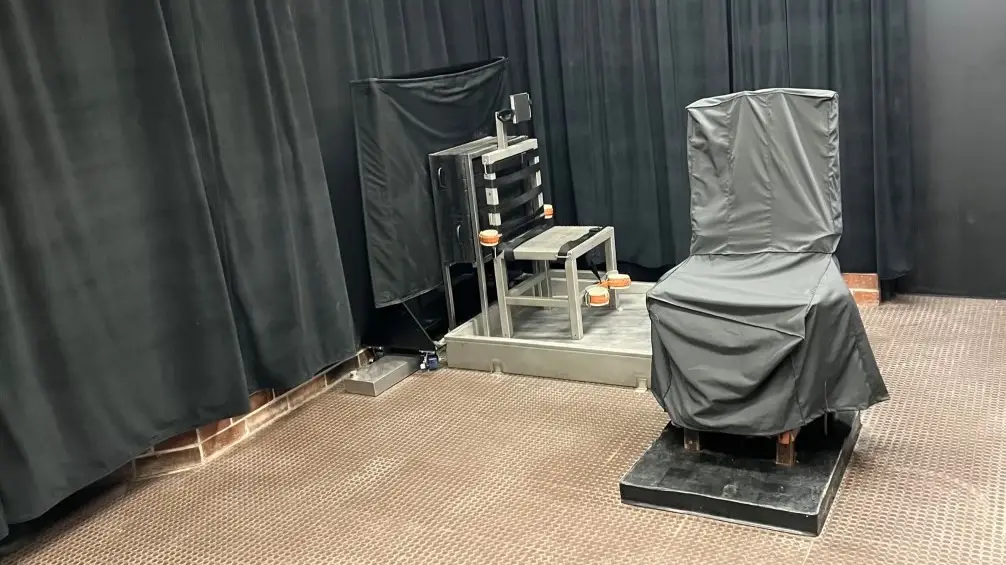
Volunteers set to be able to shoot dead eight death row inmates

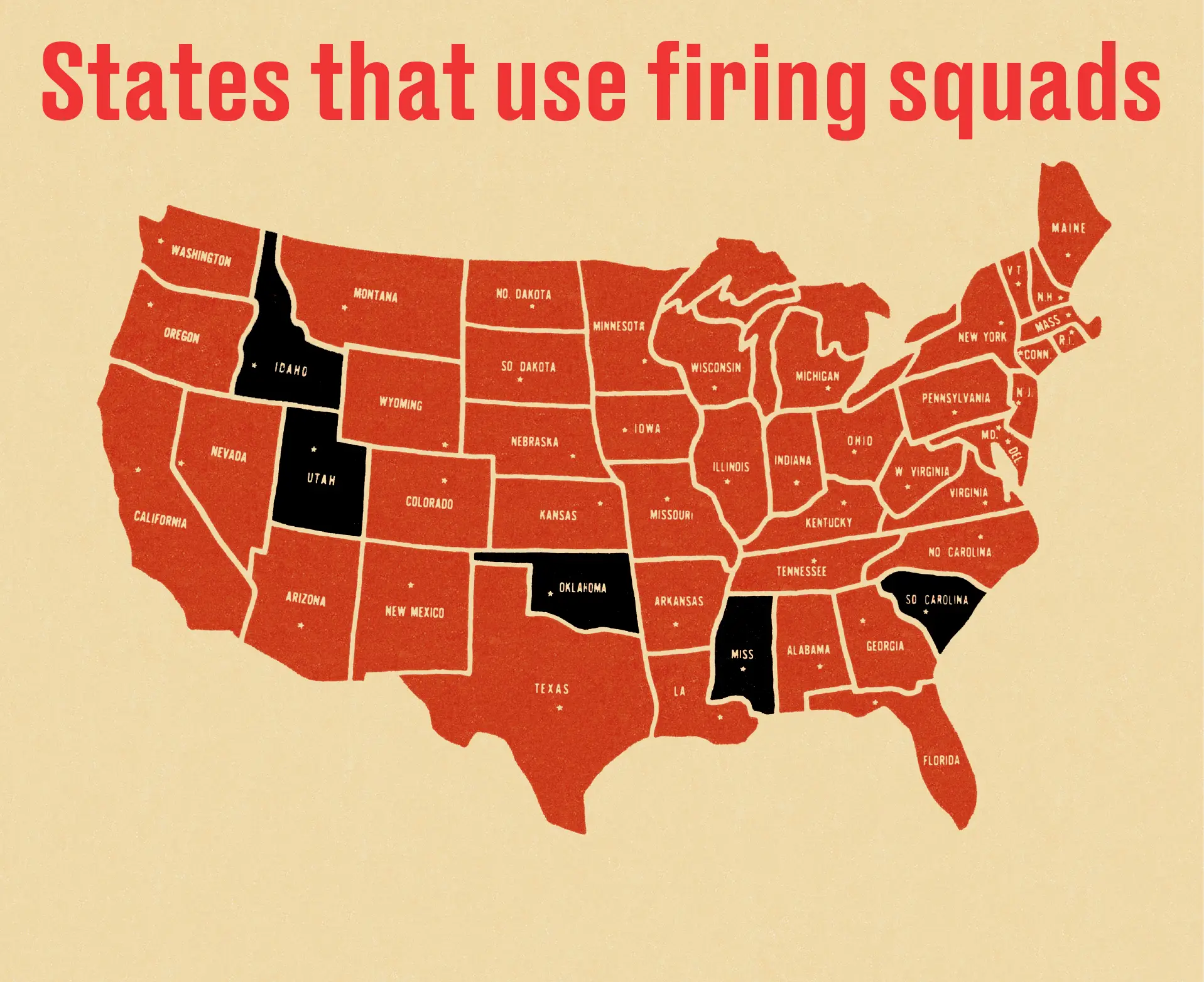
As of this week, the Idaho Maximum Security Institution is giving its Death Row prisoners the firing squad again, with one key difference.
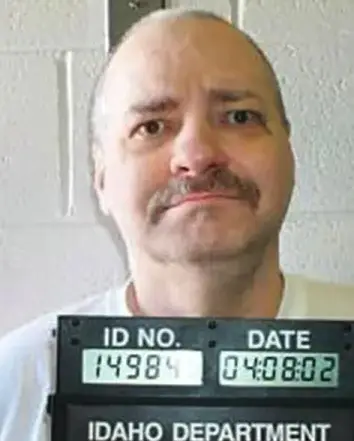
After Thomas Eugene Creech's execution was abandoned last year, with staff trying and failing eight times to administer the lethal drug over the course of an hour, the US state was forced to change its primary execution policy. Idaho ended up spending over a million dollars of taxpayers' money on a brand new death chamber.
State officials recently revealed the redesigned processes in place for dealing with the institution's eight inmates (at the time of writing).
It's all based around the recruitment of six volunteer police as opposed to seasoned executioners, who will wield Daniel Defence DD5-P rifles chambered inside .308 Winchesters at the scheduled event.
Advert
Per The Daily Mail, three of the six anonymous officers are tasked with firing the fatal bullets, while two alternating members are essentially substitutes.
The sixth and final officer acts as team leader and is responsible for loading the weapons.
Execution jobs aren't available to every police officer though, as they must be certified in Idaho with a minimum of three years of Peace Officer Standards training.
The volunteers also cannot have any disciplinary actions related to excessive force and cannot be related to either the Death Row inmate or their victims.
Before they are approved to join the team, volunteers must repeatedly hit a heart-sized target without missing a beat during qualification tests.
To remain qualified, the firing squad are to complete quarterly live-fire training exercises and take part in regular rehearsals.
On the day they meet their maker, Death Row criminals will be offered as many as two mild sedatives prior to the shooting.
They will then be strapped into an execution chair while attached to a heart monitor. A target is placed directly over their chest as the prison director declares the official death warrant.
If they so choose, those who are sentenced to die can request an eye cover too.
Volunteer executioners must stand behind a protective wall roughly 10 yards away from the target, aiming through a small opening.
A single bullet from each officer's gun - totalling three - should then be fired straight at the heart.
If the onsite electrocardiogram determines that the inmate is still alive after this, a second round of bullets will be authorised ahead of the county coroner's pronouncement of death.
Meanwhile, the Death Penalty Information Center's executive director Robin Maher has been critical of the refreshed system.
"Every new execution method in history has been introduced with the promise that it will be foolproof and 'more humane' than the previous method. Unfortunately, those promises have always been broken," she said.
Hitting back via the Idaho Statesman, local prison director Bree Derrick noted: "The Idaho Department of Correction recognises the gravity of carrying out a court-ordered execution and the responsibility that comes with it.
"Our procedures are designed to ensure that any execution is conducted in a secure, orderly, and dignified manner while safeguarding the rights of all individuals involved and maintaining the safety and security of staff, witnesses, and the public."
States are using alternate execution methods for Death Row
With many pharmaceutical companies opposing the use of their drugs on Death Row, as well as a handful of botched executions using this method, inmates are opting for alternate execution methods.
Nitrogen hypoxia
First used: 2024 - in Alabama to execute convicted murderer Kenneth Eugene Smith
States where it’s authorised: Alabama, Arkansas, Louisiana, Mississippi, Oklahoma
Process: Inmates are strapped to a gurney and breathe pure nitrogen; death occurs as the body is deprived of oxygen
Risks: Confusion, the feeling of suffocation, panic
Electrocution
Most recently used: 2020 - by quadruple murderer Nicholas Todd Sutton in Tennessee, who was one of several prisoners who viewed lethal injection as state-sanctioned torture
States where it’s authorised: Alabama, Arkansas, Florida, Kentucky (if offence before 1988), Louisiana, Mississippi, Oklahoma, South Carolina, Tennessee (if offence before 1998)
Process: Tennessee’s chair is built using wood from the gallows used by the state before hangings were abolished and is nicknamed Old Smokey; it delivers 1,750 volts at 7 amps over 20 seconds
Risks: US Supreme Court Justice William Brennan graphically described the process, saying in 1985 that prisoners’ eyeballs could pop out and they could vomit blood - some states have ruled that the method is inhumane
 Dan Seddon