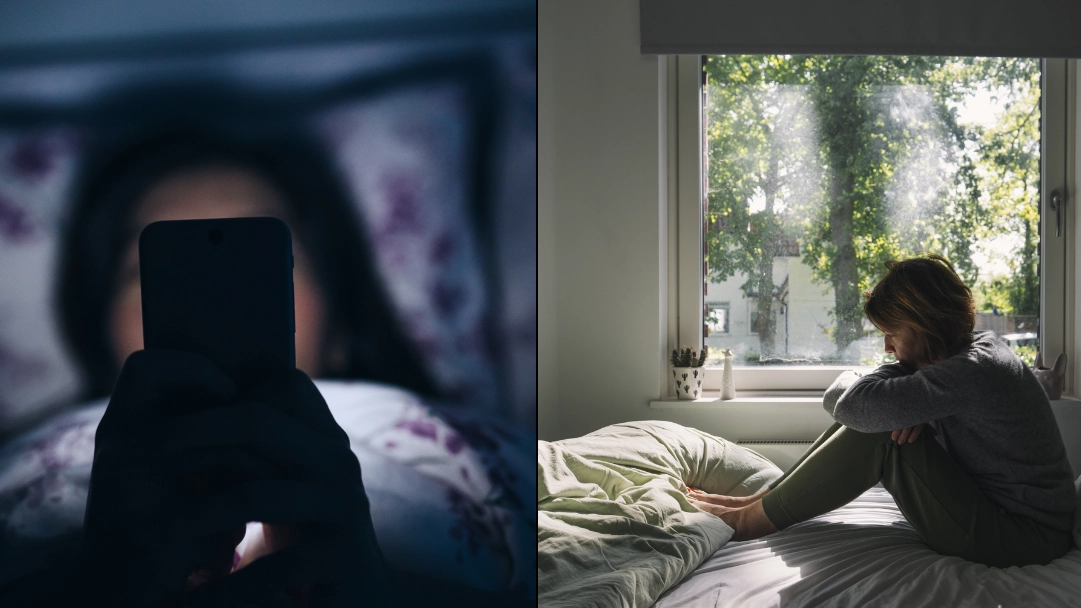
Experts reveal how 'doomscrolling' can impact your mental health and wellbeing

Since the invention of social media and smartphone technology, the art of doomscrolling has become common place in society.
Whether it’s scrolling through an endless list of TikTok videos, Instagram or X while you’re bored on the toilet or in bed - you’ve got to admit it can be pretty addictive.
However, now researchers have come out to reveal that it can also be bad for your mental health.
Now, if you don’t already know, doomscrolling is when a person will scroll on social media for a long period of time and the subject matter is generally morbid.
Advert
This can be news stories which are increasingly negative, or even Wikipedia pages of scary conspiracies.

Studies have even found that consumers prefer to seek out negative news or social media content to scroll through and this pattern checks out if you see the top ranking shows on Netflix being True Crime docu-series.
Whatever it is that an individual chooses to scroll through, this study has found that it can make people suspicious of others and also feed existential dread.
Reza Shabahang from the Flinders University, Australia released a statement of their findings.
It read: “Doomscrolling can have some dire consequences on our mental health and wellbeing leaving us feeling stress, anxiety, despair and questioning the meaning of life.
“Viewing negative news on social media has become a source of vicarious trauma, where someone has a negative psychological impact even though they did not experience the trauma themselves.”
It found that when people were exposed to material related to traumatic events, that people developed symptoms close to PTSD.
In the study, Shabahang and their colleagues surveyed 800 university students from the US, and from Iran to explore how negative content affected a person’s feelings on existence.
Those who were surveyed were asked how anxious they felt towards their existence, how they felt about humanity and fairness in the world and it ended with asking them how much they doomscrolled.
Shabahang said: “We wanted to see if there were any connections between doomscrolling and subsequent thoughts and feelings about humankind and the importance of life.”
According to the results, people who doomscrolled marked as having higher existential anxiety in both groups of students.
The Iranian group were found to have a major link between how much they doomscroll and how much they dislike others.
The study author said: “When we’re constantly exposed to negative news and information online, it can threaten our beliefs when it comes to our own mortality and the control we have over our own lives.
“Moreover, doomscrolling can negatively affect how we view the people and world around us.”
The study concluded that social media should be used carefully and that exposure to constant negativity can impact a person’s mental health.
Shabahang said: “We suggest that people pay attention to how much time they are spending on social media and to be aware of the impact it is having on their emotions, thoughts and feelings, especially when it comes to negative news and events.
“It’s a good idea to keep track of how much time you spend doomscrolling and start making changes to reduce that time if it’s problematic. By becoming more aware of our online habits, such as doomscrolling, and taking small steps to address them, it could help with improving our overall mental wellbeing.”
Topics: Health, Mental Health, Social Media, Technology, US News, World News
 Britt Jones